
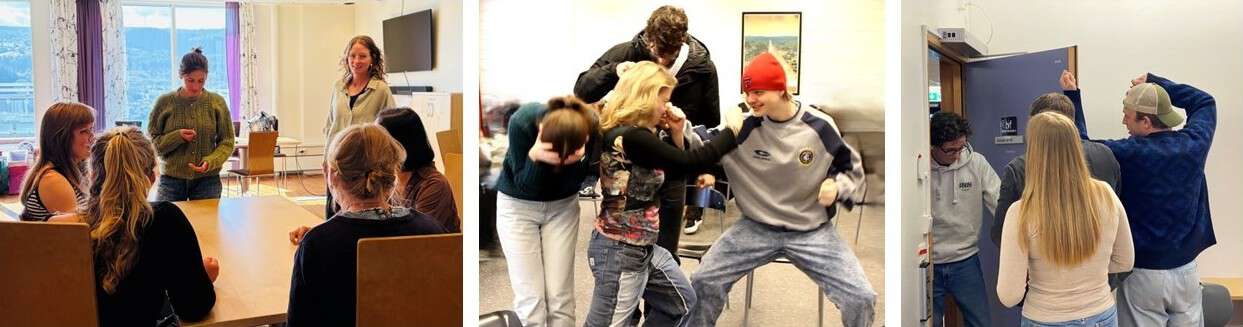
The goal is to enhance both documentary filmmakers’ skills and the quality of their artistic productions through the new knowledge and methods developed in this project.
- Mette Nyseter, project leader and assistant professor at the TV School in Lillehammer
Stimulating creativity and learning
How can role-playing accelerate processes related to skill development and artistic innovation for those of us creating content for television and documentaries?
This is the central question in the project 'Roleplay in Artistic and Educational Development within TV and Documentary Production'.
In this project, we explore how role-playing can be utilised to enhance skills and boost creativity in connection with various roles, responsibilities, and tasks in TV and documentary production in the most effective way.
Innovative use of a well-tested method
Role-playing is a traditional and well-known method for skills training within vocational education, including health sciences, social sciences, law, and teaching, but the method has not yet been widely explored in the creative profession of documentary filmmaking.
In this project, we aim to explore how role-playing can be applied in our field to develop both artists' competencies and their artistic productions.
During the process, we are learning from those who came before us, while also developing and testing new exercises tailored to our own profession.
Play and safety as a framework for learning and creativity
When working on documentary projects, the pressure is often high. There is rarely an opportunity to pause, reflect, and learn from what happens during production, especially when working on location in the unpredictable reality we navigate. This applies both in the industry and during studies where skills are practiced through practical production.
There is also usually no chance to test and explore different ways of doing things when faced with a full team and contributors, all working towards a result to be presented.
When the stakes are high, and there is a fear of failure, we know that this inhibits learning, creativity, innovation, and development.
Through role-playing, we can create space for a more playful approach to the craft, compared to real-life production. By providing participants with relevant experiences of realistic situations performed as role-play in safe environments, we can stimulate both learning and creativity in ways previously unexplored in our field.
Embodiment of knowledge
By allowing participants to embody various types of relevant professional knowledge through small, practical exercises in safe surroundings, we hope to create transformative experiences that lead to lasting learning through reflection.
By creating a kind of laboratory for exploring and testing both the artists' ideas and working methods through role-playing, we aim to discover effective success factors that can enhance the quality of both teaching and development work within our field.
The project also explores how techniques involving the whole body impact idea development and creative processes in the artistic work of film and TV production.
International collaboration
In autumn 2025, a research group was established across Norway, Denmark and the Czech Republic. So far, we have not found anyone else researching this particular approach to using role-play in documentary education, and we would very much like to connect with others working in this field—if you find us, as we have not yet found you.
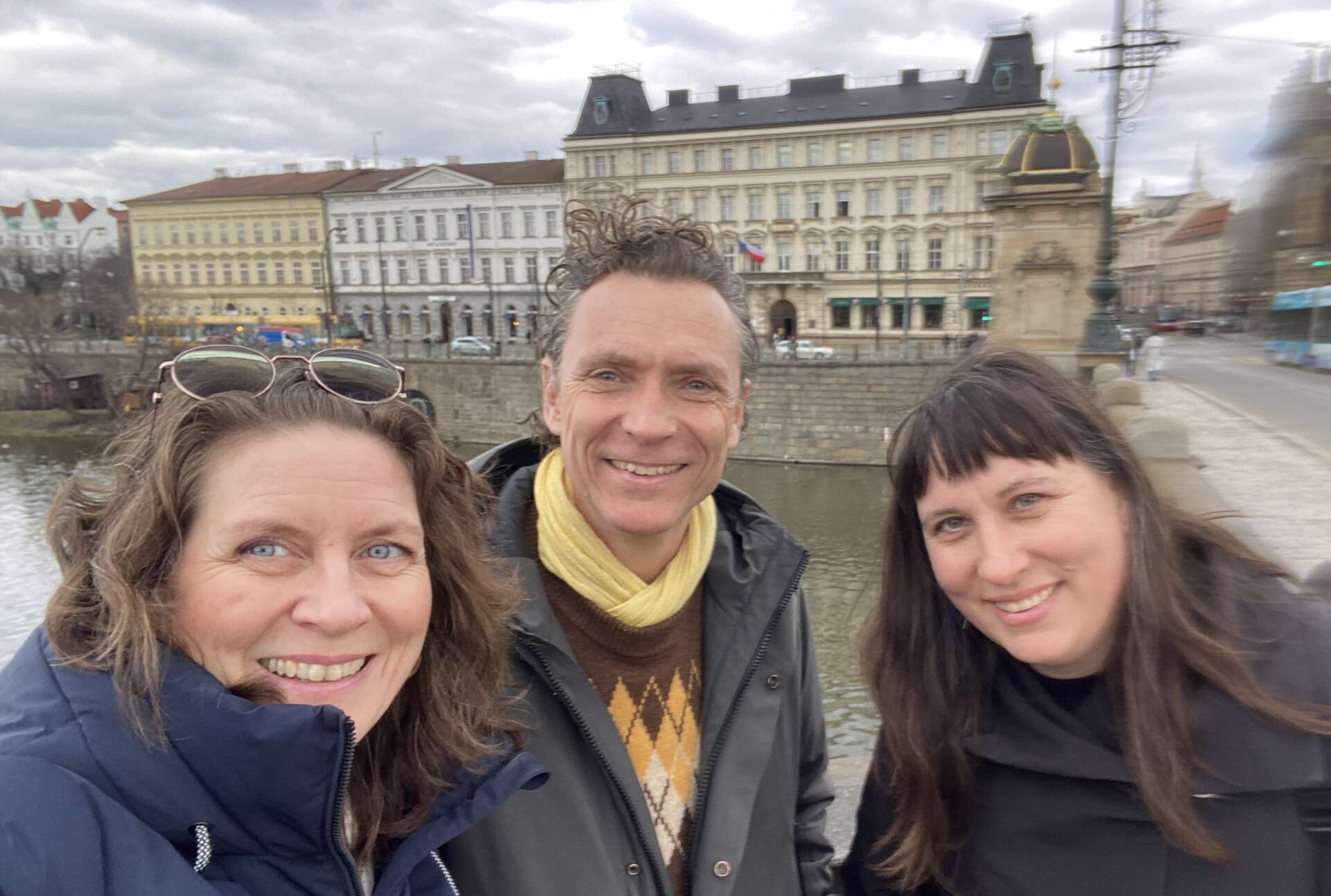
Our first in-person gathering took place in Prague in February 2026, where we spent five days conducting research together with other staff and documentary directing students from FAMU. Since then, we have given a joint workshop presentation at the Second International Conference on Embodied Education, held in Copenhagen in June 2026. We are writing a joint article in autumn 2026, and have ambitious plans for future collaborative projects across film and television schools in our three countries.
A breakthrough in developing role-playing exercises tailored for documentarians and their craft came when I invited Danish director and producer Jan Bacher Dirchsen to join my project.
He is the author of the book 'Et spørgsmål om tillid – at lave TV med mennesker' (2019), and when he was set to lecture at the TV School in Lillehammer for the second time, I posed him this challenge: How can we translate your theory into practice? How can we teach students exactly what to do, step by step, while still in the classroom? Can we create exercises that transform the relevant knowledge and theoretical reflections into practical role-playing scenarios, providing immediate, hands-on experience of what we are discussing—without having to wait to get into an actual production?
The result was the exercises 'Key Scenes' and 'Dilemmas'. These exercises were designed for small classes of directing students and focused on artistic idea development during the script phase, as well as testing working methods during shooting situations. Since then, we have continued to develop new exercises together, including exercises for collaboration between directors and producers
Jan Bacher Dirchsen teaches on the documentary programme at the National Film School of Denmark. As a result of our collaboration, he is now using these exercises, with a focus on embodied learning, in his teaching there as well.

Interdisciplinary collaboration
In addition to valuable exchanges of experience and discussions with colleagues within my own field, which is television and documentary filmmaking, I have greatly benefitted from and enjoyed collaborating with colleagues at the Department of Psychology and Department of Art and Cultural Studies in this project.
Across documentary and drama pedagogy
In the search for effective exercises that could train students to cope with the unpredictable nature of reality as documentary filmmakers, I found two highly skilled drama pedagogues at the Department of Art and Cultural Studies at the University of Inland Norway. Together with Linn-Terese Bern and Dorthe Gunnhildsdatter Hagen, we initiated a subproject within the role-play project entitled “Improvisational Competence and Creativity”. The first pilot was conducted with directing students in the Documentary Programme at the Norwegian TV School in autumn 2025. The project was presented as a conference paper at the Fourth AIE International Conference (Art, Research, Education) in November 2025, and the results will be published in a peer-reviewed article in the Level 1 journal Corpo Grafías during autumn 2026. The initiative is being further developed and will continue as part of the curriculum in autumn 2026.
Across documentary and psychology
In my search for answers as to why students reacted so strongly and enthusiastically when I explored various roleplay exercises in the classroom, I came across clinical psychologist and Associate Professor Ulrika Håkansson in the neighbouring building on the Lillehammer campus at the University of Inland Norway.
She turned out to be a treasure trove of wise, research-based, and highly relevant insights – particularly when it came to learning and developmental processes, the interplay between emotions, the brain and body, why these things occur, and what they mean for us as human beings trying to live our lives in the best possible way, both individually and collectively.
Together, we organised the event It really does play a role! during the 2024 Research Days festival. In dialogue with each other and the audience, we aimed to recreate some of the sense of wonder and the 'aha' moments we had experienced while working with these fascinating processes – drawing from Mette’s experience with roleplay in documentary teaching and Ulrika’s illuminating reflections based on her own and others’ psychological research.
In the audience was Ingeborg Flagstad, professor and head of the Department of Psychology at the University of Inland Norway. She was immediately inspired by the project and also wanted to contribute. This led to a collaboration in which we connected her expertise – including psychodrama – to a project at the TV School, where documentary students were to collaborate in teams on a film production. We adapted the role-play exercises to documentary filmmakers’ needs for developing skills in teamwork and an understanding of group dynamics. The pilot project was successful, and the session has remained part of the curriculum for further development.

- mette.nyseter@inn.no
- Phone
- +47 61 28 85 28