
Antimicrobial resistance (AMR) is the ability of germs to withstand the drugs we use to treat them. It is one of the top global health threats and continues to rise, with projections estimating 10 million deaths per year by 2050.
This rise is mainly caused by the misuse and overuse of drugs like antibiotics.
"In healthcare settings, time consuming tests are required to determine the optimal treatment for each infection, which can take 2–7 days. Developing rapid tests could help to improve patient treatment and combat rising AMR", says Branders.
One way to do this is by using DNA sequencing-based methods. These have proven to be a promising modern approach but require highly complex data analysis.
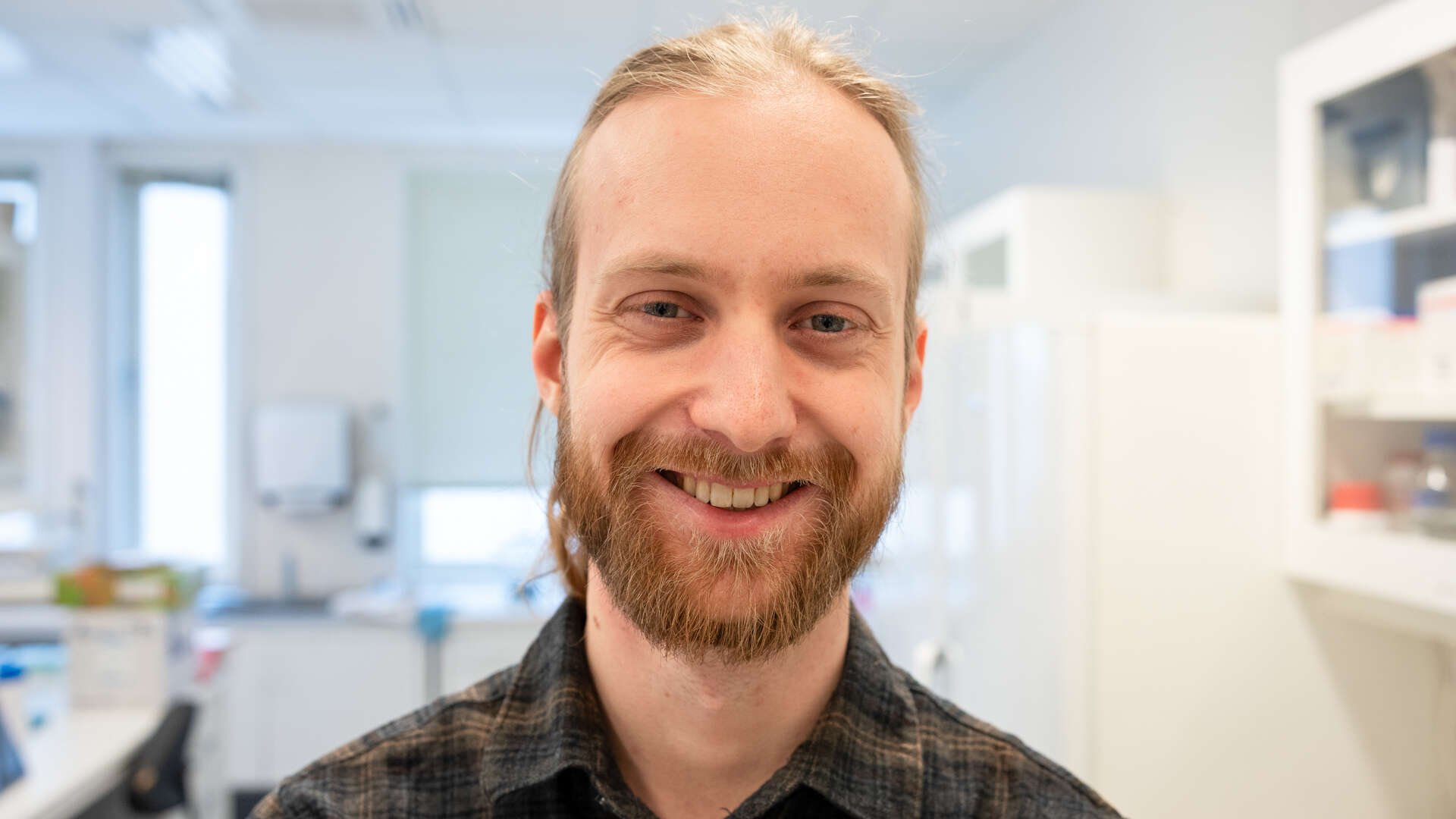
"In my thesis I have developed four easy to use software tools using new algorithms to detect germs in patient samples and predict the optimal treatment", says Sverre Branders.
A rapid sequencing based test was optimized and evaluated in a real hospital setting, with good results.
"The test could identify the germ and suggest an optimal antibiotic in only four hours, with similar accuracy compared to current gold standard tests", says the research fellow who was affiliated with the PhD programme in Applied Echology and Biotechnology in Hamar.
Sverre Branders' thesis is titled "Machine Learning Solutions for Rapid Diagnostics of Infection and Antimicrobial Resistance".
The main findings of the PhD thesis:
- MysteryMaster is a novel approach for classifying demultiplexed Nanopore sequencing data that can recover up to 1/3 of previously unclassified data. This novel tool enables intuitive troubleshooting of barcode declassification and provides an algorithm that complements standard methods.
- Voyager implements two novel algorithms: SMDS for rapid, memory-efficient long-read mapping, and a deconvolution approach to dynamically correct false-positives. Voyager can achieve strain-level discrimination and outperforms current tools across fifteen metagenomic datasets.
- K-MARVEL enables high-accuracy resistance gene variant and point mutation detection directly from raw sequencing data, achieving superior accuracy and significant speed-up over existing methods.
- Mango is a visual correlation browser for any tabular data and patterns of correlation in large-scale data.
- A sequencing-based method for rapid diagnostics was optimized and evaluated on a clinical cohort of patients with complicated urinary tract infections. The method has a turnaround time of only four hours and was able to identify pathogens with 99% accuracy and predict antibiotic susceptibility with 90% accuracy.