
Systematic literature search
A systematic search is searching for literature in a systematic and methodical way. As part of writing research applications, reports or review articles, you might need to map out the existing literature.
You can request a search by completing the online form. Please provide details such as your research question, the purpose of the search, relevant articles, and any other pertinent information. The more information you provide, the better we can plan and conduct an effective search.
We also offer guidance in systematic searching for staff and PhD candidates.
Order a systematic literature search
If you are a student, please refer to the library’s website for information on how to conduct literature searches.
What is the purpose of the literature search?
There are various reasons for reviewing and summarizing existing knowledge. A literature review may be a standalone product, such as a review article, or it may form part of a larger work, such as an introduction to a research grant application. The purpose of the review determines how extensive the literature search needs to be.
- A review article, may require a comprehensive literature search to identify as much relevant literature as possible. In such a process, it may be necessary to screen 4,000 references in order to end up with only 12 references in the end.
- A literature search conducted for a grant application, however, can be much more selective in its approach. The aim is not to find absolutely everything, but rather to gain an overview of the research activity within the topic, identify key publications, and locate any existing review articles.
How to carry out a systematic search for literature
Systematic searching can be condensed into the following five steps. It is recommended to document the process in order to have a sound foundation when writing the methods section in a future article or report.
1. Develop a research question
Developing a research question is the first step in a systematic search. Spend some time and explore the literature before formulating your research question. What are the themes and focus in your project?
Further reading:
Stern, C., Jordan, Z., & McArthur, A. (2014). Developing the review question and inclusion criteria. AJN The American Journal of Nursing, 114(4), 53–56. https://doi.org/10.1097/01.NAJ.0000445689.67800.86
2. Identify the main concepts in the research question
The research question consists of several elements or concepts, and they form the basis for your search strategy. Identify the most important element, og select more elements when needed. To build a search strategy you can make a table with one column for each element.
Further reading:
Aromataris, E., & Riitano, D. (2014). Systematic reviews: Constructing a search strategy and searching for evidence. AJN The American Journal of Nursing, 114(5), 49–56. https://doi.org/10.1097/01.NAJ.0000446779.99522.f6
Bramer, W. M., de Jonge, G. B., Rethlefsen, M. L., Mast, F., & Kleijnen, J. (2018). A systematic approach to searching: An efficient and complete method to develop literature searches. Journal of the Medical Library Association: JMLA, 106(4), 531–541. https://doi.org/10.5195/jmla.2018.283
3. Find search terms for each element
The next step is to find search terms for each element. A concept can often be expressed in different terms, and is therefore important to find the appropriate synonyms for each concept. You can use keywords and index terms in the search.
- Keywords are terms found in for example titles and abstracts of articles.

- Index terms are found in thesauri or lists of subject headings in the databases.
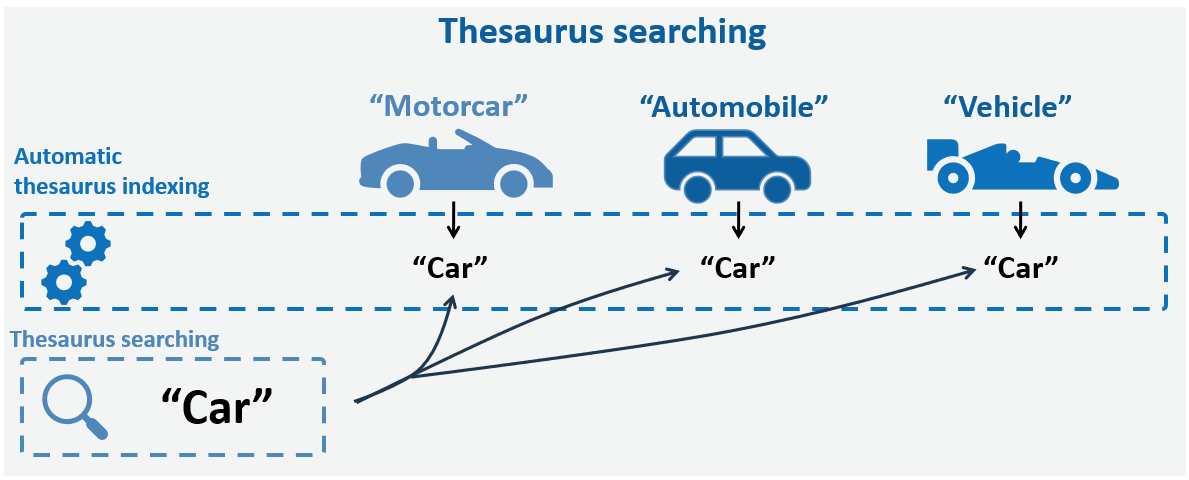
- Subject terms are taken from the subject heading lists in each database. Look for ‘subject headings’ or ‘thesaurus’ to find and search these subject term lists.
Fill in your search terms for each element in the table. If you choose very general search terms, the number of hits may be very high. Do some trial searches in order to test the number of results and the relevance of the results. The more elements you choose to combine in the search, the more specific search results you get. If the search is too narrow, you risk loosing relevant results. If the search is too broad, you risk getting many irrelevant results.
Further reading:
PhD on Track (n.d.). Classical searching. Retrieved July 2, 2026, from https://www.phdontrack.net/search-review-and-write/searching/index.html#toc11
Aromataris, E., & Riitano, D. (2014). Systematic reviews: Constructing a search strategy and searching for evidence. AJN The American Journal of Nursing, 114(5), 49–56. https://doi.org/10.1097/01.NAJ.0000446779.99522.f6
4. Carry out searches in one or more databases
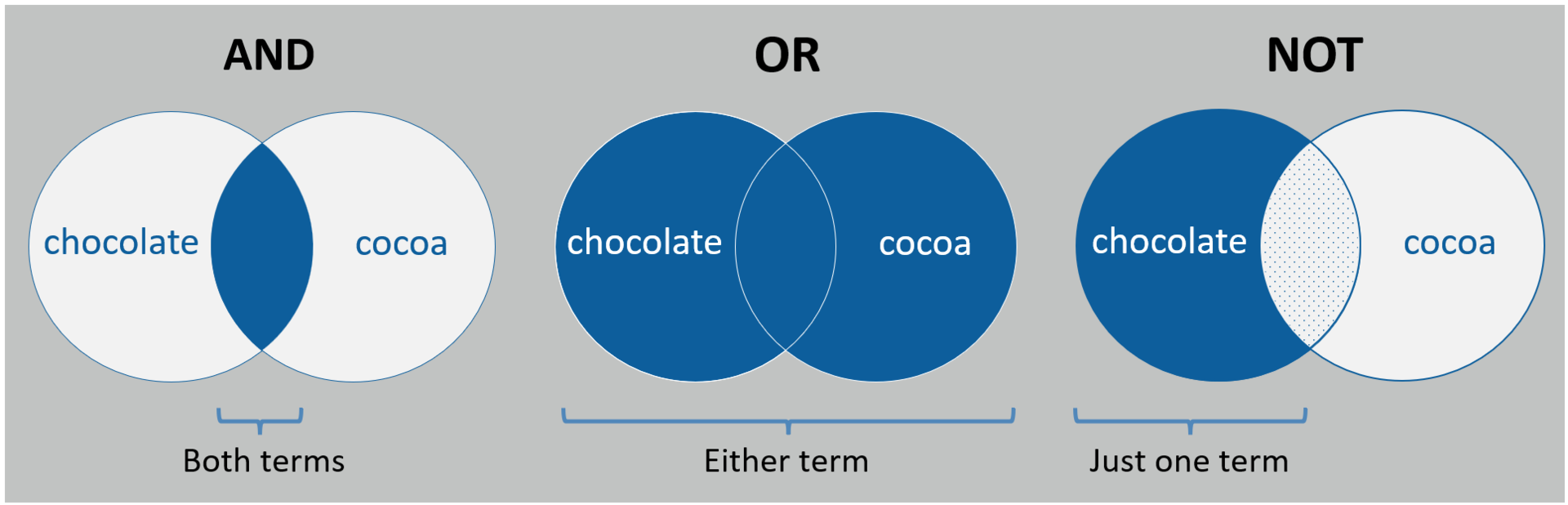
When you have selected your search terms, you combine these when searching in databases. You use the search operator OR within each element. The elements are combined with the search operator AND.
The video The video using AND/OR to improve your searching, produced by NHI – Health Education England explains how to use AND and OR i searches.
The INN library subscribes to both subject specific and interdisciplinary databases. Each database gives you the opportunity to choose the field you would like to search, e.g. title, abstract or index terms. In addition, it is possible to adjust using techniques such as truncation, proximity search, and limitations like year, language and document type.
Do not hesitate to reach out to the library for guidance or courses in database searching, or you may consult the databases’ help pages.
When you have performed searches in databases, the references may be downloaded to a reference management tool such as Endnote or Zotero for screening.
5. Use supplementary search techniques to find literature
In addition to searching in databases, you can use supplementary techniques to identify relevant sources.
- Search in citation databases like Web of Science and Scopus for references and citations
- Read table of contents in relevant journals
- Reach out to experts
- Search for grey literature (not published by commercial publishers or journals, i.e reports, dissertations, conference papers)
- Use reliable AI tools to identify relevant publications via core articles. "Inciteful" would be an example of such a tool. See the university's intranet pages on work support regarding the use of AI tools (login required and only in norwegian).
Further reading:
Gusenbauer, M. & Haddaway, N. R. (2021). What every researcher should know about searching: Clarified concepts, search advice, and an agenda to improve finding in academia. Research synthesis methods, 12(2), 136–147. https://doi-org.ezproxy.inn.no/10.1002/jrsm.1457
Different types of systematic reviews
There are many types of reviews, and they vary in scope and meet different needs. This is a short summary of a few, including tips to further reading about method. Be aware that the term “review” can refer both to a group of reviewers and to a specific type of review. For instance, “systematic review” is used both as a broad category and as a distinct type of review.
Systematic review
A systematic review’s starting point is a clearly defined research question. Using systematic and concise methods, you identify, select and critically evaluate relevant research, and to collect and analyze data used in the studies included in the review. Statistical methods (i.e. meta-analyses) may be used to analyse and summarize the results from the included studies. The summary may be done without using statistical methods as well.
Further reading on systematic reviews:
Munn, Z., Peters, M. D. J., Stern, C., Tufanaru, C., McArthur, A. & Aromataris, E. (2018). Systematic review or scoping review? Guidance for authors when choosing between a systematic or scoping review approach. BMC Medical Research Methodology, 18(1), 143. https://doi.org/10.1186/s12874-018-0611-x
Scoping review
When you want to map the extent of a field of research or research on a specific subject, a scoping-review methodology might be a appropriate (Munn et al., 2018). For example you can:
- Identify types of knowledge
- Identify key concepts and definitions
- Identify how the research has been conducted
- What characterizes the nature of a concept
- Decide if it is necessary to conduct a systematic review
- Identify knowledge gaps
A scoping review may include grey literature (not published by commercial publishers or journals), such as reports, dissertations, conference papers, in addition to scientific, peer-reviewed publications. Scoping reviews need not include a quality assessment of the identified studies, although it is becoming ever more common to do so.
Indications for choosing a systematic review
- Wanting to find all relevant international studies
- Wanting to confirm present practices/ investigate differences in practices/ identify what may constitute new practices
- Wanting to identify areas of future study
- Wanting to identify and investigate contradictory results
- Wanting to support decision-making
Indications for choosing a scoping review
- Wanting to map the knowledge base in a field of study
- Wanting to map/identify key subject terms and definitions
- Wanting to investigate how research in the field has been conducted
- Wanting to identify important factors or hallmarks to do with the subject investigated, such as social exclusion of elderly
- Wanting to prepare the performance of a systematic review
- Wanting to identify and analyze knowledge gaps
(After Munn et al., 2018)
Further reading on scoping reviews:
Munn, Z., Peters, M. D. J., Stern, C., Tufanaru, C., McArthur, A., & Aromataris, E. (2018). Systematic review or scoping review? Guidance for authors when choosing between a systematic or scoping review approach. BMC Medical Research Methodology, 18(1), 143. https://doi.org/10.1186/s12874-018-0611-x
State-of-the-art review
A methodology for state-of-the-art review was developed by Barry and colleagues (2022). This type of review employs narrative, descriptive synthesis to describe how a field of study has developed over time. Basically to explore how research in the field has developed, what today's situation is, and how future research is expected to develop.
The six steps of this methodology are:
- Forming a preliminary research question
- Determining scope of time (time-period)
- Completing your final research question
- Developing a search strategy to identify relevant literature.
- Analyzing the literature
- Reflection
Further reading on state-of-the-art reviews:
Barry, E. S., Merkebu, J., & Varpio, L. (2022). State-of-the-art literature review methodology: A six-step approach for knowledge synthesis. Perspectives on Medical Education, 11(5), 1–8. https://doi.org/10.1007/s40037-022-00725-9
Mixed-methods review
Mixed-methods review is a collective term for reviews that combine qualitative and quantitative data from primary studies. Several terms are used for the different reviews that combine quantitative and qualitative data, of which integrative reviews is best known. The purpose is to better understand the width and depth of knowledge needed to answer complex research questions.
Further reading on mixed-methods reviews:
Lizarondo, L., Stern, C., Carrier, J., Godfrey, C., Rieger, K., Salmond, S., Apostolo, J., Kirkpatrick, P. & Loveday, H. (2020). Mixed methods systematic reviews. I E. Aromataris, C. Lockwood, K. Porritt, B. Pilla, Z. Jordan (Red.), JBI Manual for Evidence Synthesis 2024 (kap. 8). JBI. https://doi.org/10.46658/JBIMES-24-07
Whittemore, R. & Knafl, K. (2005). The integrative review: Updated methodology. Journal of advanced nursing, 52(5), 546-553. https://doi.org/10.1111/j.1365-2648.2005.03621.x
Rapid review
A type of review that modifies or bypasses elements of the traditional, systematic methodology in order to rapidly present information to decisionmakers. It is especially suitable in acute situations or emergencies, for example during the Covid epidemic. Rapid reviews will normally consist of narrow and well-defined questions to simplify the process. Other simplifying methods may be to search fewer databases, omit searching for grey literature, applying stronger inclusion-criteria, and extracting less information from each study.
Further reading on rapid reviews:
Garritty, C., Hamel, C., Trivella, M., Gartlehner, G., Nussbaumer-Streit, B., Devane, D., Kamel, C. Griebler, U. & King, V. J. (2024). Updated recommendations for the Cochrane rapid review methods guidance for rapid reviews of effectiveness. BMJ, 384, e076335. https://doi.org/10.1136/bmj-2023-076335
Umbrella review
Umbrella review is a review of reviews, i.e an overview of reviews within a given subject or research question. It follows that primary studies are not included, while the included reviews may contain studies with various designs. This type of review is appropriate when there are many excisting reviews in a field of study. Umbrella review is also known as ‘review of reviews’, ‘overview of reviews’, ‘summary of systematic reviews, ‘synthesis of reviews’ og ‘meta-reviews’.
Further reading on umbrella reviews:
Aromataris, E., Fernandez, R., Godfrey, C., Holly, C., Khalil, H. & Tungpunkom, P. (2020). Umbrella reviews. I E. Aromataris, C. Lockwood, K. Porritt, B. Pilla & Z. Jordan (Red.), JBI Manual for Evidence Synthesis. JBI. https://doi.org/10.46658/JBIMES-24-08
Specialised methodological literature
Health Sciences
Higgins, J. P. T., Thomas, J., Chandler, J., Cumpston, M., Li, T., Page, M. J. et al. (Red.) (2024). Cochrane Handbook for Systematic Reviews of Interventions version 6.5 (updated August 2024). https://www.cochrane.org/authors/handbooks-and-manuals/handbook
Garritty, C., Hamel, C., Trivella, M., Gartlehner, G., Nussbaumer-Streit, B., Devane, D., ... & King, V. J. (2024). Updated recommendations for the Cochrane rapid review methods guidance for rapid reviews of effectiveness. BMJ, 384, e076335. https://doi.org/10.1136/bmj-2023-076335
Aromataris, E., Lockwood, C., Porritt, K., Pilla, B. & Jordan, Z. (Red.) (2024). JBI Manual for Evidence Synthesis. JBI. https://doi.org/10.46658/JBIMES-24-01
Social Sciences
Borch, A., Thorvik, C., Wollscheid, S. & Ødemark, I. L. (2024). Kunnskapsoppsummeringer for samfunnsvitere. Cappelen Damm akademisk.
Papaioannou, D., Sutton, A., Carroll, C., Booth, A. & Wong, R. (2010). Literature searching for social science systematic reviews: Consideration of a range of search techniques. Health Information & Libraries Journal, 27(2), 114-122. https://doi.org/10.1111/j.1471-1842.2009.00863.x
Petticrew, M., & Roberts, H. (2006). Systematic reviews in the social sciences: A practical guide. John Wiley & Sons. https://onlinelibrary.wiley.com/doi/book/10.1002/9780470754887
Tranfield, D., Denyer, D. & Smart, P. (2003). Towards a methodology for developing evidence-informed management knowledge by means of systematic review. British Journal of Management, 14(3), 207–222. https://doi.org./10.1111/1467-8551.00375
Educational Sciences
Munthe, E., Bergene, A. C., Braak, D. t., Furenes, M. I., Gilje, T. M., Keles, S., Ruud, E. & Wollscheid, S. (2022). Systematisk kunnskapsoppsummering utdanningssektoren. Norsk pedagogisk tidsskrift, 106(2), 131-144. https://doi.org/10.18261/npt.106.2.5
Prøitz, T. S. (2023). Forskningsoversikter i utdanningsvitenskap: Systematikk og kreativitet. Fagbokforlaget.
Zawacki-Richter, O., Kerres, M., Bedenlier, S., Bond, M. & Buntins, K. (2020). Systematic reviews in educational research: Methodology, perspectives and application. Springer Nature. https://link.springer.com/book/10.1007/978-3-658-27602-7
Environmental Sciences
Pullin, A.S., Frampton, G.K., Livoreil, B. & Petrokofsky, G. (Red.). (2022). Guidelines and standards for evidence synthesis in environmental management (Version 5.1). https://environmentalevidence.org/information-for-authors/
Reporting guidelines
PRISMA 2020 is a set of reporting guidelines for reviews used by many journals. Additionally, there are PRISMA Extensions tailored to various disciplines, protocols, scoping reviews, and search strategies.
Organizations and online resources
- Campbell Collaboration (Social Sciences)
- Cochrane Norway (Health Sciences)
- The Norwegian Institute of Public Health (Health Sciences)
- Joanna Briggs Institute (Multiple disciplin)
- The Norwegian Knowledge Centre for Education (Educational Sciences)
- PhDOnTrack
- NORNESK Norsk Nettverk for Systematiske Kunnskapsoppsummeringer
- Online methods course in systematic review and systematic mapping
Contact us

- karianne.hagen@inn.no
- Phone
- +47 62 51 77 85

- ole.arnesen@inn.no
- Phone
- +47 62 54 16 07

- elin.opheim@inn.no
- Phone
- +47 62 43 02 11

- inger.nylund@inn.no
- Phone
- +47 61 28 83 25