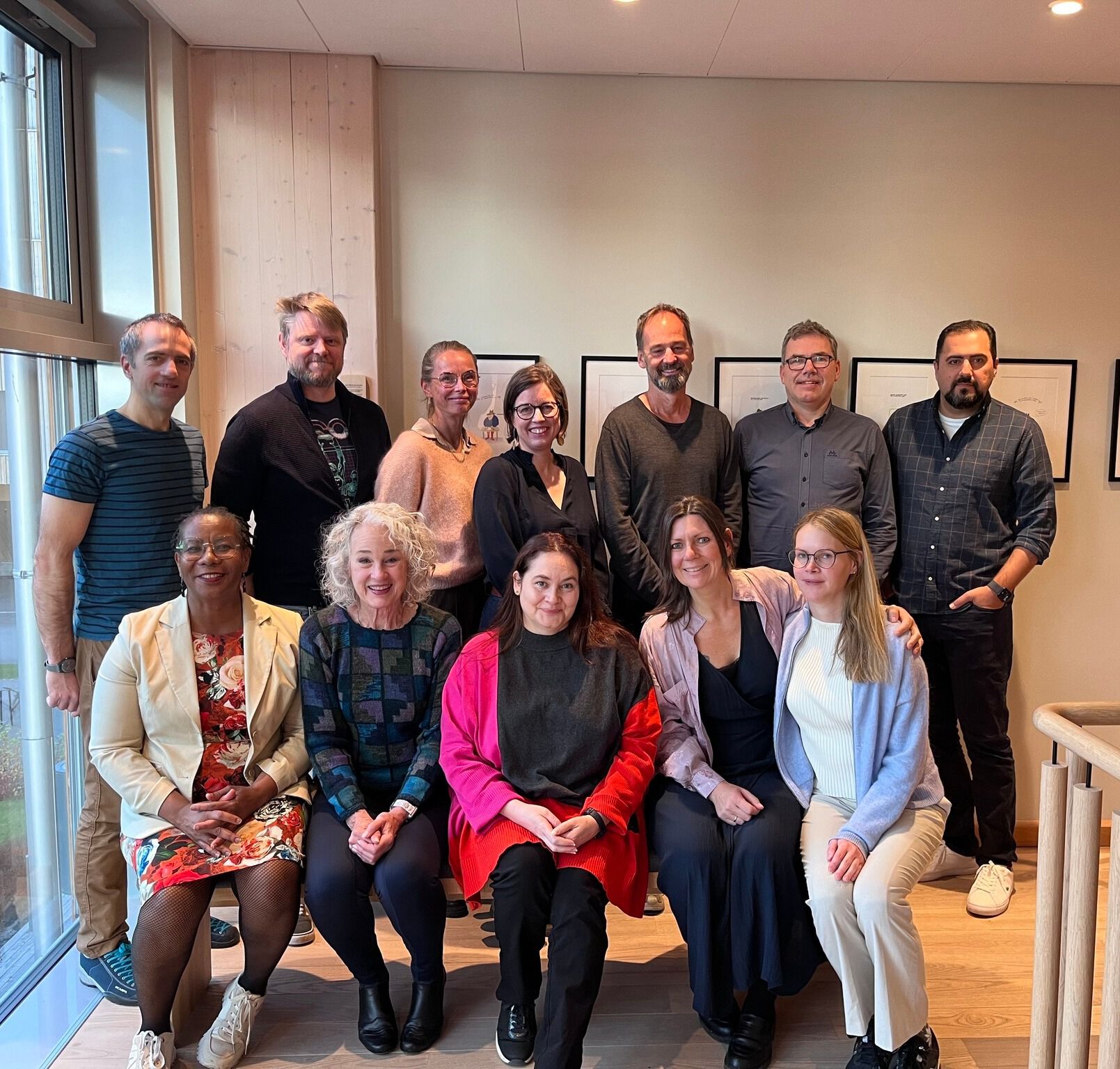
This conference aims to stimulate discussions on how teacher education can enhance student teachers’ and teachers’ professional competence required to identify and counteract racism and racial injustice in Norwegian education and society.
By promoting interdisciplinary and cross sectoral exchanges between researchers and professionals from various educational disciplines, countries, and regions the conference seeks to foster collaborative dialogue, share innovative practices and research, and contribute to shaping equitable educational policies and practices in Norway and the Nordic.
In addition to keynote lectures, paper sessions, and panel discussions, the conference will include VR workshops and museum exhibitions. It will also showcase examples of collaborations between teacher education and other educational institutions, aiming to foster educational collaborations in addressing racism and racial injustice.

About the conference
The conference has no participation fee, and a free lunch will be served both days for all participants. Participants must cover their own travel expenses, accommodation, and dinners.
The conference will be held at Hamar Campus.
Hamar is the largest city in Innlandet County and is home to 30,000 inhabitants. With its stable climate, varied nature and rich cultural heritage, Hamar offers many great experiences year-round.
The city lies on the sunny side of Lake Mjøsa and offers a fantastic selection cultural events, restaurants, cafés and shopping opportunities. Approximately 3000 students also give the city its distinctive character.
Hamar train station is about an hour and 15 minutes from Oslo central station, 50 minutes from Oslo airport, and 45 minutes from Lillehammer station.
There are several hotels and motels in the city:
Topics
Topics to be addressed during the conference include but not limited to:
- Various forms of racism across all levels of education
- Instances of racism and discrimination, based on nationality, ethnicity, culture, or religion in teachereducation and profession
- Researchers and educators’ approach to racial discrimination in educational research and practice
- Encounters with racism and discrimination among teachers and/or educators
- Innovative pedagogical practices for addressing and working against racial injustice in education
- Anti-racist initiatives and pedagogies in preschool, school, and higher education settings
- Enhancing student teachers’ competence on race and racism through collaborations betweenteacher education and other learning arenas, such as museums, non-governmental organisations
- The role of Virtual Reality (VR) and Augmented Reality (AR) in addressing and/or combatting racialinjustice
- Interdisciplinary approaches to enhancing student teachers’ professional competence incountering racism and discrimination
- The impact of cross-sectoral collaborations on addressing racial injustice in education
- Innovative research methodologies for studying racism and discrimination in education
- Educational policy reforms and their relation to structural racism and/or social justice
Keynote Speakers
1. Associate Professor Iram Khawaja, Aarhus University (digital)
Title: Minority stress: On the psychological and social consequences of racism in education.
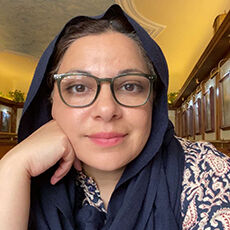
Iram Khawaja is Associate Professor of Educational Psychology at the Danish School of
Education, Aarhus University. She has an MA in Psychology (2004) from Copenhagen University and a PhD in Social Psychol-ogy from Roskilde University, Denmark.
Her research primarily focuses on ethnic and religious minoritized children and youth, exploring processes of othering, racialization, and in-/exclusion within diverse communities and educational settings and drawing on post-/decolonial, feminist and poststructuralist theories. Her main interest has been to explore the discursive and material conditions of becoming and belonging exploring these processes as affective, racialized and spatialized processes. Methodologically, Khawaja is dedicated to developing and employing qualitative methods that emphasize the dynamics of researcher positioning, engaged pedagogical strate-gies, and participatory methods such as auto-ethnographic and visual narrative methods, more specifically memory work and identity mapping.
Khawaja’s research encompasses schools, high schools and higher education with a broad focus on stu-dents, teachers, leaders and policies. Within schools and other educational settings her focus has been to create a professional vocabulary and language to address questions related to diversity and inclusion, based on empirical analysis and theoretical concepts such as othering, whiteness, power, intersectionality and racialization. In this context, she has been interested in addressing the question of how to open spaces of inclusion and the sometimes sensitive and difficult conversations on difference, power and privilege with teachers and other professionals- specifically focusing on pedagogies of discomfort and the im-portance of addressing the affective dimensions of diversity work.
In her recent project on high schools in Denmark this focus is for example expressed in her analysis of white teachers negotiations of privilege, shame and professional integrity (Khawaja forthcoming), and in an analysis of how affects such as fear, danger and powerlessness reciprocally fuels racialized educational practices such as student dispersal (Khawaja & Jaffe-Walter 2025). A main focus in her recent work has been to understand and analyze the psychological and social consequences of othering and discrimination highlighting processes such as internalized racism, hypervisibility- and vigilance and the concept of minor-ity stress (Khawaja 2022).
Her publications spans a wide array of international journals, and her efforts of building a professional vocabulary and an arsenal of possible interventions for educational practitioners has resulted in two books, both co-authored with Laila Lagermann. The book, Gode intentioner er ikke nok (Good intentions are not enough) came out in 2022, and the anthology, (Farve)blinde Vinkler- om racialisering, andethed og ulighed i pædagogisk praksis (Colourblind angles- on racialization, otherness and inequity in educa-tional practice) was published in 2023 and are both widely used in teacher education and other educational institutes.
2. Professor emerita Christine Sleeter, California State University, USA.
Title: Implications of anti-racist pedagogy for teacher education

Christine Sleeter is Professor Emerita in the College of Education at California State University Monterey Bay, where she was a founding faculty member.
Her experiences as a high school teacher in Seattle during desegregation of the 1970s prompted her interest in urban youth and multicultural education, and the beginnings of her awareness of social injustices.
After earning her PhD at the University of Wisconsin (1982), she served as a faculty member at Ripon College in Wisconsin and the University of Wisconsin-Parkside, before moving to California. As a founding faculty member of California State University Monterey Bay, she deepened the artistry of her teaching, which she conceives as a creative orchestration of students, ideas, and support that enables accomplishments beyond what students believed they could do. She has enjoyed serving as a visiting professor at several universities, including University of Maine, University of Colorado Boulder, Victoria University of Wellington and Auckland University in New Zealand, San Francisco State University, University of Washington Seattle, and Universidad Nacional de Education a Distancia in Madrid, Spain.
She is past President of the National Association for Multicultural Education and past Vice President of Division K of the American Educational Research Association. She is also a member of the National Academy of Education, a Fellow of the American Educational Research Association, and a Fellow of the National Education Policy Center. Her research focuses on anti-racist multicultural education, ethnic studies, and teacher education.
3. Professor: Reza Gholami, University of Birmingham
Title: What Next for Diversity? Belongingness and Schooling in Liberal Democracy.

Reza Gholami is Professor of Sociology of Education at the University of Birmingham, where he is also the founding co-director of the Birmingham Research Group on Education Policy (BREP). He earned his PhD in the Department of Anthropology and Sociology at SOAS, University of London, followed by post-doctoral research funded by the AHRC. He has since held a number of academic appointments, including visiting fellowships at the University of Wisconsin, Madison (USA), Monash University (Australia) and University College London (UK). He is a Fellow of the Royal Society of Arts and Senior Editor (Sociology of Education) at the Journal of Cogent Education.
Professor Gholami’s research is internationally recognised and focuses on questions of belongingness, diversity, inter-communal relations and community engagement in education within the context of chronic educational disparities affecting racial, ethnic and religious minorities. He uses qualitative and quantitative methods, while working collaboratively with a range of educational stakeholders around the world to develop innovative educational resources to support local schools and foster inter-communal learning. His current project is funded by the Paul Hamlyn Foundation and explores issues of belonging among primary school children through drama-based pedagogies. He is also working on a mixed-methods Leverhulme Trust funded project that examines how young people in English secondary schools engage with freedom of expression around race and faith.
Professor Gholami is the author of numerous books and articles in his field, including the forthcoming book Knowledges that Destroy (co-authored with Dr Danielle Tran, UCL), the monograph Secularism and Identity, and the co-edited volume Education and Extremisms: Re-Thinking Liberal Pedagogies in the Contemporary World. He also regularly appears in national and international media and advises policymakers.
Call for papers
We invite papers and other forms of presentations from a wide variety of empirical, theoretical, and methodological perspectives.
Abstract submission deadline: 1 August 2025
Notification of acceptance: 20 August 2025
Abstract submission CERiTE 2025
Program
Click here for the full program and overview of all parallel sessions
Registration
Contact

- siri.klausen@inn.no
- Phone
- +47 62 51 72 49

- prisca.massao@inn.no
- Phone
- +47 62 59 79 58
Administrative:

- rita.langree@inn.no
- Phone
- +47 62 51 77 68
Other: