About the project
How do we prepare future teachers for a world shaped by cultural diversity, sustainability challenges, and global interconnectedness?
Supported through the Erasmus+ Programme, the project focuses on teacher education, intercultural competence, sustainability, indigenous perspectives, and educational inclusion. Rather than seeing internationalisation as a one-way exchange, the project is built on reciprocity, mutual learning, and long-term partnership.
Why does this matter?
Future teachers need more than academic knowledge.
They need:
- intercultural understanding,
- the ability to work across differences,
- critical reflection skills,
- and experience navigating complex global challenges.
At the same time, universities around the world are asking:
- How can education become more inclusive?
- How do we decolonise curricula?
- How do we prepare students for sustainable futures?
- How can international collaboration happen more equitably?
This project explores these questions through real encounters between students, educators, schools, and communities in Norway, Namibia, and South Africa.
What do students actually do?
Students participate in:
- international study exchanges,
- collaborative classrooms,
- joint teaching practice in schools,
- intercultural workshops,
- sustainability-focused courses,
- and guided reflection activities.
One of the central activities is the Joint Multicultural Practicum (JMP), where Norwegian, Namibian, and South African student teachers complete teaching practice together in schools.
Students learn not only from lecturers — but also from each other’s experiences, educational systems, cultures, and perspectives.
Learning Through Difference
The project uses diversity itself as a learning resource.
Courses explore themes such as:
- sustainable living,
- indigenous knowledge,
- multilingualism,
- cultural expression,
- global citizenship,
- and education for diversity.
Students engage with literature, film, digital storytelling, discussion-based learning, and collaborative reflection.
The goal is not simply to “study abroad,” but to develop deeper understanding of how culture shapes education, identity, and society.
Indigenous Perspectives and Sustainability
A key part of the project is learning from indigenous perspectives and local knowledge traditions.
Students engage with:
- Sámi perspectives from Norway,
- indigenous and postcolonial perspectives from Southern Africa,
- and discussions about sustainability, identity, language, and belonging.
These conversations help students reflect critically on education systems, power structures, and the role of schools in shaping more sustainable and inclusive societies.
Inclusion and Equal Opportunities
The project places strong emphasis on inclusion and accessibility.
Many participating students come from backgrounds where international mobility is financially or socially difficult. The project therefore prioritises support for students with fewer opportunities and works actively to reduce barriers to participation.
The universities collaborate closely to ensure:
- accessible housing,
- practical support,
- intercultural preparation,
- student mentoring,
- and social inclusion throughout the mobility period.
Shorter mobility opportunities are also offered for students who cannot participate in longer exchanges.
Beyond Student Exchange
This project is also about long-term institutional collaboration.
- Academic and administrative staff work together to:
- improve teaching practices,
- strengthen internationalisation strategies,
- develop future research collaborations,
- create new funding initiatives,
- and explore new approaches to global higher education partnerships.
The collaboration also contributes to wider international networks, including:
- the SANORD network,
- the UNESCO Chair in Education for Sustainable Lifestyles,
- and the EMERGE European University Alliance.
Project Activities at a Glance
Student Mobility
- Semester exchanges
- Joint practicum placements
- Intercultural seminars
- Sustainability-focused courses
Staff Collaboration
- Teaching exchanges
- Research cooperation
- Curriculum development
- Joint supervision and reflection
Dissemination
- Conference presentations
- Workshops
- International partner events
- Research publications
- Student storytelling and reflection
A Partnership Built Over Time
The collaboration between Norway and Namibia began in 1999 through teacher education practicum placements and has grown into a long-standing partnership based on trust, reciprocity, and shared learning.
The project also strengthens collaboration with South Africa through existing research cooperation and international teacher education networks.
Together, the partners aim to create educational collaboration that is:
- equitable,
- reflective,
- globally relevant,
- and locally meaningful.
Project Impact
A Different Approach to Internationalisation
Many international education projects are built around movement from South to North or around unequal access to opportunities.
This project aims to do something different.
The partnership between Norway, Namibia, and South Africa is built on the idea of reciprocity — that all partners contribute knowledge, perspectives, and expertise that are equally valuable.
Students and staff are not only “hosted” by another institution. They actively shape shared learning environments together.
The project also creates space for stronger South–South collaboration between Namibia and South Africa, recognising that some of the most important educational conversations happen within regional and historical contexts that are often overlooked in international higher education.
Reciprocity in Practice
Reciprocity in this project means:
- creating mobility opportunities in both directions,
- recognising different forms of knowledge and experience,
- learning from each other’s educational systems,
- and building partnerships based on long-term trust rather than short-term exchange.
For many years, funding structures made balanced mobility difficult. This project contributes to changing that by enabling students from Southern Africa to participate more fully in academic and social life in Norway.
At the same time, Norwegian students and staff gain perspectives and experiences that challenge assumptions and deepen intercultural understanding.
The goal is not simply mobility — but mutual transformation through collaboration.
Strengthening South–South Collaboration
The project also aims to strengthen collaboration between the University of Namibia and the University of KwaZulu-Natal.
Internationalisation is often imagined as collaboration primarily between Europe and the Global South. This project recognises the importance of creating stronger academic networks within Southern Africa itself.
Through joint activities, mobility, research collaboration, and shared educational development, the project creates opportunities for partners in Namibia and South Africa to:
- exchange experiences,
- develop joint initiatives,
- strengthen regional networks,
- and contribute collectively to future international projects.
This creates a more balanced and sustainable model for international higher education collaboration.
Learning Across Different Contexts
Each partner institution brings unique experiences and perspectives to the collaboration.
The project creates opportunities to discuss:
- education and inequality,
- sustainability,
- language and identity,
- indigenous knowledge,
- decolonisation of curriculum,
- and the role of schools in diverse societies.
Rather than seeking one “correct” model of education, the project encourages critical reflection across different cultural and historical contexts.
Community Support for Reciprocal Collaboration
Creating genuinely reciprocal international collaboration is not only about academic partnerships — it also requires practical support structures that make participation possible.
To help strengthen reciprocal mobility opportunities, the project has also received support from Namibiaforeningen, a Norwegian organisation with long-standing engagement in cooperation with Namibia.
This additional support contributes to reducing financial barriers for students and helps strengthen the project’s commitment to inclusion, reciprocity, and long-term partnership.
News from GLOMIND
-
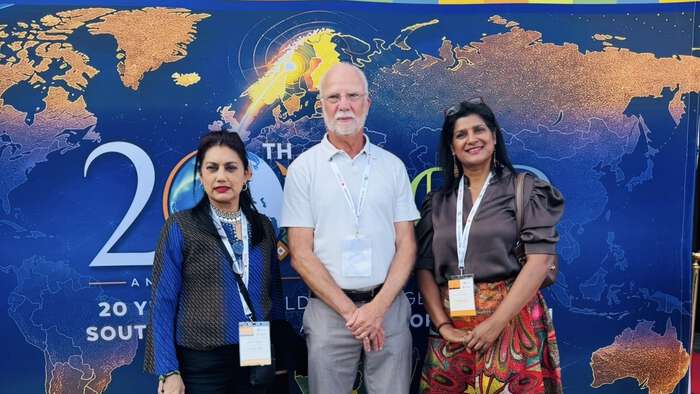
Dissemination of the GLOMIND Project at SANORD 2026 Sep. 30, 2026 7:43 AM
The GLOMIND project was disseminated at the SANORD 2026 Conference in Namibia through two presentations highlighting international student mobility, inter-university collaboration, and the broader educational and professional value of international partnerships.
-
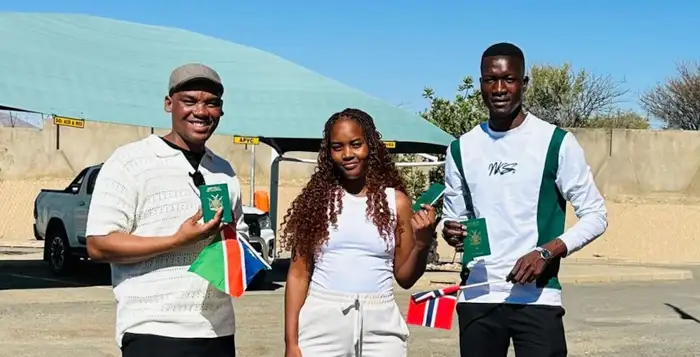
Namibian teacher students to INN Sep. 28, 2026 8:04 AM
Three master's students from the School of Education at the University of Namibia (UNAM) are bound for Norway in the first GLOMIND exchange. They will be spending the coming months in Hamar.
-
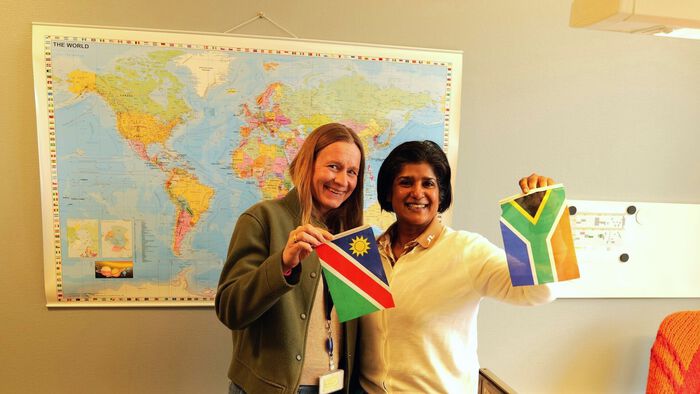
170,000 for internationalisation in teacher education Oct. 10, 2025 10:40 AM
Funding for the GLOMIND project ensures reciprocity in exchange opportunities between the University of Inland Norway and its partners in Namibia and South Africa. The dedicated staff working on internationalisation have every reason to celebrate.