
Urinary tract infections (UTIs) are among the most common bacterial infections in the world.
Currently, standard urine culture is the method used to identify pathogens and determine their antibiotic susceptibility. This method takes about 48-96 hours, thereby contributing to the progression of antimicrobial resistance.
Nanopore-based DNA sequencing methods can enable rapid profiling, but little has been explored to effectively remove host DNA and impurities from complex UTI samples.
"In this study we evaluated several in-house methods to address this challenge, and the 'optimized method' performed best. The robust performance of this method was also verified through testing on a large cohort of cUTI samples from the urology ward," writes Bellankimath to inn.no.
The method's clinical application extends beyond UTI samples, as demonstrated by its use in blood cultures.
"Therefore, the developed method has the potential to transform how rapidly UTIs are diagnosed," says the research fellow.
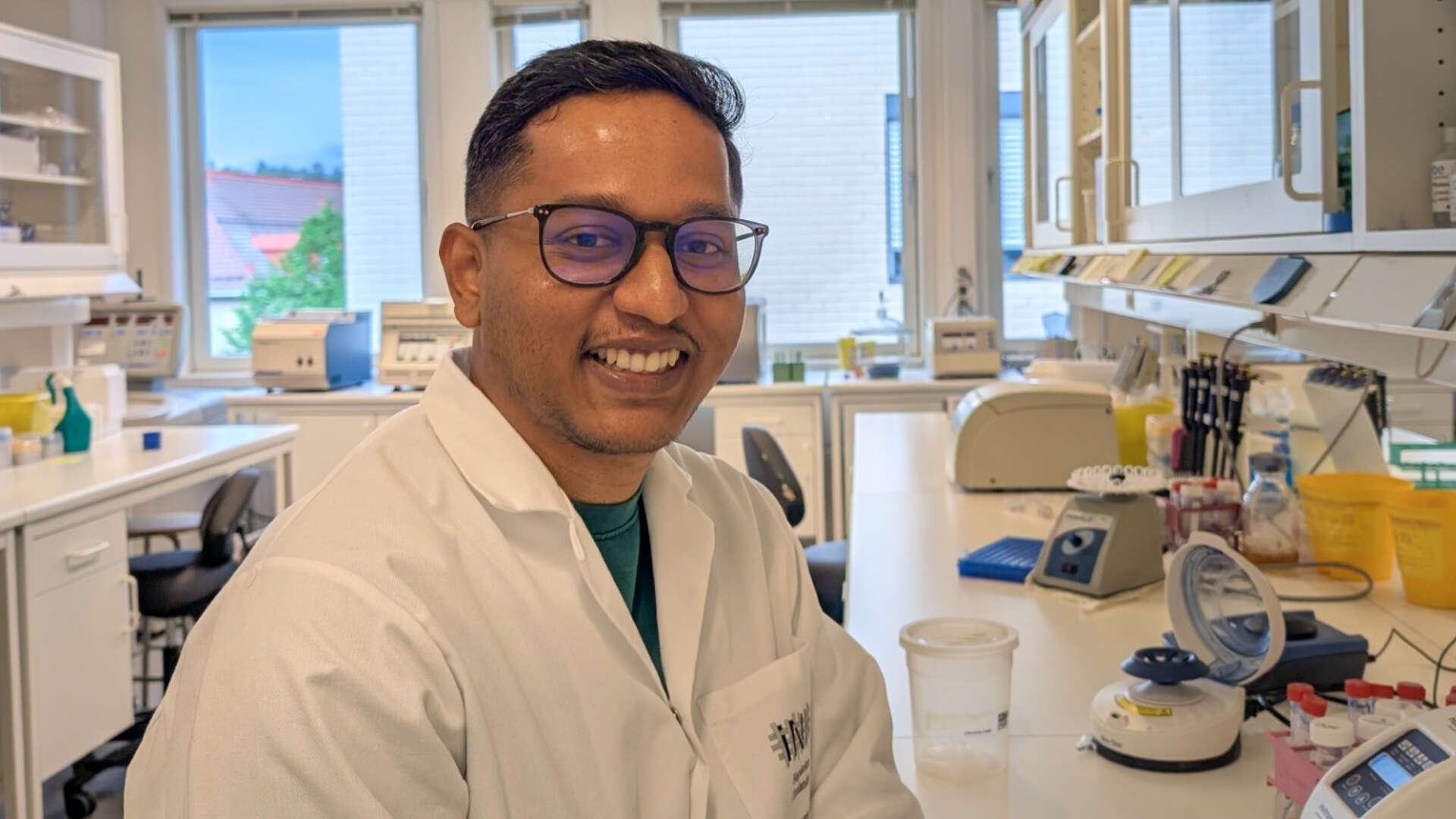
Anurag has completed his doctoral work in the PhD programme in Applied Ecology and Biotechnology at Hamar campus.
His thesis is titled "Transforming urinary tract infection diagnostics: clinical metagenomics for rapid pathogen identification and antimicrobial resistance profiling".
The main findings of the PhD thesis:
- It is possible to directly isolate DNA from the urine samples and perform identification of the pathogens and the corresponding antimicrobial resistance genes (ARGs) through Nanopore sequencing.
- In a proof-of-concept study, an optimized method, along with other in-house developed methods, was tested on a cohort of complicated urinary tract infection patient samples and achieved the best performance metrics for pathogen identification performance (accuracy 99%, sensitivity 99%, specificity 100%) and antibiotic-susceptibility predictions (accuracy 90%, sensitivity 68%, specificity 95%) among all the tested methods. The method is rapid (≈4 hours) and cost-effective (per-sample cost of ~$36).
- Further validation of the optimized method on a larger sample cohort confirmed the consistent performance of the method with slight improvements in the antibiotic susceptibility predictions.
- The method also has greater potential for clinical applications, as demonstrated by its initial application in blood cultures.