
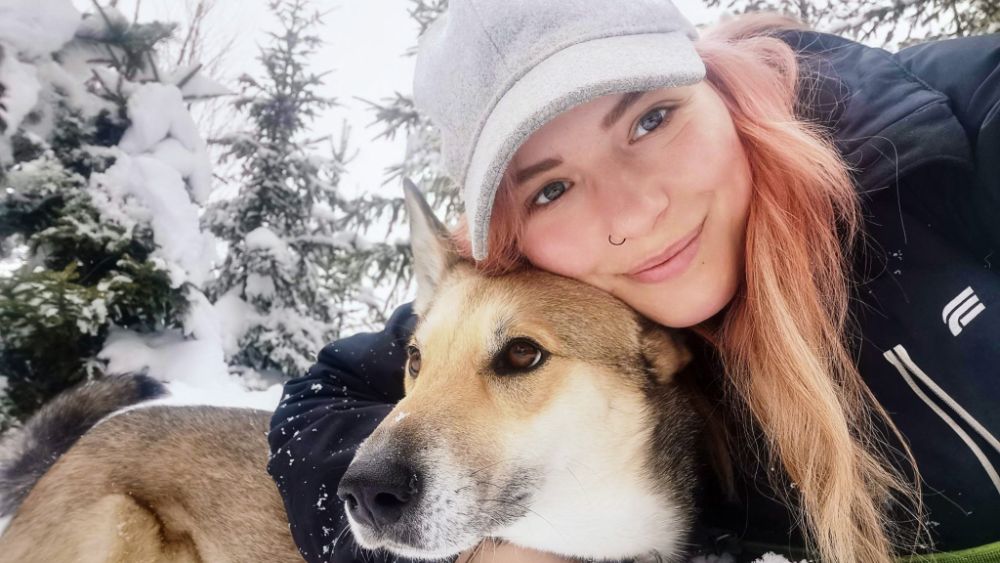
Giorgia Ausilio has been working on her dissertation at Evenstad as part of the PhD programme in Applied Ecology and Biotechnology.
She writes to inn.no that humans influence the interactions between predators and prey in several ways. We alter animal densities, their behaviour, and, most notably, their survival through activities such as hunting, forestry and agriculture.
According to Ausilio, the objectives of her dissertation were fourfold:
- To determine whether hunting and wolves lead to conflicting or overlapping spatial and temporal patterns of mortality risk for moose.
- To investigate moose habitat selection in relation to the spatial and temporal distribution of mortality risks from hunting and wolves.
- To examine the mortality of moose calves during summer and winter in relation to hunting and wolf predation risks.
- To assess whether the return of wolves has led to reduced browsing damage to pine trees by moose.
– My findings show that the risk of moose mortality varies in time and space for both hunting and wolves, but the timing and location of these two risk factors are in contrast with each other, Ausilio writes to inn.no.
She continues:
– The moose adjusted their habitat selection in response to the stronger and more predictable threat of mortality – hunting. However, wolves did not seem to alter moose behaviour, as moose neither avoided areas or times of high wolf predation risk nor reduced browsing damage to pine trees.
Large predators are returning to parts of their original habitats. Areas now shaped by human presence and activities.
Understanding the scale and role of predator-prey interactions in human-modified landscapes can have significant implications for wildlife management and conservation, Giorgia explains.
– Since predator-prey relationships play an important role in structuring ecological communities, there is an urgent need to evaluate how humans influence and reshape this relationship, and whether prey species can respond to multiple sources of mortality risk.
For example, it is crucial for population management to examine how survival rates of young ungulates are affected by both large predators and human activities when developing population management plans.
Main findings in the doctoral work:
- Environmental and human-altered landscape features influenced the risk of moose being preyed upon by wolves or harvested by hunters, likely reflecting differences in wolf and hunter predation strategies.
- Hunting and wolves produced contrasting patterns of mortality risk for moose that varied in space and time.
- Moose adapted their habitat selection to avoid high-risk areas during high-risk times, but this only applied to hunting-related risk, not wolf-related risk.
- Both wolf and hunting risks were associated with higher probabilities of calf mortality, while bear density was unrelated to summer calf mortality.
- The return of wolves to Scandinavia has not resulted in reduced browsing damage to pine trees within wolf territories compared to areas outside wolf territories.
Contact information:

- giorgia.ausilio@inn.no
- Phone
- +47 62 43 07 61