
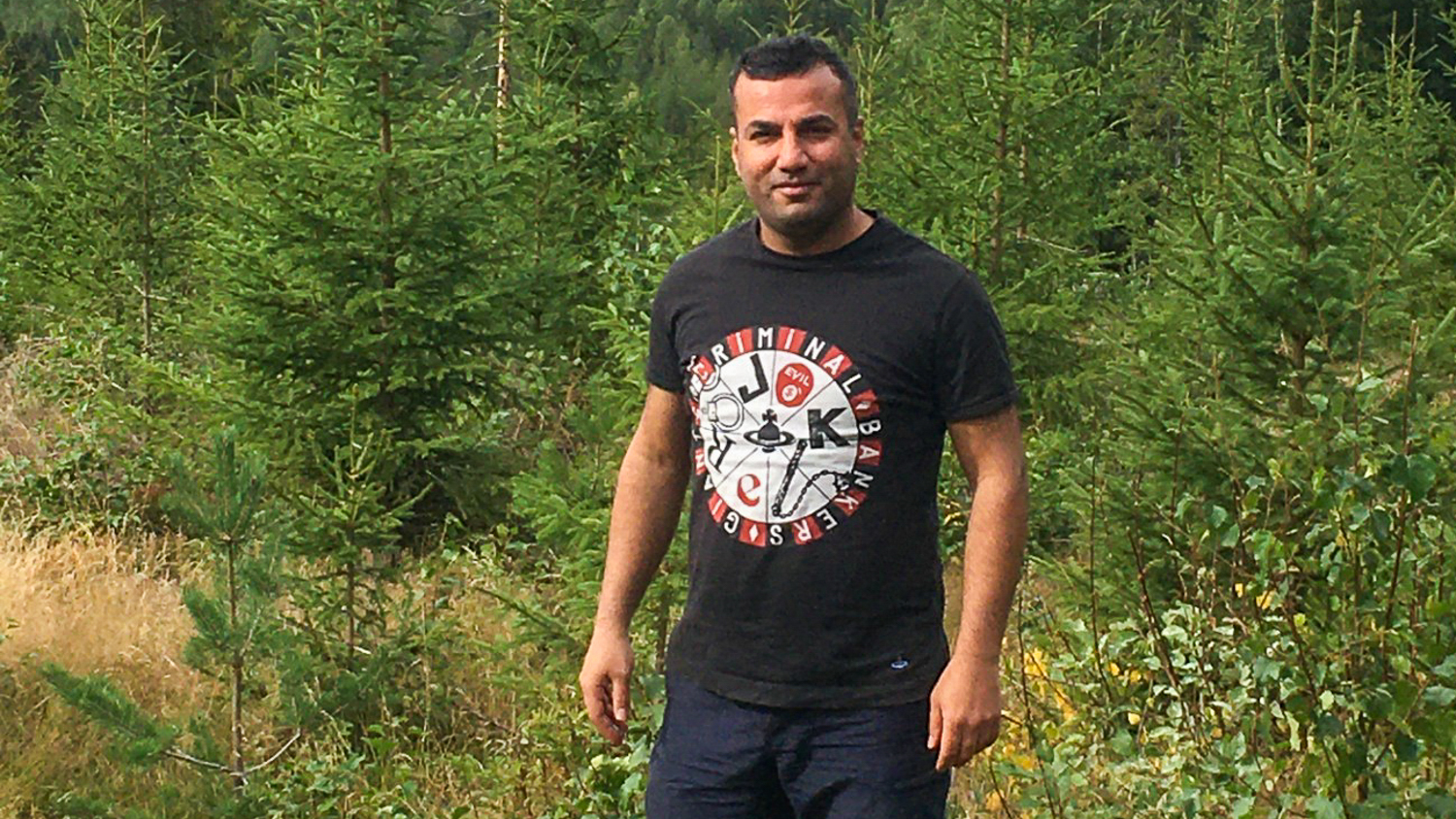
– The reason we need advanced decision support systems in this context is that we must balance multiple ecosystem services and analyse the trade-offs and synergies between them. The current tools are limited, the PhD candidate writes to inn.no.
Abbas Nabhani completed his PhD within the doctoral programme Applied Ecology and Biotechnology. His thesis is titled 'Decision support tools for satisfying multiple forest ecosystem services'.
His analysis reveals several important findings.
– This thesis develops an individual tree simulator and a comprehensive simulation and optimisation framework to enhance SFM, using Norwegian forestry as a case study, he explains.
The thesis also emphasises the importance of understanding the trade-offs and synergies between timber production, carbon sequestration and biodiversity conservation, and offers various modelling frameworks for SFM.
- Her finner du mer informasjon om disputasen til Abbas Nabhani 20. august 2024.
- Here you can find more information about Abbas Nabhani's defence on 20 August, 2024.
Main findings in the doctoral work:
- The developed simulator effectively uses Norwegian NFI data for long-term simulations. It supports forest management, decision-making, reporting and research.
- The effects of different carbon prices on timber harvest, carbon sequestration, biodiversity and forest industry production are analysed.
- There are complex synergies and conflicts between carbon sequestration and biodiversity.
- Biodiversity constraints have minimal impact on timber harvest and carbon sequestration.
- A two-level decision-support framework improves decision-making under timber price uncertainty.
- Trade-offs are identified among economic profit, carbon sequestration and biodiversity conservation. A compromise solution robust to timber price uncertainty is found.
- Optimal forest management varies with spatial and harvest size constraints, affecting timber yield, biodiversity and carbon sequestration.
Contact information:
/english/research/doctoral-degree/public-defences/forest-management/index.html, 141:3: ${include:contact}: https://www.inn.no/english/find-an-employee/abbas-nabhani.html?vrtx=vcf does not exist