
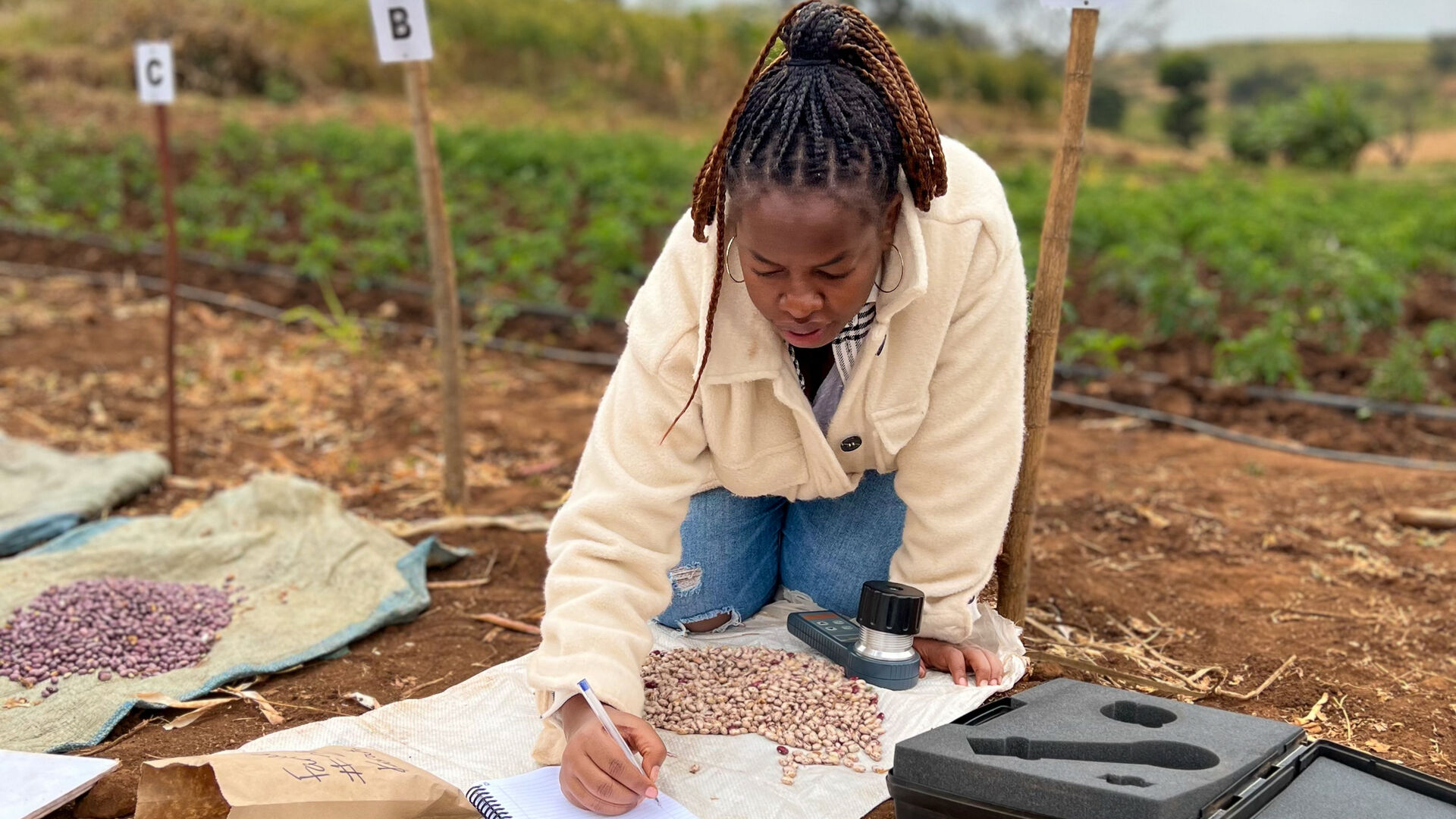
Climate change is making farming more difficult, particularly for smallholder farmers who depend on rainfall and have limited access to modern technologies.
Although many improved crop varieties have been developed over recent decades, adoption remains low because these varieties often do not align with farmers’ on-farm conditions and needs.
"In my doctoral thesis, I have investigated how farmers can play a more active and effective role in developing targeted varieties in this regard", says Mabel Nabateregga.
Her research focused on a participatory citizen science approach called tricot, in which farmers test and compare crop varieties directly on their own farms. The research covered several important crops, including beans, cassava, maize, sorghum, and groundnut, and was conducted across multiple locations in East and West Africa.
"The findings show that farmers can generate accurate data comparable to that collected by trained technicians. Farmers were also able to capture differences in crop performance across environments, which is critical for climate adaptation", says Nabateregga.
In addition, the research identified key traits most valued by farmers and grouped farmers into socioeconomic categories to better guide breeding goals.
"Overall, this work demonstrates that farmer-led approaches can improve breeding decisions, increase farmer uptake of new varieties, and strengthen food security under changing climatic conditions", according to the PhD candidate.
Nabataregga's thesis is titled "Crop breeding for climate adaptation supported by crowd-sourced citizen science in sub-Saharan Africa".
The main findings of the PhD thesis:
- Farmers can be trusted to measure crop performance, but methods need to fit their local farming conditions.
- Farmers’ data on crop yields in grain crops like common bean is accurate and matches what trained experts find.
- Both experienced and regular farmers give reliable results even with a vegetative crop like cassava, and they can show how crops perform in different environments.
- Farmers mostly value traits like drought resistance, high yields, resilience, and intercropping, but differences may occur due to gender and socioeconomic characteristics. This is crucial for demand-led breeding