
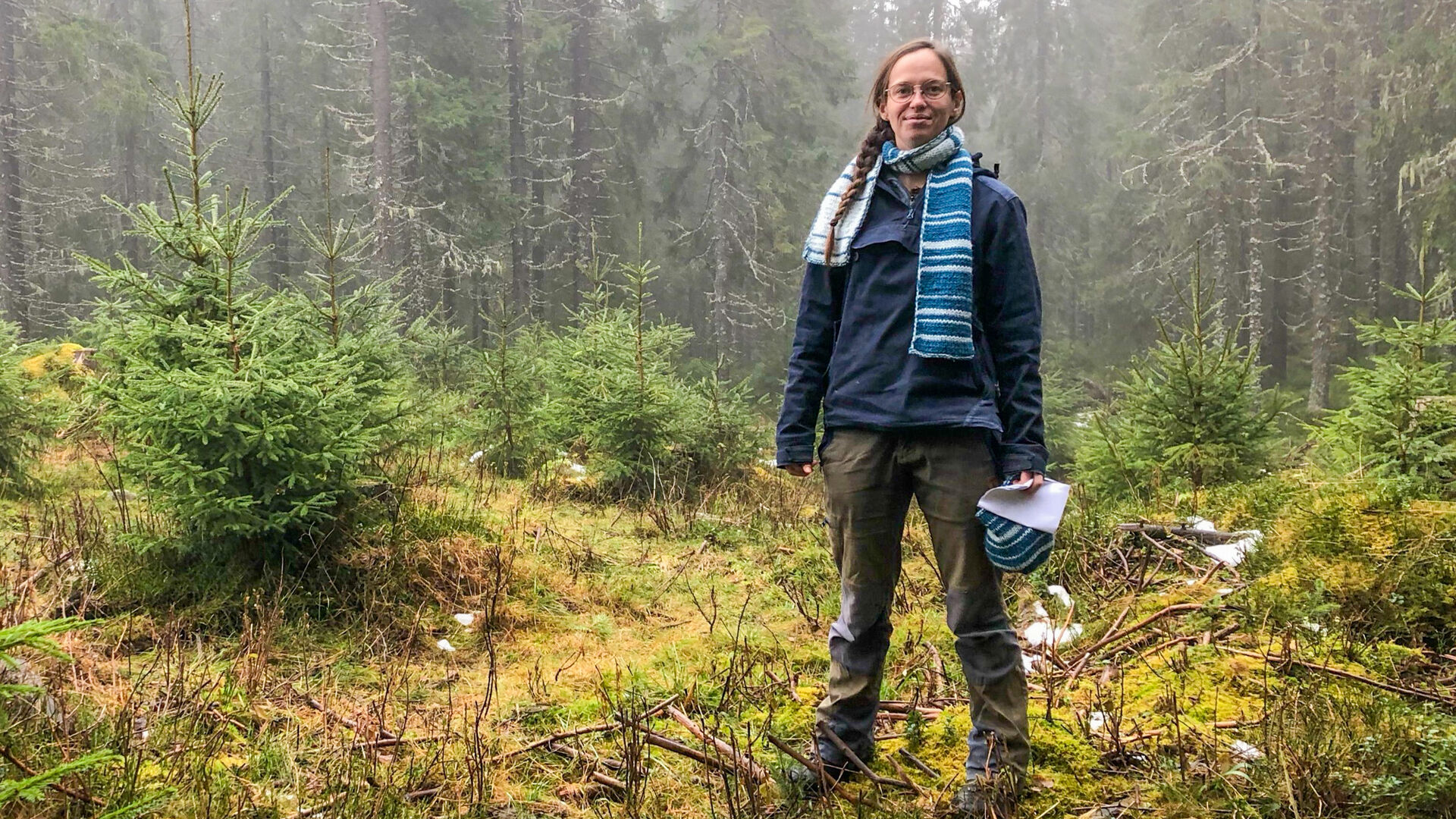
Livestock has been grazing in Norwegian forests for thousands of years, and each year cattle are released for summer grazing in large areas of forest. These forests are shaped by clear-cutting practices, resulting in a mosaic of even-aged forest stands.
"I wanted to know where in this forest landscape cattle spend their time, and what they forage on", writes Mélanie Spedener til inn.no.
As the main goal in these forests is timber production, Spedener studied the effects of cattle on young spruce trees.
"As the current forest practices lead to decreased biodiversity and cattle grazing is known to increase biodiversity in grasslands, I studied the effects of cattle on biodiversity, more precisely on plant-pollinator communities", says Spedener.
In addition to this, she studied the interactions between cattle and moose, which is the main wild ungulate in these forests.
"My work provides understanding of this traditional practice allowing animals to graze in our forests in modern circumstances such as highly mechanized forestry. My findings can be used to disentangle and mitigate interest conflicts between cattle husbandry, forestry, nature conservation and wildlife management", says Mélanie Spedener.
Her thesis is titled "The role of summer grazing beef cattle in boreal production forest".
The main findings of the PhD:
- Cattle kept a grass-rich diet, even in this forest landscape where grass is scattered and scarce.
- Cattle preferred grass-rich habitats when foraging, and flat, grass-rich habitats with closed canopy when resting.
- At the observed low stocking rates, cattle caused little damage to young spruce trees and even had a beneficial weeding effect by removing vegetation which was competing with young spruce trees.
- Cattle did not have the expected positive effect on plant-pollinator communities. On the contrary, they reduced the number of flowers and the number of pollinators.
- Moose avoided summer grazing cattle in space and time.