
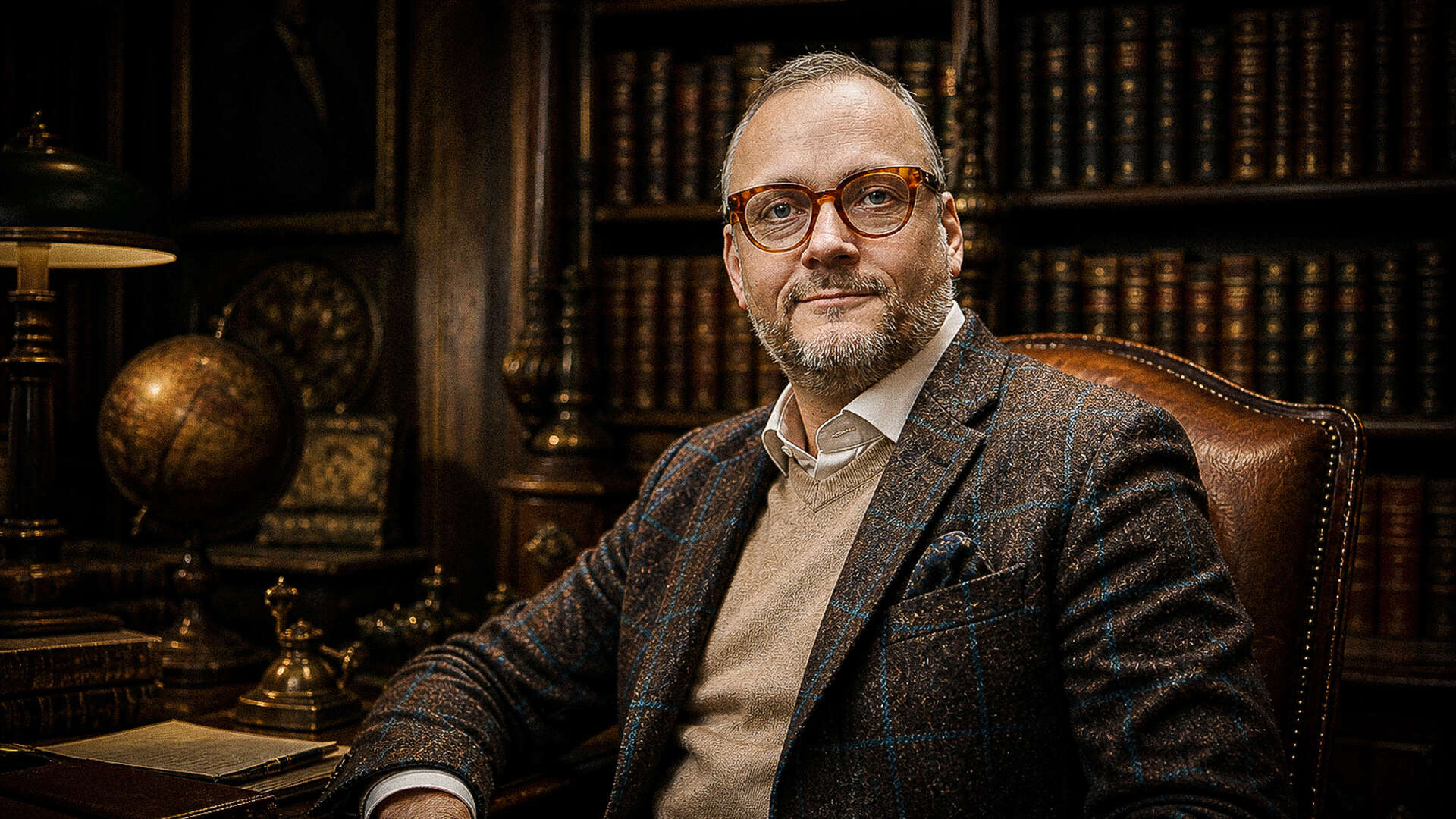
"This dissertation develops Trust Design — an operative model for leadership in complex, multidisciplinary creative productions", writes Howard to inn.no.
Instead of seeing management as "managing and controlling", management is described as an artistic practice.
"The producer or manager is understood as a co-author: someone who helps create the framework and conditions that allow the expertise of others to meet and work well together", says Frederick Howard.
Howard's Trust Circle model rests on four values — Clarity, Competence, Authenticity and Benevolence.
These values are operationalised through four practices: Relational Design, Structural Dramaturgy, Ethical Modulation and Embedded Reflexivity.
"When this works, four outcomes are generated: coherence, quality, safety and reciprocity. The model understands trust not as a private feeling, but as an architecture the team inhabits", according to Frederick Howard.
The feature film "Three Wishes for Cinderella" (2021) serves as the primary case study, testing the model in an international co-production under real pressure: artistic ambition, financial risk, public funding and human exhaustion.
"The case demonstrates that producing is a form of artistic co-authorship – a leadership that brings the work into being, not merely manages it", says Howard.
Frederick Howard, who has completed his research as part of the PhD programme FILMART at the Norwegian Film School, argues that his thesis contributes a new operative language to creative leadership.
"The model is developed within film but is transferable to research environments, healthcare institutions, education and other knowledge organisations where expert work depends on coordinated judgement under pressure".
Howard's thesis is titled: "DESIGNING TRUST – Values, Structures and Leadership in Collaborative Practice".
The main findings of the PhD thesis:
- Trust is architecture, not feeling. Trust can be designed, stressed, degraded, and repaired. This reframes leadership from a personality trait to a systemic practice: from who the leader is to what the leader builds around the team.
- The Trust Circle. Four interdependent values — Clarity, Competence, Authenticity, and Benevolence — produce four observable outcomes: Coherence, Quality, Safety, and Reciprocity. The model gives leaders a way to read where trust is holding, slipping, or failing in real working conditions.
- Producing as artistic co-authorship. The film producer exercises leadership as an artistic practice — the authorship of the conditions under which other people's expertise can meet, be tested, and become more than the sum of its parts. This widens what counts as creative work, and what counts as an artist.
- Trust Debt. When the four trusts are strained beyond what a team can carry, the system meets present demands by borrowing from its future — accumulating invisible debt in clarity, competence, authenticity, or benevolence. Naming this dynamic gives leaders a diagnostic for intervening before collapse.
- Post-heroic architecture. Decentralised decision-making works best when boundaries, practices, and rituals are built into the system itself, not held in the leader's personal charisma. Leadership becomes structural rather than individual.
- Transferability beyond film. Trust Design is thought as transferable to research environments, higher education, healthcare, and cultural administration — anywhere expert work depends on coordinated judgement under pressure.