
CESCOP aims to connect researchers, students, and practitioners to foster interdisciplinary high quality research and evidence-based practise.
The CEP and NSPCP conference are both annual student-organized, international scientific conference. This year, the 8th CEP have merged with the 24th NSPCP conference to make a three days conference on 13th - 15th November 2024 at Inland Norway University of Applied Sciences in Lillehammer, Norway.
Please note that it will be possible for all to attend the conference either physically or digitally on all 3 days, but Presenters are asked to attend physically.
The conference is divided into the following themes:
- Wednesday: Social, Community, and Organizational Psychology
- Thursday: Environmental, Social, Community, and Organizational Psychology
- Friday: Environmental Psychology
The deadline for registering to attend the conference physically has passed. Please note that it is still possible to register to attend the conference digitally. Registration to attend the conference digitally will be open until November 8.
Registration and abstract submission
The deadline for submitting an abstract and registering to attend the conference physically has passed. However, you can still register to attend the conference digitally.
- Registration to attend the CESCOP 2024 digitally.
Note. Verbal presentations will be 15 minutes followed by 5 minutes for questions. Posters will be presented at the poster session on Thursday (poster size should be 70x90 cm).
Keynotes
Wednesday's Keynote
Professor Marit Christensen

Marit Christensen is Professor of Work and Organizational Psychology at the Department of Psychology at NTNU. Her research interests span occupational health, work engagement, health promotion, organizational interventions, and the development of measuring tools for the psychosocial working environment. With extensive experience in the field, Marit has led notable projects, among others being project manager for two Nordic projects dealing with the positive factors in the working life and healthy engaged workers in healthy organisations. She is a part of ARK, a comprehensive mapping and implementation programme to promote psychosocial working environment and climate in the university and university college sector in Norway. Furthermore, she also leads a work package in the H2020 project “H-work – Multilevel Interventions to Promote Mental Health in SME’s and Public Workplaces”. In this role, she collaborates with an international team of researchers to develop and test multi-level tools and measures to promote mental health in Europe.
The title of her keynote is:
Participatory Organizational Interventions: A Multilevel Approach for Creating Healthy Workplaces
Abstract
Mental health issues in Europe have increased over the past decade, leading to more sickness absence, presenteeism, and decreased productivity (WHO, 2020). This creates a substantial burden on individuals, society, and the economy. While 79% of European managers are concerned about employee mental health, fewer than 30% feel equipped to address it (EU-OSHA, 2019). Many employers lack the tools and guidance to implement effective workplace interventions.
This presentation will highlight how participatory organizational interventions, using a multilevel approach, can foster healthier and more productive workplaces, drawing on insights from the EU H2020 H-WORK project. The project was designed to create, implement, and validate toolkits that promote mental health in SMEs and public workplaces (De Angelis et al., 2020). Three specific toolkits were developed and tested: the H-WORK Assessment Toolkit (HAT) for needs assessment and intervention evaluation, the H-WORK Interventions Toolkit (HIT) for testing interventions, and the H-WORK Evaluation Toolkit (HET) for monitoring procedural and economic impacts.
The presentation will explore the theoretical foundations, conceptual model, study design, and key findings of the H-WORK project. It will provide a clear understanding of its evidence-based framework for improving mental health in the workplace, culminating in practical recommendations for organizations to implement effective interventions and create more resilient work environments for mental health.
Thursday's Keynote
Professor Martijn van Zomeren
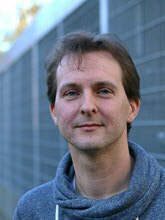
Martijn van Zomeren is Professor of Social Psychology at The University of Groningen. His theorizing and research has focused mainly on the psychology of collective action against collective disadvantage, exemplified by peaceful demonstations and petitions (e.g., against cuts on higher education), but also violent uprisings and revolts (e.g., Egypt, Tunesia, Libya). Martijn and his collaborators seeks to model the relationships between four core motivations for engagement in collective action: group identity, emotion, efficacy, and morality. The core theme in his line of theorizing and research revolves around the question of how individuals can become more active and involved in groups, and in society at large.
Martijn's current theorizing and research moves beyond the realm of collective action by focusing on the psychology of human motivation in general, connecting aspects of his earlier thinking with the accumulating insight that humans are fundamentally relational beings. Martijn has written a monograph that reconsiders and replaces the implicit axiom of individuality in theories and research on motivation with one that is grounded in social relationships. In this monograph he shows that it becomes possible to reinterpret the psychology of motivation in an integrative and even consilient way, which emphasizes the relational essence of motivational processes.
The title of his keynote is:
Motivations for and Effectiveness of Social Protest: What we know and don't know yet
Abstract
In this talk, I will outline a new psychological theory of social protest that is based on a motivational and a strategic pillar. The motivational pillar offers an integrated portrait of the protester on the basis of empirically supported core motivations for social protest (i.e, social embeddedness, identity, morality, anger and efficacy). The strategic pillar is based on emerging insights from recent research on effectiveness of social protest and on the theory's assumptions about the protester as a socially embedded actor. I will first outline what I think we know and don't know about motivations for (e.g., Agostini & Van Zomeren, 2021) and effectiveness of social protest (e.g., Shuman et al., 2023), and then apply this perspective to the case of climate protests, raising and also partially answering questions about how to motivate people to mobilize for this cause, and what kind of protests may be most effective in this case. I close with outlining directions for future research on social protest relevant to social, community and environmental psychology.
Friday's Keynote
Associate Professor Erik Løhre

Erik Løhre is Associate Professor in the Department of Leadership and Organizational Behaviour at BI Norwegian Business School. He has broad interests within judgment and decision making, with uncertainty and uncertainty communication as a core topic. His research has addressed questions about how people think and talk about uncertainty, and how they understand and react to what others say about uncertainty. Erik is a believer in the value of using an experimental approach to answer questions that have important “real-life” implications, such as communication of uncertainty connected to climate change, the reactions to uncertainty from experts and non-experts, as well as advice taking and effort estimation of different kind of work tasks.
The title of his talk is:
Uncertain words in an uncertain world
Abstract
Uncertainty is an undeniable fact that creates challenges for decision makers in various domains. This talk explores the dilemma of revealing uncertainty to others: ideally, politicians, business leaders, and other decision makers should be able to be completely open and honest about uncertainty, but they may reasonably fear being seen as incompetent or ignorant if they admit the full extent of uncertainty. I review recent research on uncertainty communication in judgment and decision making, focusing on social and reputational factors in expressing (un)certainty. Understanding how lay people comprehend and respond to uncertainty can allow us to better communicate and manage uncertainty in an uncertain world.
Program
Day 1 - Social, Community and Organizational Psychology
Date: 13. November
|
10:00-11:00 |
Registration and coffee (around the corner from Aud. G) |
|
11:00-11:15 |
Opening of the conference by Dr. Maria Olsson and Professor Svein Åge Kjøs Johnsen |
|
11:15-12:15 |
Keynote 1 Chaired by Professor Jonas Rennemo Vaag Professor Marit Christensen: Participatory organizational interventions: A multilevel approach for creating healthy workplaces. |
|
12:15-12:30 |
Leg stretcher |
|
12:30-13:30 |
Session 1: Groups and Cooperation Chaired by Dr. Maria Olsson
|
|
13:30-14:30 |
Lunch in Sans (Kantina) |
|
14:30-15:30 |
Session 2: Health and Well-Being Chaired by Professor Marit Christensen
|
|
15:30-15:45 |
Leg stretcher |
|
15:45-16:45 |
Session 3: Attitudes & Behavior Chaired by Dr. Oyeniyi Samuel Olaniyan
|
|
19:00 |
Dinner at Scandic Victoria Lillehammer Nymosvingen 3, 2609 Lillehammer |
Day 2 - Social, Community and Organizational Psychology
Date: 14. November
|
9:00-10:00 |
Registration and coffee (around the corner from Aud. F) |
|
10:00-11:20 |
Session 4: Gender Chaired by Professor Jonas Rennemo Vaag
|
|
11:20-12:00 |
Lunch in Sans (Kantina) |
|
12:00-12:45 |
Poster session (around the corner from Aud. G and Aud. F) |
|
12:45-13:45 |
Keynote 2 Chaired by Dr. Maria Olsson Professor Martijn van Zomeren: Motivations for and effectiveness of social protest: what we know and don't know yet. |
|
13:45-14:00 |
Leg stretcher |
|
14:00-15:00 |
Session 5: Collective Action and Resistance Chaired by Dr. Afra Koulaei-Van Oest
|
|
15:00-15:15 |
Leg stretcher |
|
15:15-16:15 |
Session 6: Environment and Community Chaired by M.Sc. Julie Reppen Brattsti 1. Professor Luca Tateo: The eco-centric self. 2. M.Sc. Valentina Ferrari: Outdoor sport in natural spaces as a tool for promoting connection with community and nature among vocational training school students. 3. Dr. Stefano Grismondi: Sport and community capacity building in a neighborhood of the city of Bergamo: a preliminary analysis. |
|
16:15-18:00 |
Drinks in Studenten, HINN |
|
18:00-20:00 |
Dinner in Sans (Kantina) |
|
21:00 - |
Drinks at Toppen Skybar Elvegata 12, 2609 Lillehammer |
Day 2 - Environmental Psychology
Date: 14 November
|
9:00-10:00 |
Registration and coffee (around the corner from Aud. F) |
|
10:00-11:20 |
Session 1: Nature’s Role in Health and Well-Being Chaired by B.Sc. Marie Carlsen
|
|
11:20-12:00 |
Lunch in Sans (Kantina) |
|
12:00-12:45 |
Poster session (around the corner from Aud. G and Aud. F) |
|
12:45-13:45 |
Keynote 2 Chaired by Dr. Maria Olsson Professor Martijn van Zomeren: Motivations for and effectiveness of social protest: what we know and don't know yet. |
|
13:45-14:00 |
Leg stretcher |
|
14:00-15:00
|
Session 2: Environmental Emotions and Nature Conservation Chaired by B.Sc. Fabian Venjar Raae
|
|
15:00-15:15 |
Leg stretcher |
|
15:15-16:15
|
Session 3: Public Health and Sustainable Behavior Chaired by B.Sc. Tobias Knapp Eliassen
|
|
16:15-18:00 |
Drinks in Studenten, HINN |
|
18:00-20:00 |
Dinner in Sans (Kantina) |
|
21:00 - |
Drinks at Toppen Skybar Elvegata 12, 2609 Lillehammer |
Day 3 - Environmental Psychology
Date: Friday 15 November
|
09:15-09:30 |
Registration and coffee |
|
09:30-10:50
|
Session 4A: Behavioral Change and Environmental Adaptation (Double session) Chaired by B.Sc. Tobias Knapp Eliassen
Session 4A: Energy, Sustainability, and Consumer Behavior
|
|
09:30-10:50 |
Session 4B: Climate Emotions and Psychological Responses to Environmental Challenges (Double session) Chaired by B.Sc. Fabian Venjar Raae
|
|
10:50-11:05 |
Leg stretcher |
|
11:05-12:05
|
Keynote 3 Chaired by PhD Candidate Kelsey Kristine Tisthammer Associate Prof. Erik Løhre: Uncertain words in an uncertain world
|
|
12:05-12:45 |
Lunch in Sans (Kantina) |
|
12:45-14:05
|
Session 5: Nature’s Role in Health and Well-Being Chaired by B.Sc. Marie Carlsen
|
|
14:05-14:15 |
Leg stretcher |
|
14:15-14:30 |
Closing of the conference by Dr. Ingeborg Olsdatter Busterud Flagstad |
Conference language
The conference language is English. All abstracts will be included in the book of abstracts and should be written in English.
Contact person
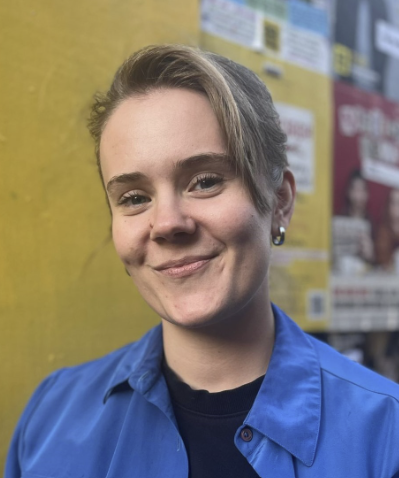
Julie Reppen Brattsti, Coordinator