
Using sensors can provide valuable insights into how effectively we are utilising the capacity of the teaching spaces we rent, says Trond Are Bakaas, project manager and head of the project. Trond is the head of the AV Infrastructure Section in the IT department. This is an exciting project that has also garnered interest from Statsbygg, one of our landlords.

How are the spaces being used, how much space does the university need, and what type of spaces are required? These are questions sensors can help answer by mapping how rooms are utilised.
Data from the sensor can be transferred to a sensor platform, where it can be combined with data from systems such as FS, Time Edit, and so on. Below, you can see an image of information from a sensor.
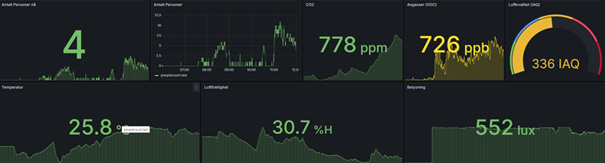
In addition to counting the number of people in a room, the sensor provides information on CO2 levels, volatile organic compounds (VOCs), temperature, humidity, and lighting. A sensor can also be directly connected to systems that control ventilation, heating, and lighting, enabling more efficient energy management.
The use of sensors can also simplify the planning of cleaning schedules. Cleaning staff need not visit teaching rooms that haven’t been used, saving time and effort. This is particularly significant on our campuses, where there are often many buildings spread across large distances.
The IT Department is currently working on building a sensor platform and testing different types of sensors. The first sensors are scheduled to be installed in the teaching rooms in Lillehammer by the end of the year.
If you have questions about sensors and their use, please contact Trond.

- trond.bakaas@inn.no
- Phone
- +47 62 43 01 33