
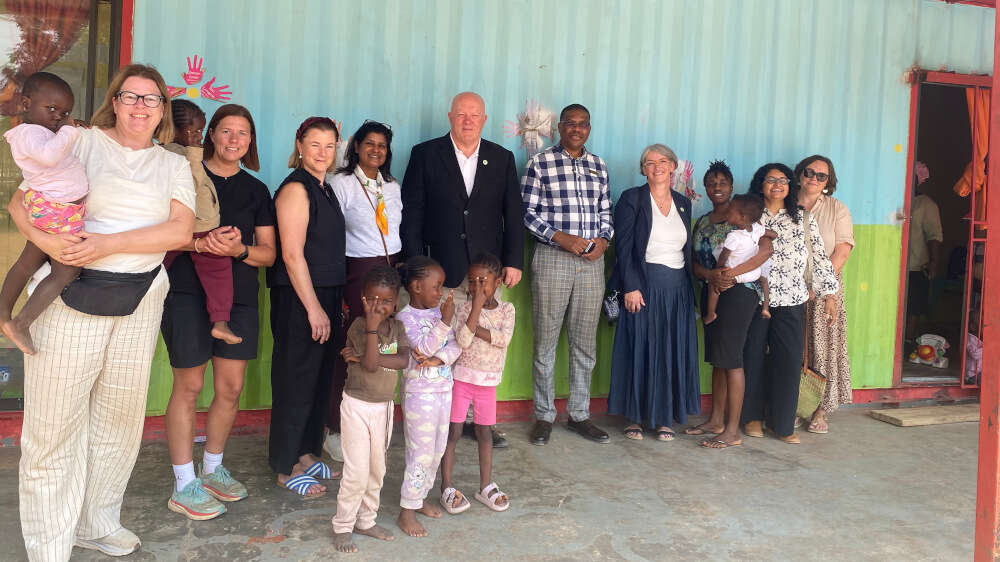
“Our cooperation with Namibia is deeply rooted in our organisation. It began as part of a solidarity initiative to support the Namibian people in the early 1980s, when the teacher training college in Elverum became involved,” says Jill Tove Buseth, Head of the Department of Social Sciences, Religion and Ethics at INN.
The first six students travelled to Namibia for teaching practice placements in 1999: four teacher education students and two early childhood education students. Since then, INN students have been undertaking placements in the Oshikoto Region almost every semester.
New cooperation agreement signed
In 2001, the partnership was formalised through an agreement with the University of Namibia (UNAM).
The parties agreed to develop a strong academic collaboration between their teacher education programmes. This has led to a joint master's degree programme, exchange opportunities at all levels, extensive collaborative research projects, and externally funded mobility and research initiatives.
For several years, efforts have been made to strengthen the institutional partnership and enhance its academic and scientific quality. Among other outcomes, this has resulted in numerous international co-authored publications.
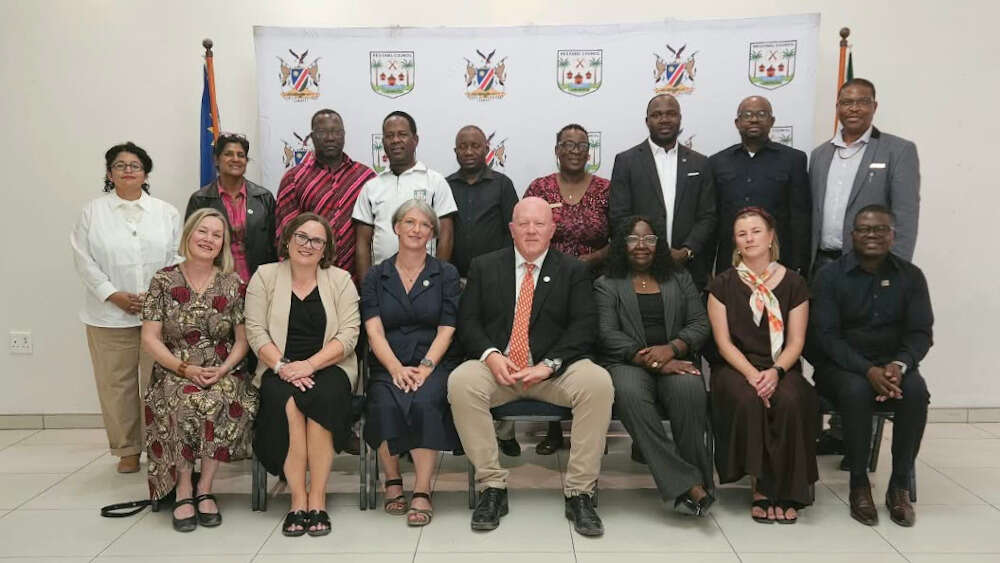
Last week, leaders from the two universities signed a new cooperation agreement. The renewed and strengthened agreement is intended to promote mobility, international understanding, and reciprocity between INN and the Oshikoto Region. The agreement has been concluded between INN and the regional education authorities.
Eight students on placement
This autumn, eight early childhood education students from INN are undertaking three-month placements in kindergartens in the town of Tsumeb. Before departure, they completed preparatory courses and receive supervision and assessment throughout their stay. Upon returning to Norway, they participate in structured follow-up activities.
“Teaching is one of the most international professions in the world. I see that students gain tremendous benefits from international placements like these,” says Gunhild Tomter Alstad, Dean of the Faculty of Teacher Education and Pedagogy.
Namibia is located in the south-western part of the African continent.
“These experiences contribute to global citizenship and are an important part of the educational journey our students are on. The insights they gain foster openness, reflection, and critical thinking. This is highly valuable in their future work in schools, for example in multicultural and multilingual classrooms,” she says.
There are many new and unfamiliar aspects to teaching and learning environments in Namibia. Jill Tove Buseth believes that such experiences help develop more open-minded and tolerant individuals.
“Most students regard this as an incredibly valuable experience. They encounter different systems, use alternative educational approaches, and are challenged to realise that the values they bring from Norway are not necessarily universal,” she says.
Cultural differences
The eight third-year students currently in Tsumeb have already gained important insights after only two weeks. Two of them describe significant cultural differences, particularly in how care and nurturing are practised in early childhood education settings.
“I have become very aware of how privileged I am to have been born and raised in Norway, and I often think about the future opportunities available to the children I meet in the kindergarten. I worry that poverty can perpetuate poverty,” says Silje Skogheim Lillestuen.
“I am overwhelmed by how warmly we have been welcomed, but being in a kindergarten here in Namibia is quite different. The way adults relate to children is different. It may seem more structured and place greater demands on the children,” says Kathrine Utsi Vennberg.
The University of Namibia is one of INN’s most important international partners.
Several faculties at INN are involved in the collaboration, including the Faculty of Teacher Education and Pedagogy and the Faculty of Health and Social Sciences.
The partnership encompasses both teacher education and nursing programmes at INN.
The collaboration with Namibia was originally established through cooperation between the Elverum Teacher Training College and the Namibia Association.