
Ninety percent of wildlife management is about people—about attitudes, the role users play in practical management, and human interventions in wildlife habitats.
Quote from the book
Recognition for academic quality
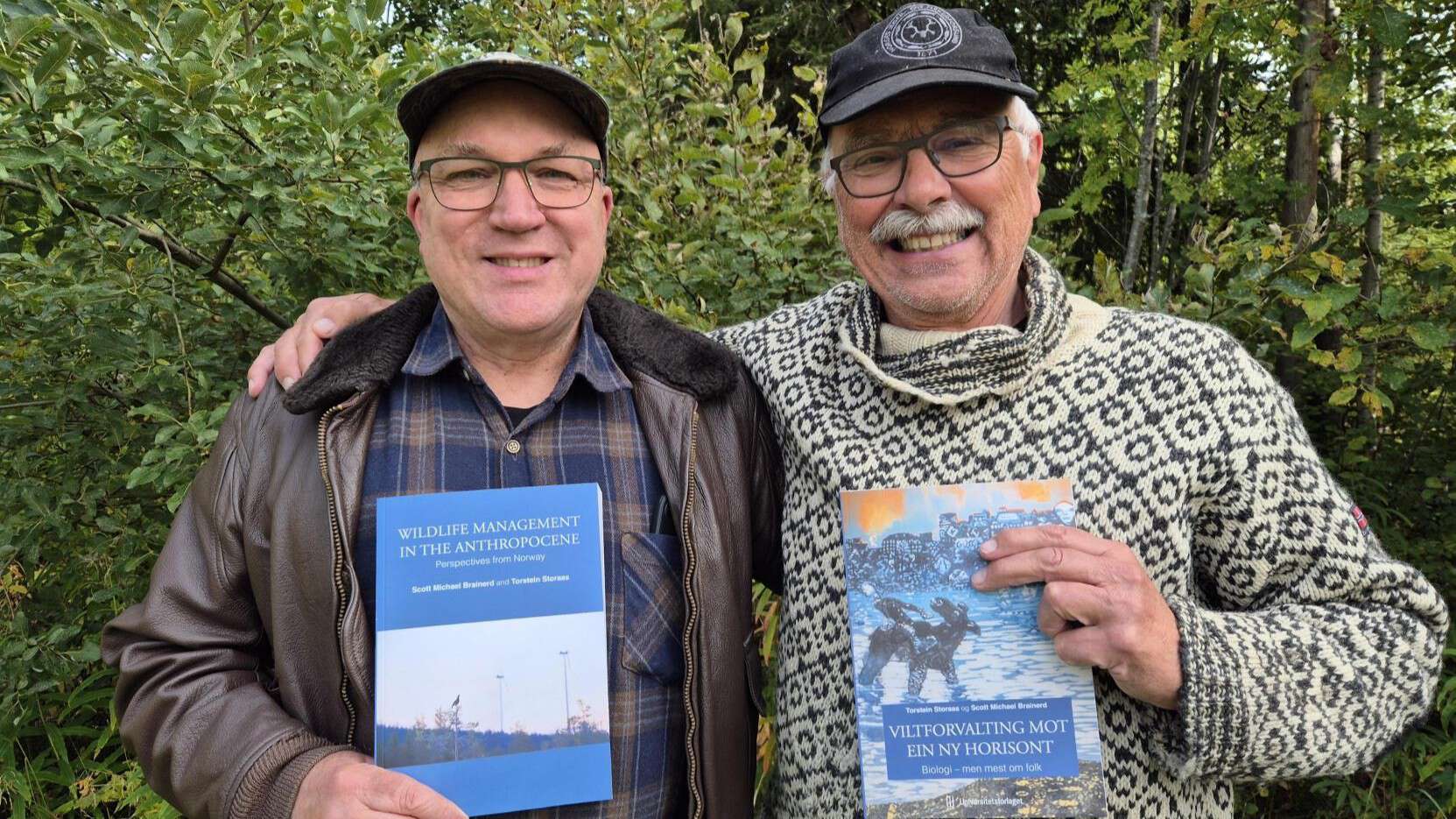
Brainerd and Storaas received the honourable mention for Wildlife Management in the Anthropocene, a collaboration that brings together their long-standing expertise in wildlife management. The book draws on their extensive experience in wildlife management and research in Norway and internationally.
The Wildlife Society’s Wildlife Publication Awards
The awards recognise outstanding scientific literature on wildlife biology and wildlife management published during the past three years. According to the organisation, selected publications are distinguished by originality in research or thought, as well as a high academic standard of presentation.
A people-centred perspective
Published in both Norwegian and English, the book offers a comprehensive account of wildlife management in Norway, placing contemporary practices in historical context and comparing them with selected management models from elsewhere in the world.
The book provides readers with a basis for understanding modern wildlife management and its foundations in scientific research and monitoring. It places particular emphasis on the effects of human activities on wildlife and their habitats in the Anthropocene—the age in which human influence has become a defining force in the natural world.
Rather than focusing primarily on biology and ecology, the authors highlight the social and human dimensions of wildlife management. During the writing process, they reviewed relevant research and publications on changes in wildlife management practices to ensure the content was as up to date as possible.
Storaas is a professor emeritus at the University of Inland Norway and has worked in wildlife management and research for more than four decades, including in Norway, the United States, Nepal and other European countries.
Brainerd succeeded Storaas after his retirement in 2019. He has more than 50 years of experience in wildlife management and research in North America and Scandinavia. Together, the authors bring complementary perspectives to wildlife management in Norway and other countries.
Core reading at Evenstad
Each autumn, Brainerd teaches wildlife management courses at Evenstad in both Norwegian and English. Wildlife Management in the Anthropocene is core reading for students in both courses and is available in the respective course languages.
Read more:
- Announcement of the awards by The Wildlife Society
- Norwegian version, Viltforvaltning mot ein ny horisont, by Universitetsforlaget
- Wildlife Management in the Anthropocene hos Scandinavian University Press

