
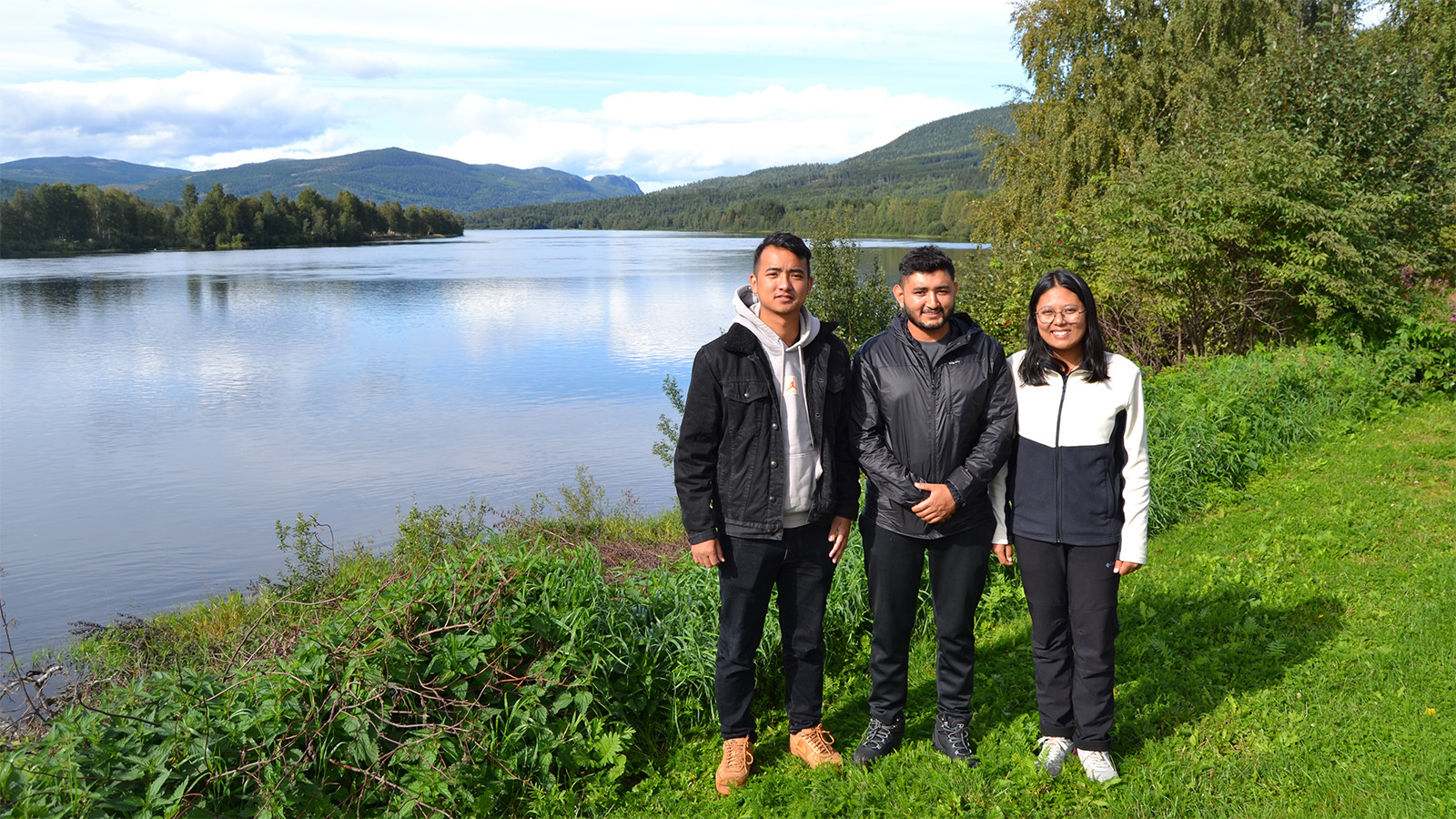
Bibek Gurung, Gunjan Adhikari and Srishti Ghising are master students in Environmental Science with specialisation in Wildlife Management at Kathmandu University in Nepal. They have come all the way to Norway to spend four months studying in the Applied Ecology programme at Evenstad.
– This is the first time any of us have travelled outside of Nepal and India, says Srishti. We travelled from Kathmandu to Doha, and then to Oslo. From Oslo we took the train to Evenstad. And the trains were on time!
The students are part of the NORPART programme – an initiative supporting long-term academic collaboration and mutual student mobility between higher education institutions in Norway and selected partner countries. In this case, the collaboration is between Inland Norway University of Applied Sciences (INN University) and Kathmandu University.
It is quite unique that Evenstad campus, a remote study location in Norway, attracts students from across the globe. This perhaps demonstrates the relevance of the academic environment in ecology at INN University.
First impressions and a warm welcome
– Everything is so clean, safe and organised here. It is really nice, says Gunjan.
The Nepalese students explain that it is unusual for them to not see any security guards or surveillance cameras at the campus, but they think it is good that everyone behaves well. They are also used to more crowds and noises but seem to enjoy the calm atmosphere of Østerdalen valley.
The students all speak highly of the warmth and hospitality at Evenstad, and fondly recall how warmly they were welcomed when they arrived on campus about two weeks ago.
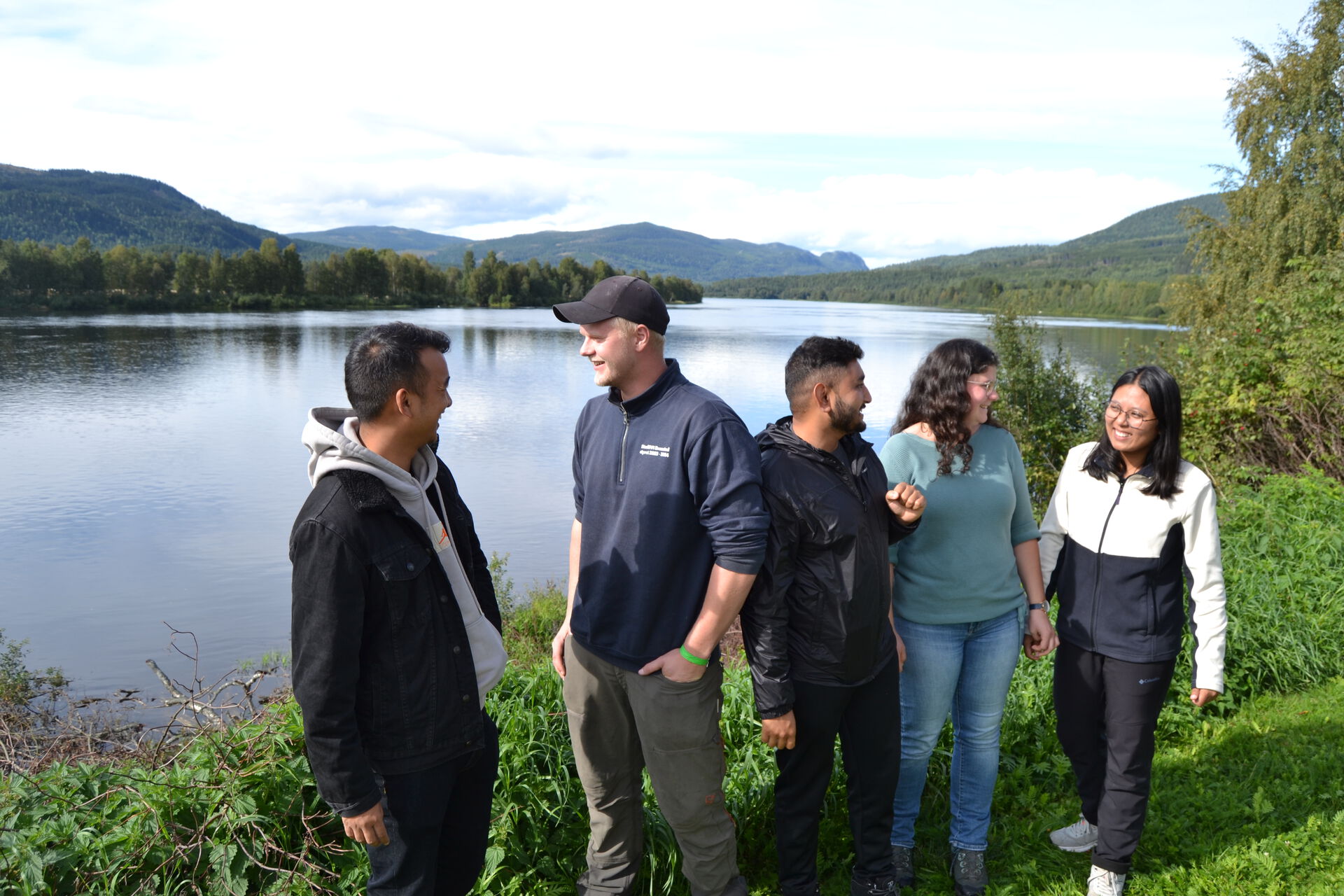
Regarding their studies, the students are most excited to experience how a European university system differs from the Nepalese. They are also curious about the wolves of the Norwegian forests.
– I am excited to see how everything here works, how the lecturers and students interact, and if the studies are more practical-oriented than in Nepal or not. It will also be interesting to see different perspectives and how Norwegians see the world, Bibek says.
A happy reunion
The programme also enables students at Evenstad to spend time in Nepal. This spring, Anna Schäffer and Stian Kalleberg, who are master students in Applied Ecology, spent 10-14 weeks studying in the Wildlife Management programme at Kathmandu University and conducting field work in Shuklaphanta National Park. The students got to know each other well during this time, so they were already friends when the Nepalese arrived at Evenstad.
Anna and Stian agree that they learned a lot from their stay in Nepal and gained new perspectives. They also point out that the ecosystems they studied are different from in Norway.
– We studied leopards, small rodents, bats and freshwater fish, among other things, says Anna.
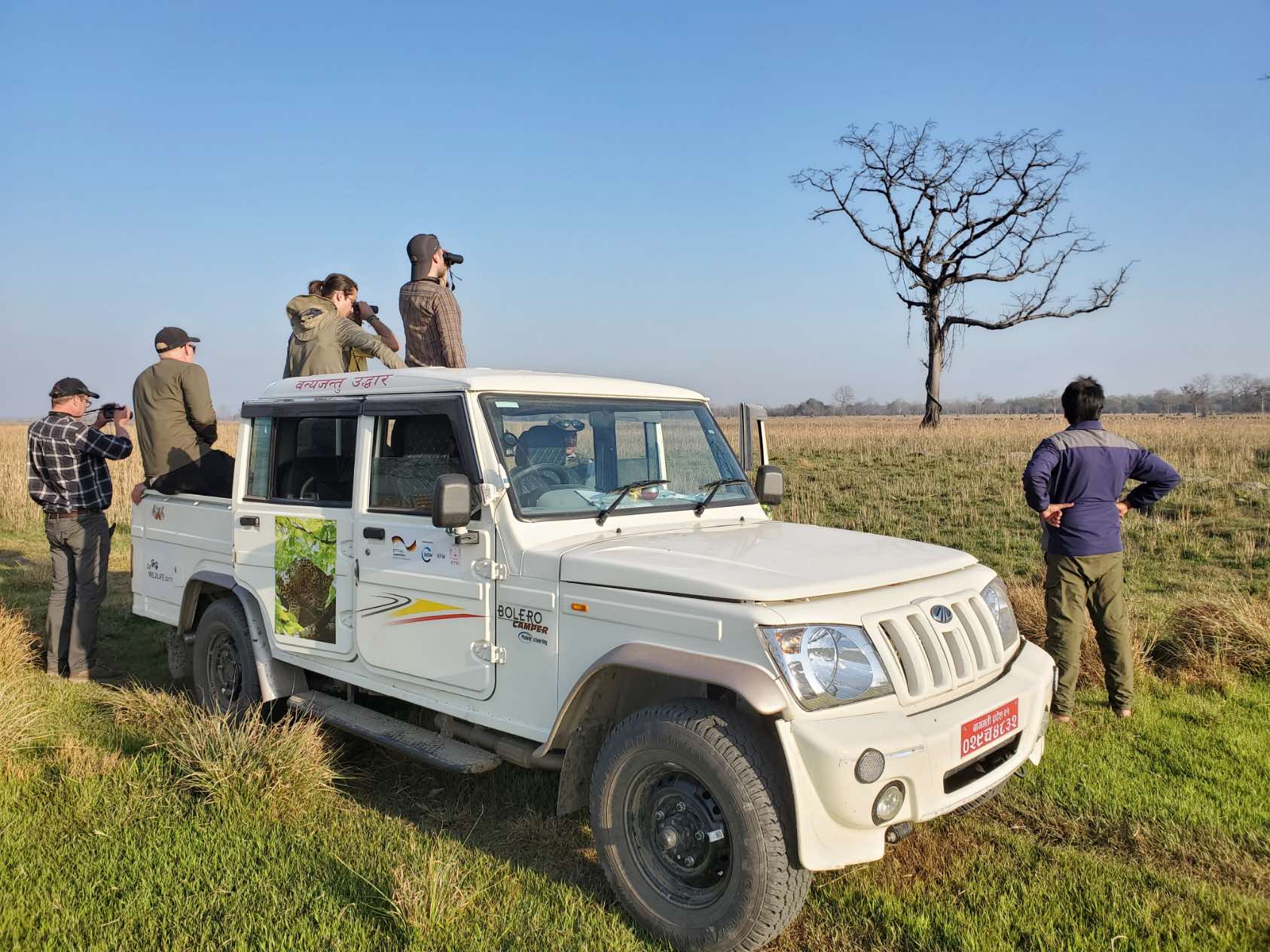
There was no doubt that encountering a leopard only 200 meters from where they stayed was the most exciting experience for the Evenstad students. But apart from the exotic wildlife, the culture in Nepal also differs from Norway.
– Before we went, we were prepared for a cultural shock as Nepal is a poorer country, and more poorly run, than Norway. But the people there were so nice and polite. They invited us in for food, coffee and tea right away, and they were really welcoming, Stian explains.
A lot to learn from each other
Professor Morten Odden is the coordinator for the NORPART project 'Capacity Building for Joint Education and Research in Applied Ecology' – a collaboration between INN University, Kathmandu University, and the National Trust for Nature Conservation, Nepal (NTNC). He is the one overseeing the Nepalese students at Evenstad.
– We have a lot to learn from each other. In Nepal, they have a strong will for wildlife preservation and are way ahead of us in policies and management. In Norway, we have good resources and academic structures. The exchange programme is set up in a way that fills the holes the students may encounter in their respective countries, Morten states.
Life-changing experiences
Studying and living in another country is an experience that goes beyond academic input, and Morten elaborates on the importance of the project:
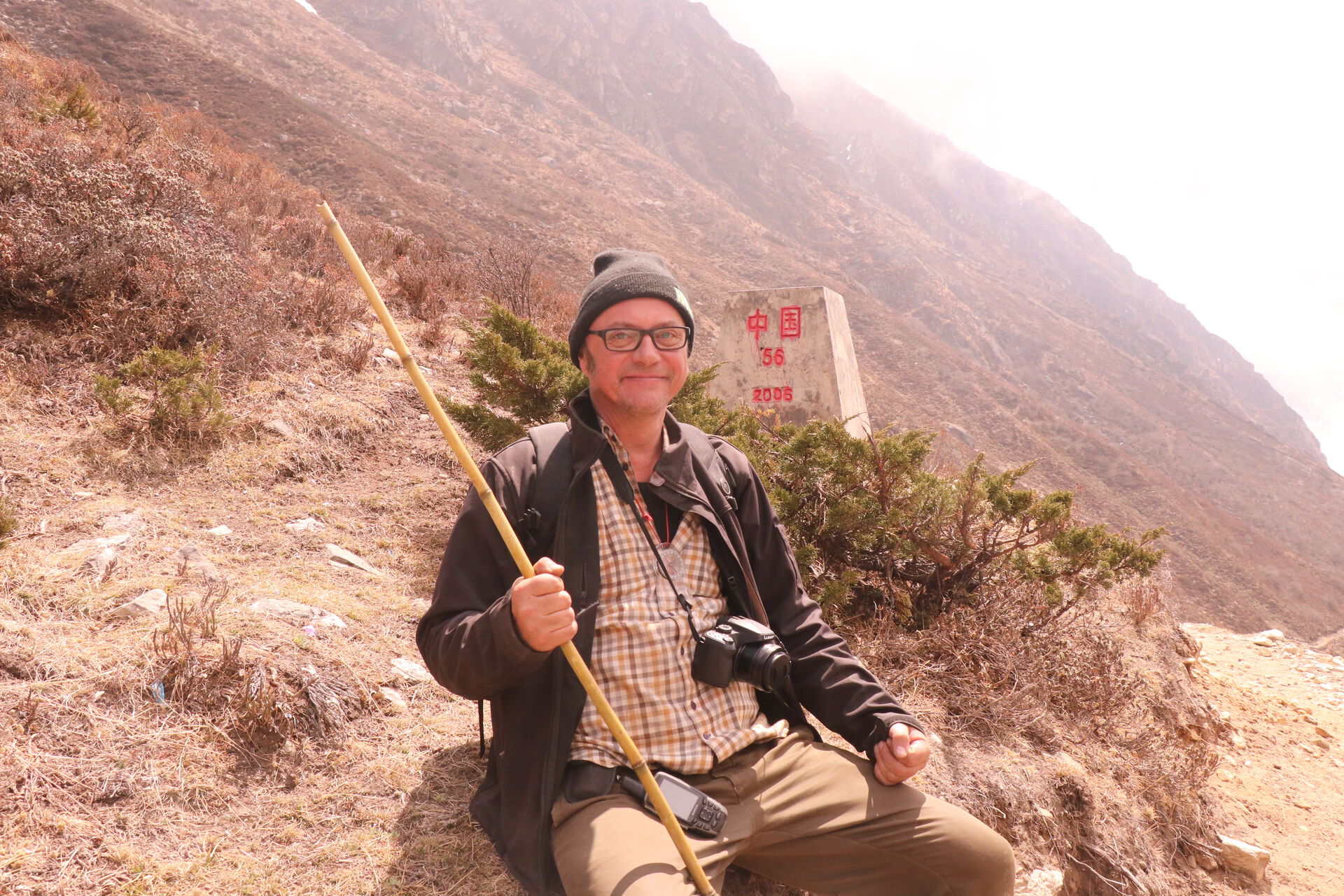
– I got the chance to study in Nepal during my PhD, and I have been part of many research projects there since. The stay changed my entire perspective on ecology, people, and even life itself. It motivated me to continue on this path in my professional life. The friends I made back then are my collaborative partners in research today. I wanted to create the same opportunity for other young students.
When asked about what he hopes the Nepalese students will take with them from Evenstad, Morten answers the following:
– First and foremost, I hope they take with them all of the study points from their classes! We have an exciting academic community here that can give a good foundation to people who will be in leading positions for wildlife preservation and management in the future.
He then adds on long-lasting friendships, self-discovery, and growth. Overall, the experience of a lifetime.
– We are facing global ecological problems, so working together across borders is extremely important, he concludes.
The ecology students Srishti, Gunjan, Bibek, Anna and Stian are certain that their friendships will last a lifetime. Perhaps we will see research collaboration and projects between them in the future?
Contact information:

- morten.odden@inn.no
- Phone
- +47 62 43 08 76