
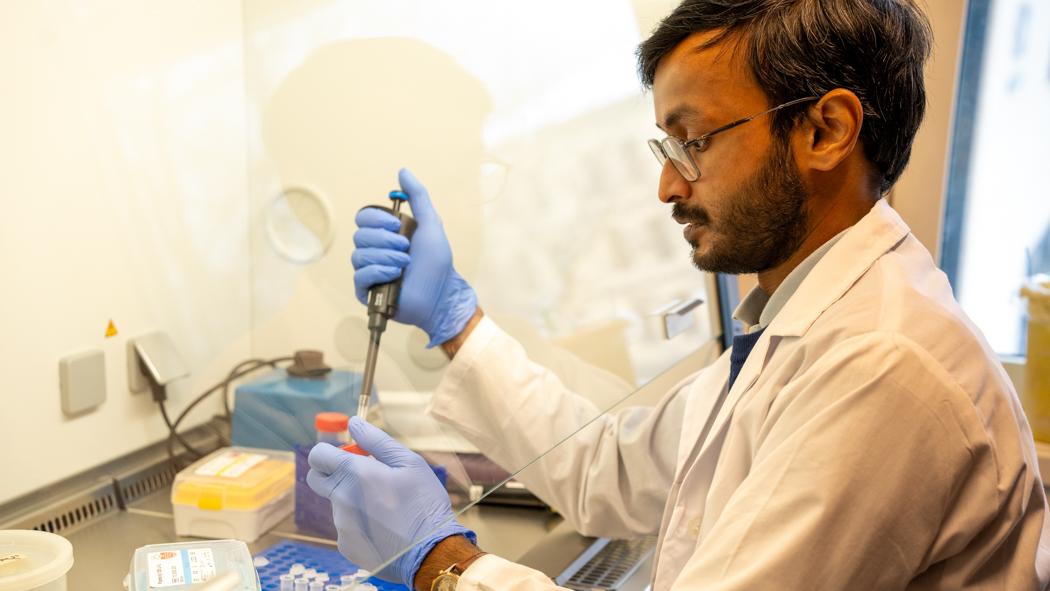
Among test tubes and advanced machinery in the laboratory at the Department of Biotechnology in Hamar, we find Nasib Bin Mahbub from Bangladesh.
Now in the second year of his master's degree, he is involved in developing low-cost and rapid alternatives for culturing bacteria from blood samples and using the test results to diagnose a disease or condition. They use nanopore sequencing and cutting-edge technology.
The aim of the research group he is involved in is to combat antimicrobial resistance.
– Early diagnosis is essential for saving lives, and antibiotic resistance is a major global health issue. I hope our research here can make a difference, says the master's student.
I hope my research can save people's lives.
Nasib Bin Mahbub
From Bangladesh to small town Hamar
Nasib chose the Master in Applied Biotechnology and Biomedical Sciences programme at the University of Inland Norway because it allowed him to work with human medicine, building on his bachelor's degree in pharmacy.
And he has only positive things to say about the academic environment in Hamar. Here, professors, PhD students, and master’s students work closely together. The research that students contribute to is published in internationally renowned journals.
– Hamar is like an island. It is a small, peaceful town where you can find balance. Life is easier here. And the professors and colleagues at the university are so friendly and incredibly helpful, no matter how busy they are, says Nasib Bin Mahbub.
He hopes to pursue a PhD and perhaps an academic career.
Close-knit learning environment
Amelia Klajn, a bachelor's student in biomedical laboratory science, also highlights the strong learning environment as a great advantage.
– At a smaller university like this, you develop a personal relationship with your lecturers, which is really valuable for learning, she says.
She also mentions the cosy places to eat and the various student organisations in Hamar.
Even as a bachelor's student, she gains hands-on experience in current research projects.
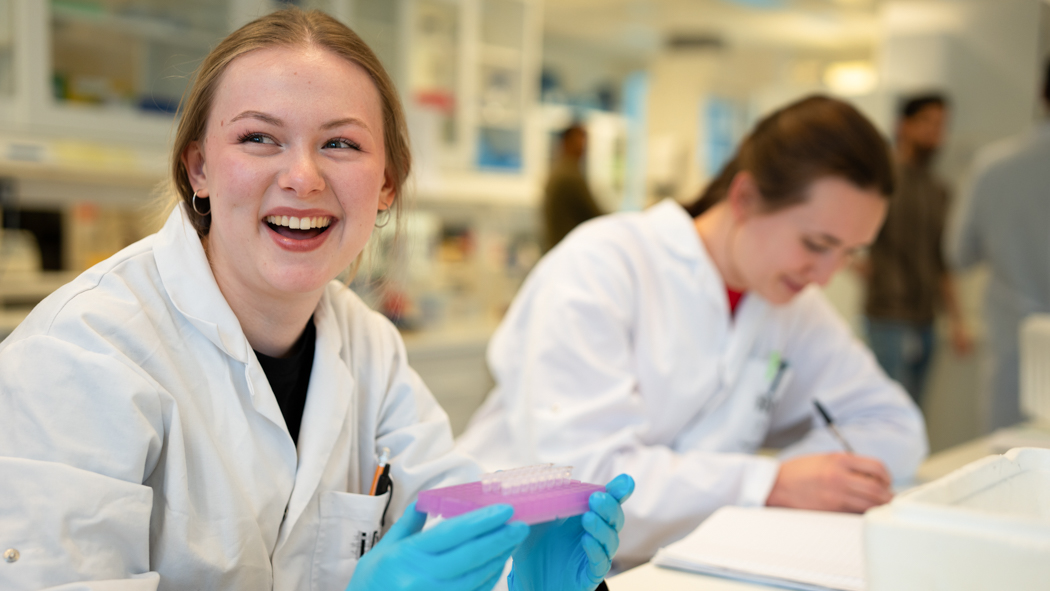
– It is incredibly motivating to work with researchers who are world-leading in their fields. Their enthusiasm is contagious.
Working on livestock breeding
Weronika Słodzińska's master's project focuses on agriculture and livestock reproduction. She is part of the Zygote research project, where researchers work closely with companies in the region that are internationally significant players in cattle and pig breeding.
Zygote aims to make reproductive biotechnology more sustainable.
Weronika Słodzińskas
She uses confocal microscopy to examine DNA in egg cells and embryos.
– I really enjoy doing this. It brings me joy to look inside cells and discover how complex they are, she says enthusiastically.
Weronika Słodzińska explains that the opportunity to work with leading researchers in an international environment was a key reason for choosing to pursue her master’s degree in Hamar. She was also not scared by Norway’s reputation as an expensive country.
– I would say it is manageable – you can live simply. I just have to say that I am very happy I started here and that I have had this opportunity to study under my supervisors. And Hamar is a big enough city for me; there is plenty of space to go for walks and relax, says the master’s student.
Read more: