.jpg)
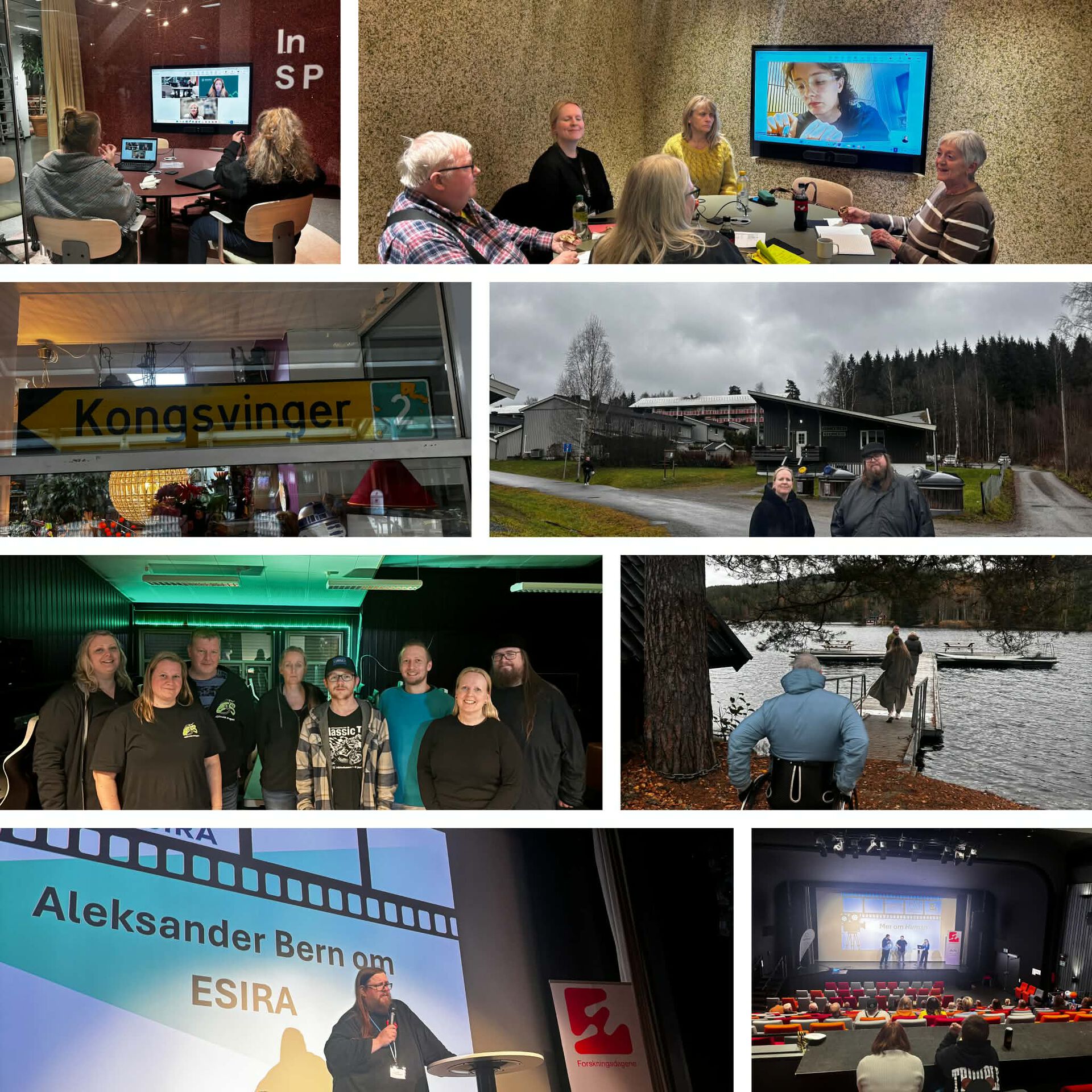
Eastern Norway Research Institute (ENRI) and Innlandet County Council are the Norwegian partners in this large project, which consists of 15 partners across eight countries. The consortium supports social innovation initiatives targeting vulnerable groups. In Norway, the project assists a local development group in the Kongsvinger region that works to improve the inclusion of people with disabilities.
The importancy of ESIRA for Innlandet
In the Norwegian county Innlandet, ESIRA is part of the action programme for the Regional Plan for an Inclusive Innlandet.
“This initiative gives us in Innlandet County Council a unique opportunity to combine international cooperation with local community development,” says ESIRA project manager at the county council, Berit Kvaløy. She adds: “The project has major social, political, and economic importance.”
Socially, because we are developing solutions that create more opportunities to participate in work and community life – including for people with disabilities.
Politically, because the research and recommendations from ENRI are included in policy recommendations to the EU regarding initiatives and safeguarding of rural areas and further inclusion efforts.
Economically, because ESIRA strengthens the attractiveness, opportunities, and competitiveness of Innlandet and the Kongsvinger region.
The development group launches pilot projects
The development group established in 2024 has this year grown into a strong team tackling the challenges facing the Kongsvinger region. The group includes people aged 18 to 80 from private business, academia, volunteer organisations, politics, public administration, and individuals contributing through personal engagement. This is a completely new way of working and takes co-creation to a new level. The group is developing innovations and pilot projects that can improve inclusion in the Kongsvinger region, particularly for people with disabilities.
We are working to realise three pilot projects:
Arena_gaming – an inclusive gaming space where young and old, experienced and new gamers, and people with different abilities can participate in a safe and engaging environment.
Bæreia for all – further development of the Bæreia recreation area in Kongsvinger municipality, including a floating bathing platform, universally designed benches, and improvements to trails, information films, and signage.
Inclusive meeting place – a universally designed physical space in Kongsvinger that is open to everyone and can host various activities.
More ideas are in progress and will be further developed next year.
Extensive knowledge sharing
In May, the entire European consortium visited Kongsvinger for ESIRA’s General Assembly. The European researchers took part in workshops on innovation and inclusion and got to know the development group and its initiatives.
In September, we participated in the national Research Days with the event "Research, Film, and Fellowship" in the village of Flisa. The evening focused on social inclusion and safety, and we screened and discussed the award-winning film Join or Die.
The project also organised a public webinar on how innovation can be used to enhance inclusion in the Kongsvinger region.
Publications
The article Building social enterprises from the ground up in the Canadian Journal of Nonprofit and Social Economy Research explores the interaction between social entrepreneurship and the welfare state and was published this summer.
Earlier this year, Østlandsforskning also published the research report Regional report: Innlandet, Norway, which presents four key findings related to social exclusion in the Kongsvinger region:
- Social exclusion among youth and the elderly: Young people outside education and employment, and older people with limited social participation, are especially vulnerable. Universal design and accessible meeting places are crucial for strengthening inclusion.
- Lack of universal design: People with disabilities face significant challenges due to poor accessibility in public spaces and services.
- Volunteer organisations as key players: The region’s strong voluntary engagement holds great potential for social inclusion, but more support is needed for social entrepreneurs working with young people and the elderly.
- Social inheritance and health issues: Limited finances, mental and physical health problems increase vulnerability among residents. Early intervention and preventive measures are essential.
The report is based on quantitative and qualitative data collected from Statistics Norway and Statistics Innlandet. The researchers also interviewed local stakeholders to gain an in-depth understanding of the challenges.
2026 will be ESIRA’s most exciting year yet – when several of the innovations will come to life!