
Around 150 million people are diagnosed with urinary tract infections every year, and at least half of all adult women experience it more than once in their lifetime.
For pregnant women, those with catheters, and those who have undergone kidney transplants, such infections can lead to severe complications. Each year, 240,000 people lose their lives as a result, particularly in poorer countries.
Antibiotics are used in treatment, but often 'blindly', meaning that healthcare personnel do not have sufficient information about the patient’s condition.
Researchers are now aiming to develop and test new technology that can detect infections early, enabling more precise and timely antibiotic treatment.
INN leads the project
The Research Council of Norway has allocated NOK 12 million to the project, with a total budget of nearly NOK 16 million. INN University has the leading role, with partners including UiT (The Arctic University of Norway), the Norwegian Institute of Public Health, the World Health Organisation (WHO), and several research institutions in India.
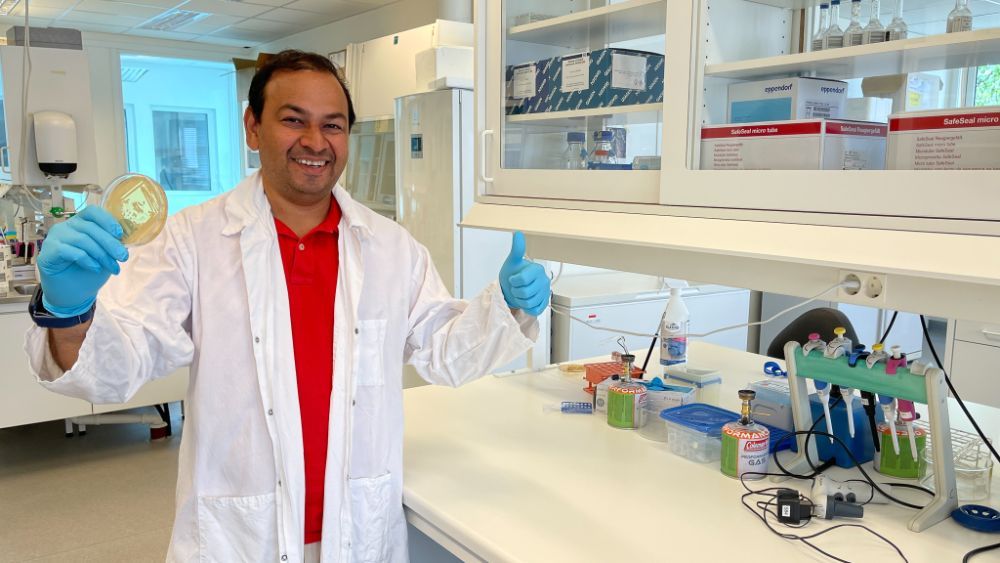
– We will be testing the technology both in laboratories and hospitals in Norway and India, particularly on pregnant women and individuals with catheters. The goal is for this technology to become accessible, affordable, and widely usable, says Rafi Ahmad, project manager and professor at the Department of Biotechnology at INN.
Biosensors, DNA sequencing, and artificial intelligence are key elements of the technology they are developing.
Much of this technology has already been developed through other research projects at the same research environment at INN since 2018. The new project, called 'UTI-Diag: Reducing the burden of antimicrobial resistance – urinary tract infection using innovative and scalable rapid diagnosis', builds upon the knowledge from these projects.
Aiming to reduce the need for antibiotics
According to the United Nations, antibiotic resistance is one of the greatest health challenges humanity faces today.
The global use of antibiotics must be reduced, and Rafi Ahmad believes the new technology can contribute to this.
– Remarkably, the current situation is that patients are often given antibiotics without concrete knowledge of the infection they are being treated for. Urinary tract infections are among the most widespread infections worldwide. Therefore, it is crucial to improve how we detect infections to make antibiotic treatment more targeted, says Ahmad.
The project will run for three and a half years, starting in January 2025. INN will contribute a PhD fellowship to the project.
In parallel with the new project, Rafi Ahmad and the research group at the Department of Biotechnology are also leading another major related project, OH-AMR-Diag. This project, which was awarded NOK 16 million by the Research Council in 2023, has both veterinary and human medicine perspectives.
Contact our researcher:

- rafi.ahmad@inn.no
- Phone
- +47 62 51 78 45
Facts about the project:
- UTI-Diag: Reducing the burden of antimicrobial resistance – urinary tract infection using innovative and scalable rapid diagnosis
- A research project led by the Department of Biotechnology at Inland Norway University of Applied Sciences.
- Collaborating partners include UiT The Arctic University of Norway, the Norwegian Institute of Public Health, All India Institute of Medical Sciences in New Delhi, Indian Institute of Technology Delhi, Indian Council of Medical Research, and the World Health Organisation (WHO).
- The project runs from January 2025 to June 2028. The budget is NOK 15.8 million, with NOK 10 million allocated to INN.
- The Research Council of Norway is the primary funder.