
About 377,000 people live in Innlandet. Thanks to immigrants, the population has grown steadily since 1990.
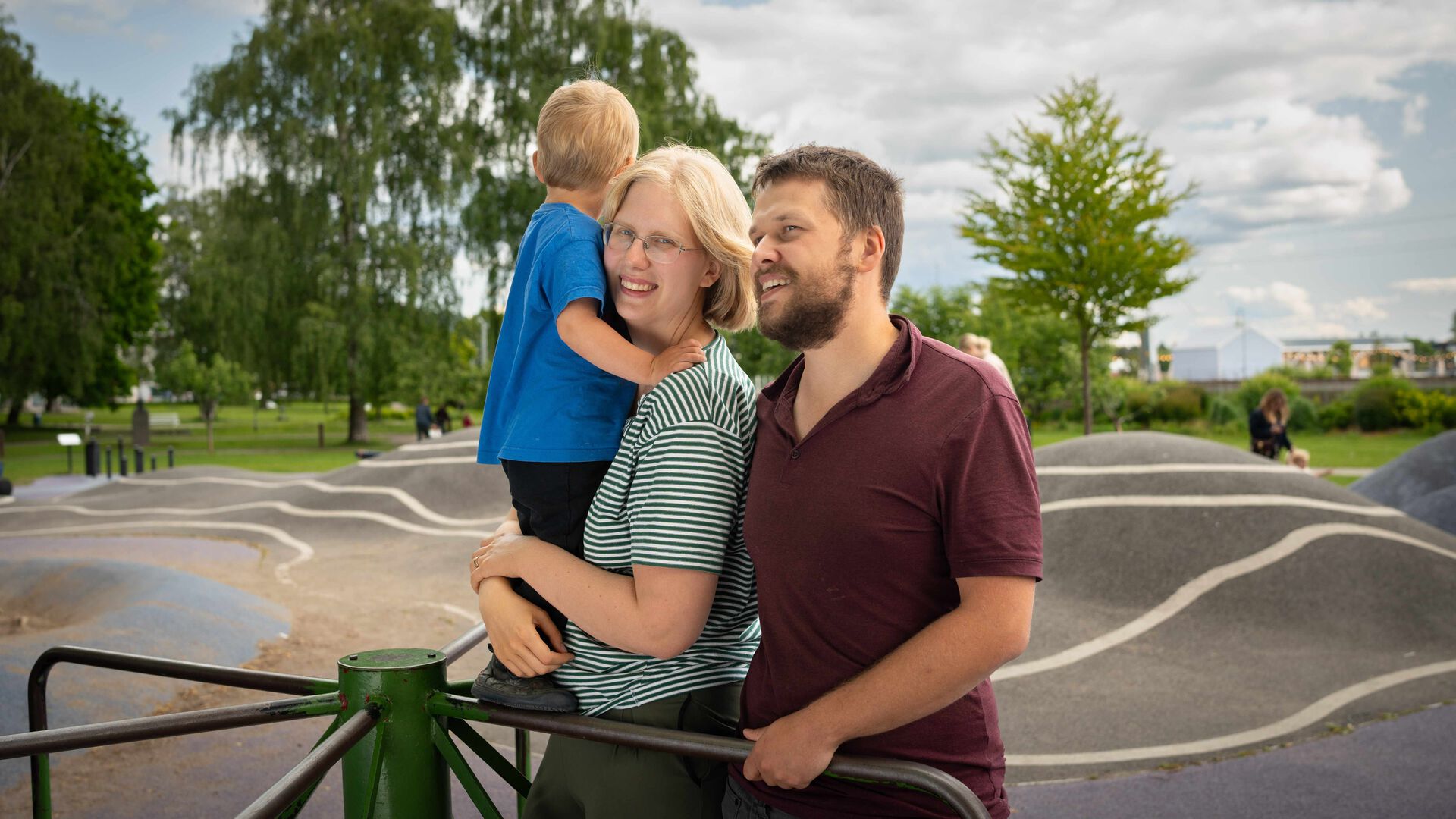
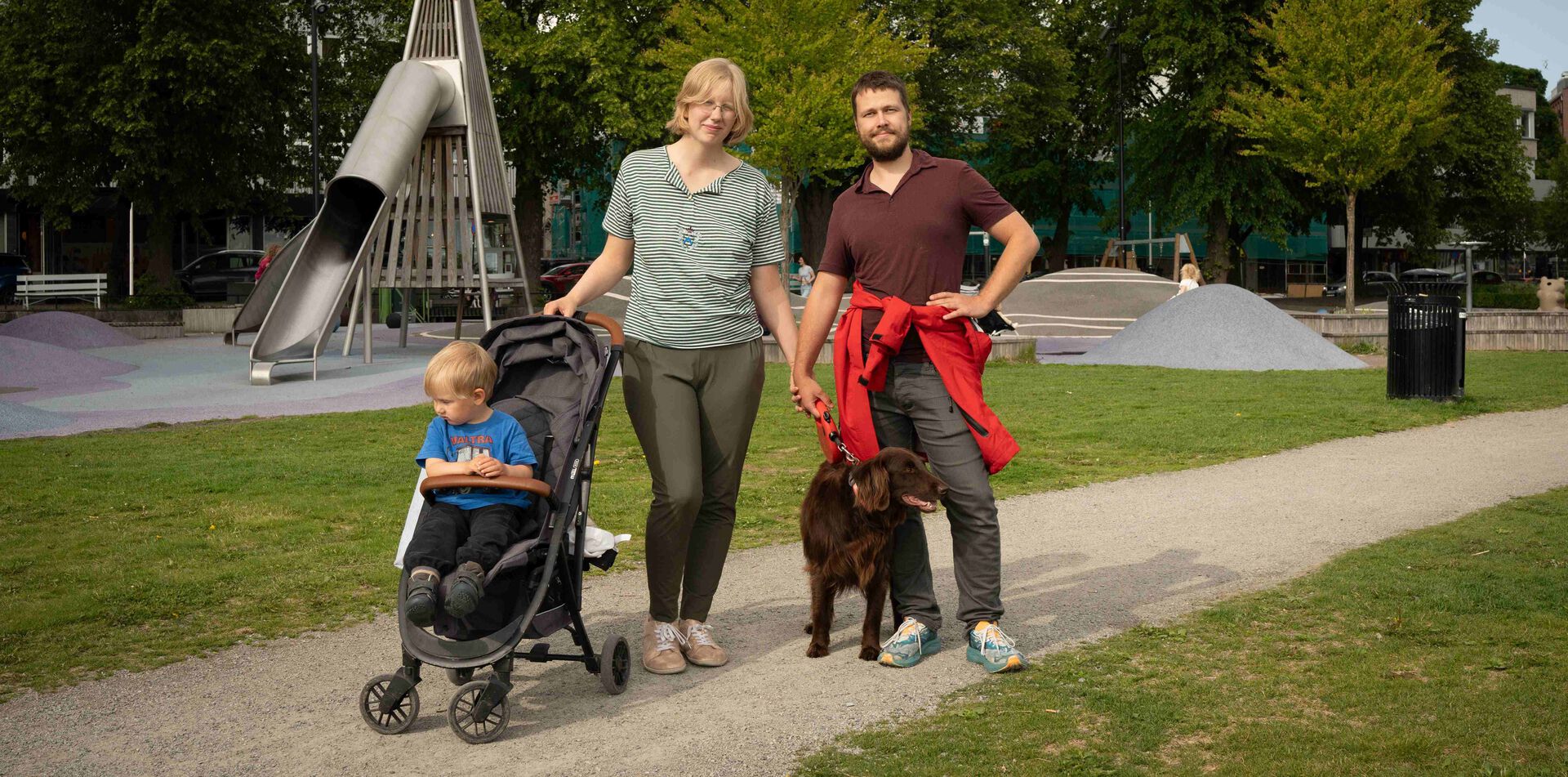
In that sense, the Allas family – consisting of Katri-Helena (27), Aksel (28), and Villem (2) – fits well into the statistics. Their choice to settle in Hamar when they moved here this spring is also quite typical.
However, the dramatic backdrop makes them far from typical newcomers.
This is the story of why this small Estonian family ended up in Hamar.
An unsafe neighbourhood
"Before I explain why we chose to move to Hamar, I have to explain why we left Estonia," says Aksel.
The family comes from Tartu, Estonia’s second-largest city, known as the country’s intellectual centre, home to one of Northern Europe’s oldest universities. Katri-Helena is a trained doctor, and Aksel is an IT developer.
Their future looked promising. They owned a large house with all the facilities, including a sauna and a gym.
Despite having everything they needed, it gradually felt less and less right.
"Russian terror works," Aksel summarises succinctly.
"We do not want our son to grow up near a regime that bombs playgrounds in neighbouring countries."
The security situation in Estonia and the other Baltic states has been tense since the war in Ukraine broke out. Several reports indicate that Russia is threatening the Baltic states through military build-up, propaganda, and so-called hybrid warfare.
"On the Russian side of the border, children are taught in school that we never wanted to break away from the Soviet Union and that we are just waiting to be 'liberated' by Russia. It is unsettling, but it is not primarily the hybrid warfare that troubles us. Our main concern is a full-scale war in the Baltics once the war in Ukraine is over," says Aksel.
Aksel believes that from a Western perspective, it is very difficult to understand the Russian mindset.
"The Russian government makes its people believe that the current situation is not a real suffering – it is just a 'special operation', and that the real suffering still lies ahead. In a competition over which people are most willing to suffer, the West falls far behind Russia, which makes Russia a far greater threat than many realise," says Aksel.
"The fear is not irrational"
Before we continue the story of the small family, we must pause and ask:
Is this fear justified?
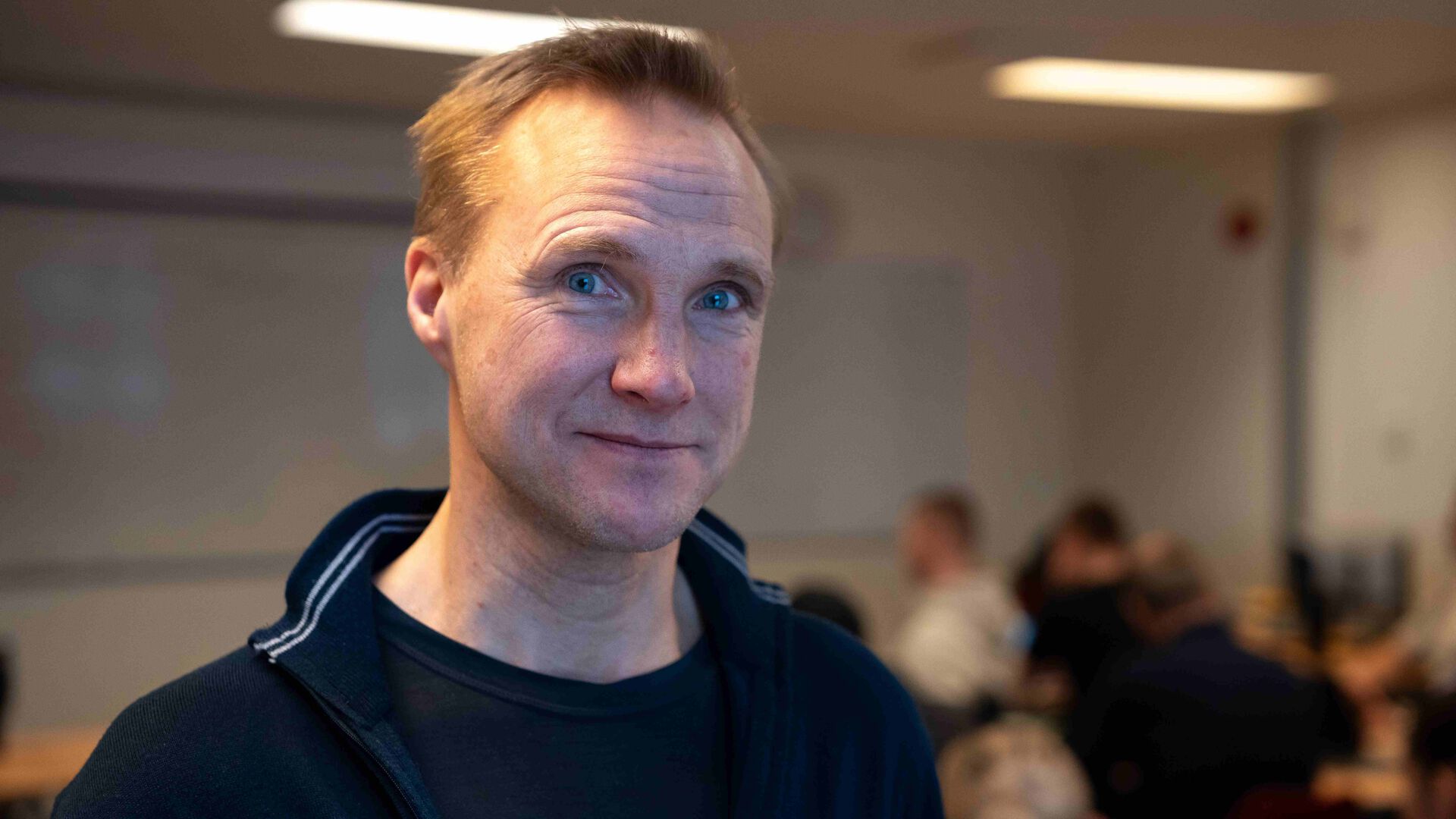
"It is certainly easy to understand," says Tormod Heier, Professor of Military Strategy and Operations at the Norwegian Defence University College, and Professor II at the University of Inland Norway (INN).
"Russia is currently conducting far more hybrid attacks against the Baltics than before. I fully understand why many experience this as both unsettling and frightening," he explains, adding that hybrid warfare includes influence operations on social media, where Russian propaganda is spread to create fear and uncertainty among the population.
"There have also been sabotage actions, such as the destruction of fibre cables and gas pipelines. In addition, Russian aircraft and vessels occasionally violate Estonian airspace and territorial waters, even though NATO is present with both aircraft and naval vessels."
Heier points to Estonia’s history as the background for the unease in the Baltic countries.
"Estonia was never liberated after World War II but experienced 45 more years of Soviet occupation. Many Estonians were deported to Siberia, while large groups of Russians were relocated there to suppress and stifle the unique Estonian national identity and culture."
Due to the large Russian-speaking population following Soviet-era population movements, Heier believes it is relatively easy to conduct such hybrid warfare operations in the Baltic countries.
Heier finds it somewhat striking and interesting that some people feel such pressure that they choose to move.
"We do not see this type of emigration from the Baltic countries to the Nordics as a pattern, and it is probably not representative of the broader population."
Is the fear exaggerated?
"I i’s easy to say when you live in one of the world’s safest countries with a very different relationship to Russia. To fully understand it, you have to experience it yourself," Heier says, reminding that although Estonia alone cannot militarily stand up to Russia, it is a member of NATO.
"It is through that membership that we must try to understand Estonian security," Heier adds.
A new chapter
For Katri-Helena and Aksel, the conclusion was clear: They wanted to leave. The only question was – where?
"We had never been to Norway, but we had read a lot. We got the impression it is the best country in the world," they explain.
The big city of Oslo was not tempting, but the job market was important. They placed their spearhead in the capital and created a commuter circle. Then they went on a research trip to the towns around Oslo.
"We considered, among other places, Drammen. But it is a car city," says Katri-Helena and Aksel.
When they arrived in Hamar, everything fell into place.
"We immediately saw that this is a city where we can cycle and walk. The town is very family-friendly, and the playground in the town centre is lovely," they say.
Hamar met many of their criteria: the right size, access to a Montessori nursery, a reasonable commute to Oslo – and a better climate compared to further north.
They signed a rental agreement straight away, and a month after their research trip, they returned with all their belongings.
Typical – and atypical
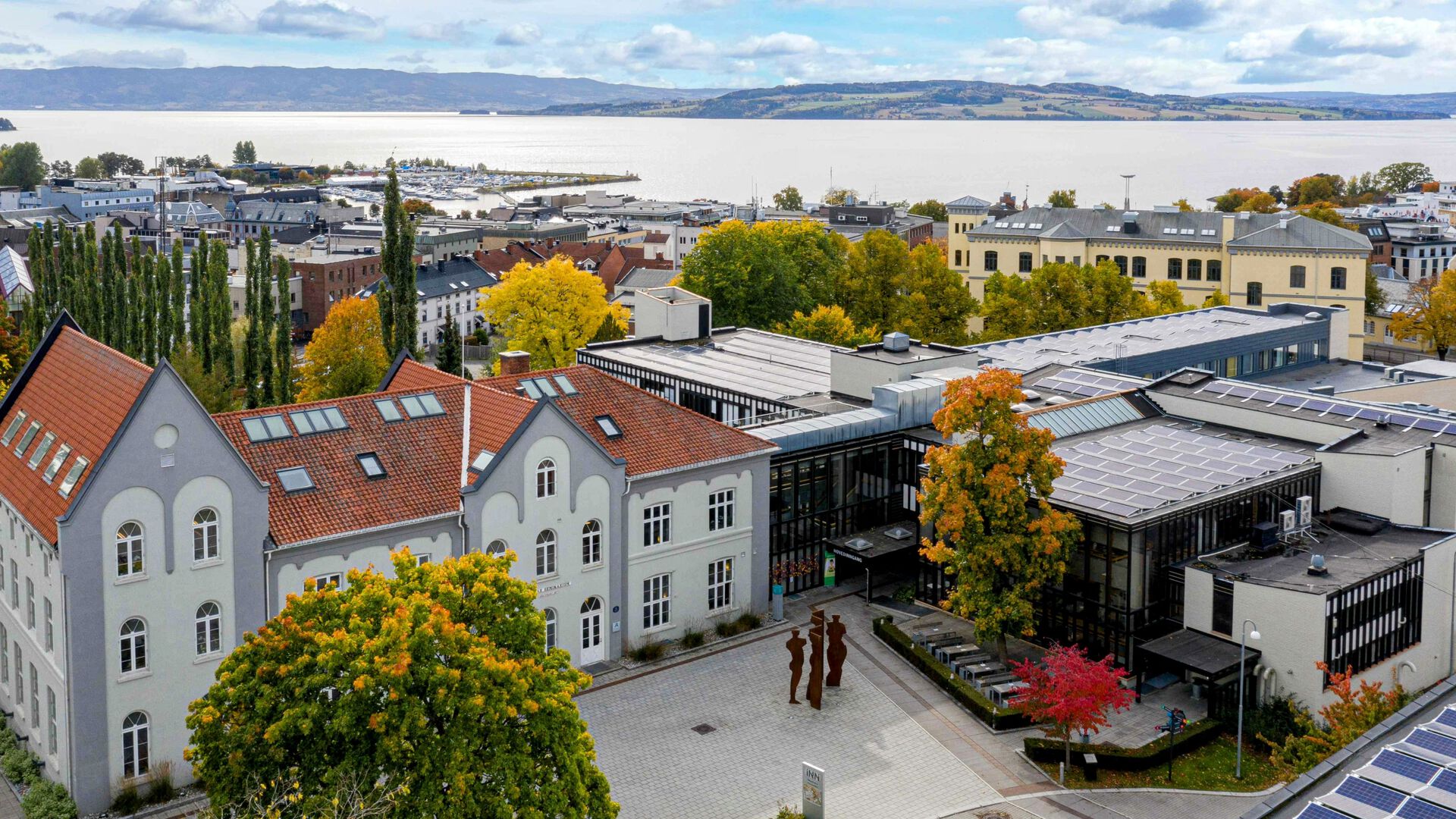
That the family chose Hamar should not surprise anyone, says Atle Hauge. He is a researcher at INN and has led a major research project focusing, among other things, on regional dynamics outside the big cities.
"Hamar has experienced positive population growth for many years, with especially many newcomers from outside the Hamar region," he says, emphasising that in fact more people move from Hamar to Løten, Ringsaker, and Stange than the other way around. It is therefore people from other parts of Innlandet, the country – and some from abroad – who are drawn here.
"Hamar is a small town, but perhaps with big-city ambitions," he adds.
That bodes well for those who want not only to live here but also to work here, doesn’t it?
Language and work
Already shortly after arrival, Aksel began looking for work. He received several interview invitations but also encountered the language barrier.
"When the team works in Norwegian, it is natural for them to choose a Norwegian speaker. There are more opportunities in Oslo," he says – in impressively good Norwegian, which he has learned through many hours using the language app Babbel over the past few weeks.
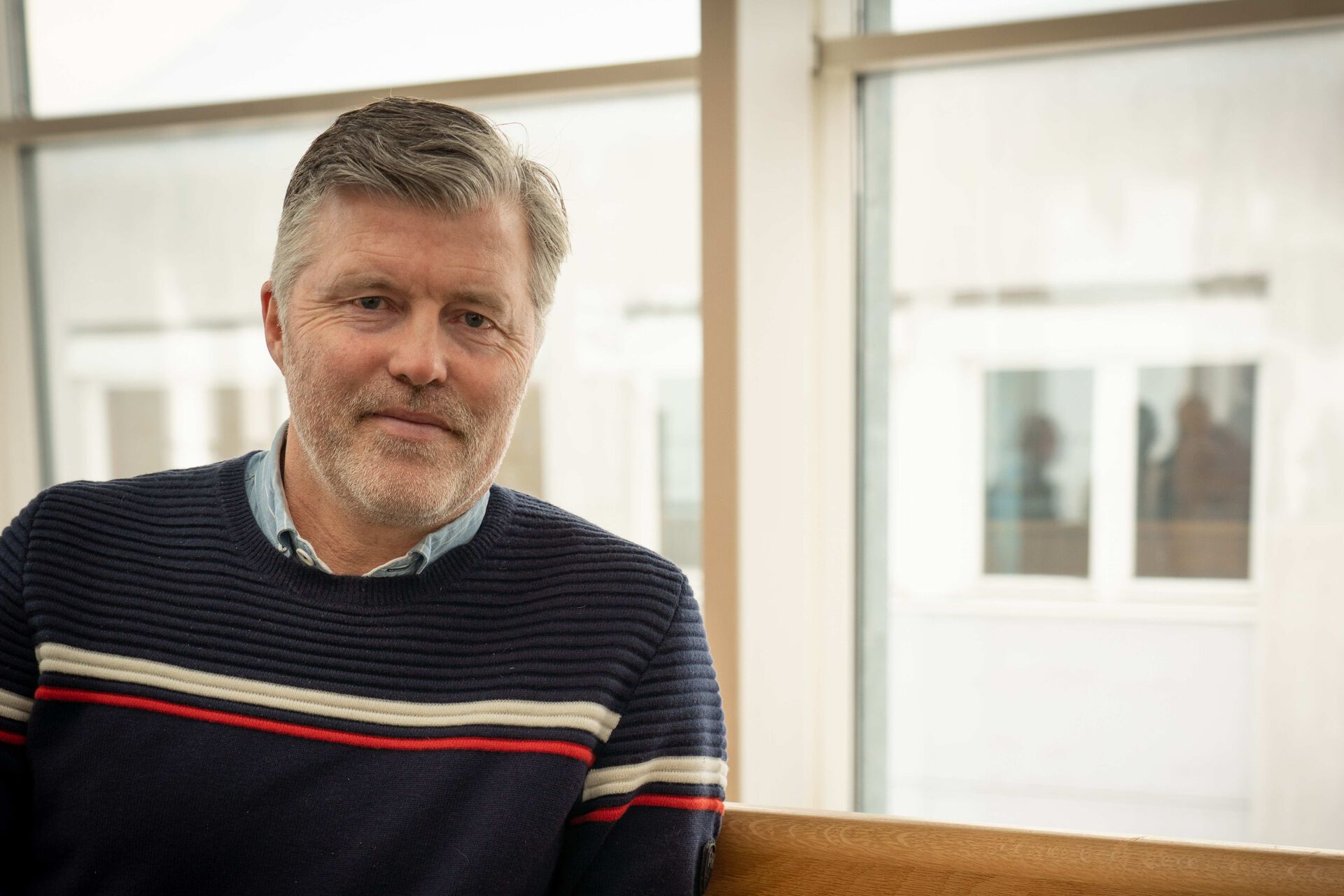
"Hamar is a city that primarily relies on services. Not speaking Norwegian when providing services to a Norwegian market is a challenge. There are probably some jobs in Hamar where English is the working language, but not many," says Atle Hauge.
Those opportunities are still greater in Oslo. In June, Aksel secured a job as a staff platform engineer for Coop Norge, and he will soon start commuting daily.
Three new additions to the statistics
When the statistics for 2025 are compiled, Katri-Helena, Aksel, and Villem will be among those who have contributed to the population growth in Innlandet.
Right now, their main priority is creating a secure life for Villem, and they believe they have found that in Hamar.
"We are very happy with life in Hamar. Villem starts kindergarten in August," say Katri-Helena and Aksel, who also do not hide the fact that they may well contribute even more to the population figures in Innlandet.
A short path to knowledge:
- At the University of Inland Norway, we have researchers conducting innovative and relevant research that matters to the community around us.
- We work across a wide range of disciplines, and much of our research is directly connected to Innlandet and the challenges faced by its residents.
- Our goal is to teach what we research and research what we teach. In other words: Here, there is a short path to up-to-date knowledge!