

When INN reported its 2024 figures to the Norwegian Science Index (NVI) in early April, the figures showed that Norway's newest university continues its solid growth in the number of publication points.
NVI is an annual report of scientific results in education and research. In order for an article to receive points, it must be published in a peer-reviewed channel, be it a journal or book.
According to INN's annual plan for 2025, the ambition had been to achieve an average of one publication point per academic man-year. Now we can state that we got there already in 2024.
"Excellent numbers"
"There are very good numbers this year again. It is a fantastic result", says Pro-rector for Research, Marit Sletmoen. INN did great in terms of the publication statistics in 2023, and continues this increase the following year:
Up from 711.83 points in 2023 to 783.32 points in 2024.
"If we look at the development over a few years, we were well behind the sector average, for example in 2018, but now we are on par with comparable institutions. Now we are at university level", Sletmoen states.
More employees publish
She is particularly pleased that more and more employees are contributing to publishing. Of INN's 785 teaching, research and dissemination man-years, 522 have contributed to publishing in 2024.
Now, for the first time, we have reached the milestone of 1.0 publication points per research and dissemination position, up from 0.87 the previous year.
"It shows that we have a culture that has taken hold, where employees see conducting research as a natural part of their work. There is an understanding that research results should be communicated in order to be useful, and this is done through peer-reviewed journals".
The Faculty of Social and Health Sciences and the Faculty of Education show the biggest increase
The faculties that have increased the most in publication volume are the The Faculty of Social and Health Sciences and the Faculty of Education.
"What do you think about the fact that the faculties associated with our heavy professional education programmes are the ones that are increasing the most?"
"I believe that this is a result of the targeted work we have done to establish and strengthen research groups, and to establish a research culture at all departments. INN aims for all employees with research time to be part of a research group. It seems to have been a fruitful strategy", says Sletmoen.
"Focusing on project development and proposal development"
She does not foresee such a strong increase in publication numbers for INN in the coming years.
"We see that publication numbers in the sector are levelling off somewhat and are also going down slightly at some institutions. It is not necessarily negative. It has to do with quantity versus quality", says Sletmoen and emphasizes that it does not mean that we are going to stop.
"Going forward, we will focus even more on project development and proposal development, and especially on obtaining external funding for research, while maintaining the volume and quality we have achieved", says Sletmoen.
"All members of our research group must publish"
The pro-rector for research points to investing in and strengthening research groups at the departments as a success factor.
Professors Marte Monsen and Guri Bordal Steien fully agree. They lead the Language and Society research group at the Department of Nordic Languages and Literature, which is one of several departments that have contributed to a publishing boost in recent years.
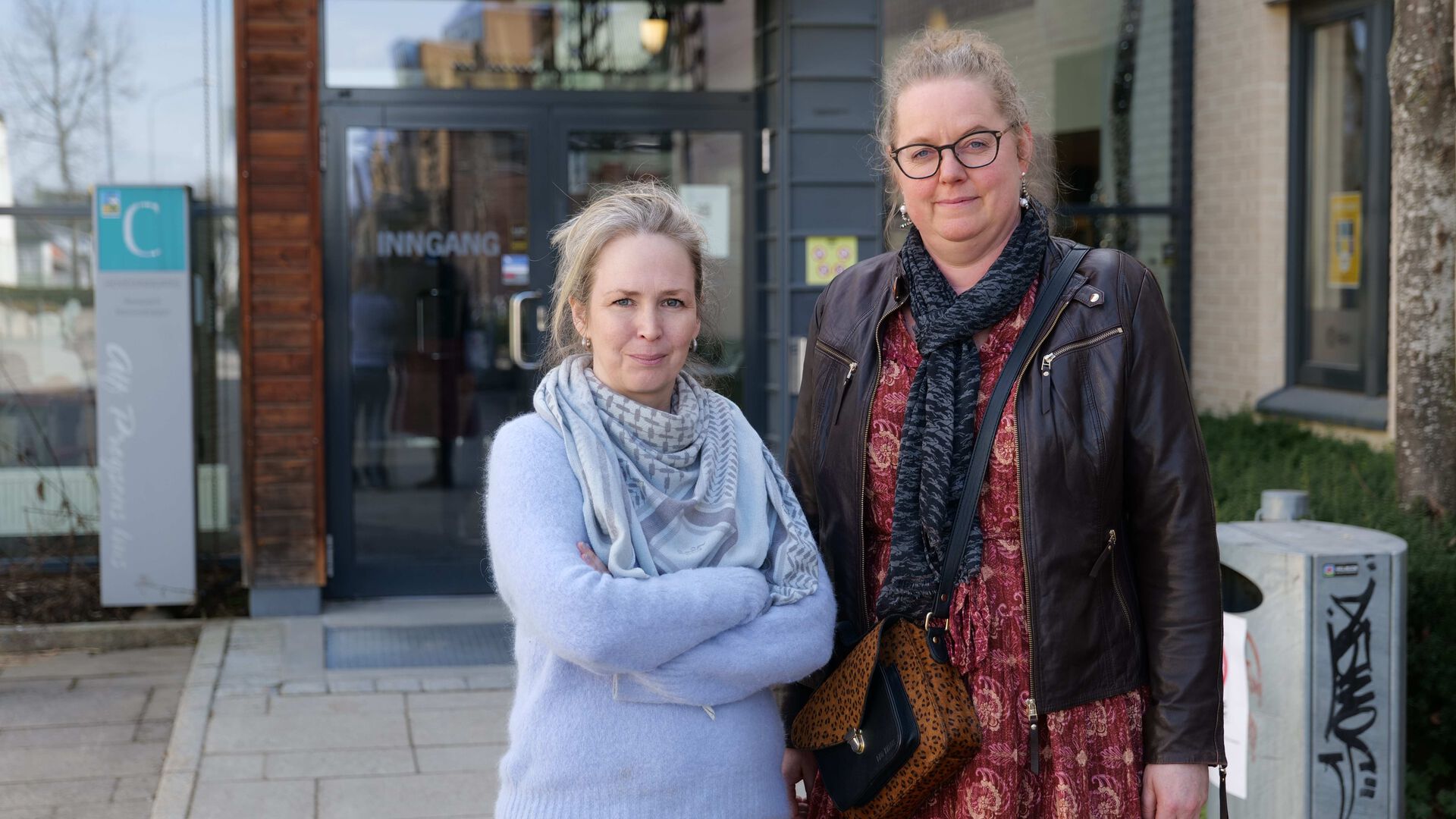
They have worked actively to encourage research and publishing and have had a steady increase since the group was founded in 2018. They emphasize that other research groups have contributed just as much as they did in 2024.
"Our members should not only do research, they should also publish", they say about the activity in their own group.
Is that easier said than done?
"We are concerned with community, and have worked actively to create a safe environment, where we support each other in research. We try to ensure that there is a low threshold for sharing research, no matter where you are in the process, to get input from others", they say about the strategy.
"And for younger researchers, we run some informal mentoring activities to get them started.
Openness, not gatekeeping
The research group meets once a month. Even if there is not much on the agenda, they still meet. Once a year, the group travels to a writing seminar.
"We sit together and work. It is both productive and social", they say.
The group also collaborates with other groups. '
"For example, we have an annual conference in collaboration with another research group. Here we focus on being open", says Steien and elaborates:
"Instead of engaging in 'gatekeeping' and building barriers between your field and mine, we ask each other 'What do you know that could be relevant to us?' It sounds banal, but we believe that it is the most important principle one can have as a research leader", say Guri Bordal Steien and Marte Monsen.
Contact

- marit.sletmoen@inn.no
- Phone
- +47 61 28 75 55