
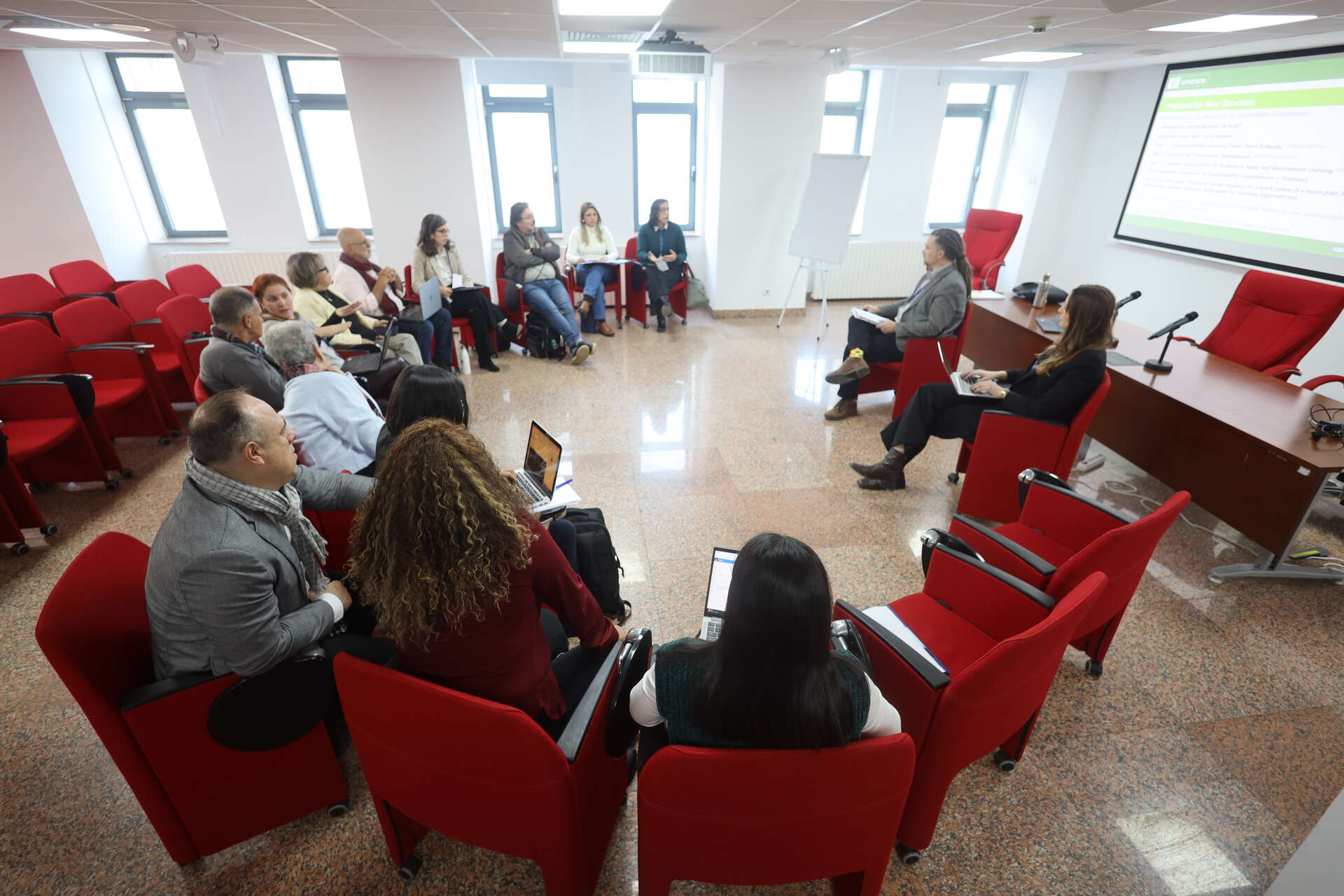
Implemented between 2024 and 2026, UNESCO’s Transforming Futures project piloted and tested innovative approaches in mainstreaming education for sustainable development within school practices across 41 schools in 10 countries. The findings of this project have culminated in the launch of three guidance tools focused on key dimensions of ESD:
- Driving sustainability in education through a whole-institution approach
- Enhancing pedagogies and competencies for sustainability
- Assessing learning in Education for Sustainable Development
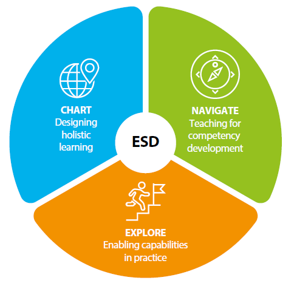
INN’s UNESCO Chair holder, Robert J. Didham, was invited by UNESCO to lead the development of the guidance tool on Enhancing pedagogies and competencies for sustainability. This guidance tool focuses specifically on transversal sustainability competencies and presents a new pedagogical framework to support their progressive and scaffolded development. It frames competency development as a holistic, contextualised and long-term learning process, and offers a flexible pedagogical approach that can be adapted to different subjects, learner groups, and institutional contexts.
Members of the International Partner Network of the UNESCO Chair on ESL have also collaborated in the development of the other two guidance tools.
Driving sustainability in education through a whole-institution approach was led by UNESCO Co-Chair holders in Reorienting Education towards Sustainability, Charles Hopkins and Katrin Kohl at York University in Canada, alongside Isabel Toman and Hilligje van't Land of the International Association of Universities (IAU). This guidance tool focuses specifically on the whole-institution approach, with the potential of transforming learning spaces into living examples of sustainability by embedding ESD into all aspects of education, curriculum, governance, operations, teacher training, and community engagement.
Assessing learning in Education for Sustainable Development was led by UNESCO Chair holder in Higher Education for Sustainable Development, Daniel Fischer at Leuphana University of Lüneburg, in collaboration with Jordan King, University of Tennessee at Chattanooga, and Aaron Redman, Arizona State University. This guidance tool focuses on assessment in ESD. Assessment in ESD has remained a critical gap in the work must reflect its transformative and inclusive nature. While learning objectives are well defined, how to assess them remains a critical gap.
About the International Partner Network of the UNESCO Chair on ESL
The International Partner Network (IPN) consists of 43 institutional partners across 29 countries around the world. Most partners are higher education institutions. Through North-South and South-South collaboration, CCL is building partnerships across the borders and strengthening the work in ESD. This network with INN’s UNESCO Chair on ESL further consists of 8 other UNESCO Chair holders. Together, the partners in this network have established several successful collaborations, such as the Formation of a Centre of Excellence to Promote Teacher Education for ESD: Towards Achieving SDGs (2021-2024) – a collaboration project between UNESCO Chairs at Okayama University, Japan; Leuphana University of Lüneburg, Germany; University of Ljubljana, Slovenia; York University, Canada; and INN University.
More about the guidance tools:
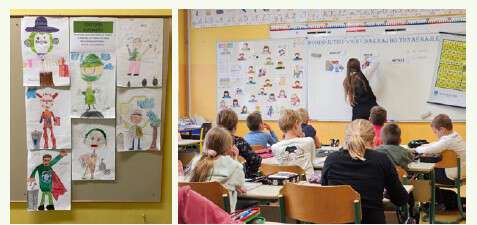
The tools were informed by literature reviews, consultations with an international advisory group, and action research conducted through the global ESD for 2030 Network. Forty-one institutions across ten countries — Brazil, Costa Rica, Côte d’Ivoire, Cuba, Germany, Japan, Kenya, Malaysia, Romania, and Slovenia — participated in piloting the tools within their local contexts.
Through the action research process, educators and school leaders became researchers in their own institutions by planning, implementing, observing, reflecting, and refining sustainability initiatives. Their experiences generated valuable evidence, case studies, and insights that informed the final guidance tools and accompanying policy briefs.
The project also fostered local and global Communities of Practice, strengthened educator capacities, and inspired school- and community-level sustainability initiatives that continue beyond the project’s implementation period.
The project was supported by the Government of Japan.
For more information about the project
Or contact:

- robert.didham@inn.no
- Phone
- +47 62 59 79 63
Didham RJ (2026) A pedagogical framework for sustainability competencies: bridging theory and practice in education for sustainable development. Front. Educ. 11:1908784. doi: 10.3389/feduc.2026.1908784. https://doi.org/10.3389/feduc.2026.1908784