
.jpg)
Thomas from Trysil put it this way: “And then I have 126,000 square metres of Norway that are mine.”
In the research report Choosing the Mountains: Newcomers’ Stories of Life, Choices and Values, people who have moved to a mountain municipality describe their desire to create a lifestyle they see as better and more meaningful. The life they find here aligns with their values and ideals. For most, financial reasons were not the main motivation for moving.
Even though depopulation and an ageing population are a reality in Norway’s rural districts, many still choose to leave the city in favour of rural areas. In the report, researchers from Eastern Norway Research Institute at Inland Norway University provide insight into newcomers’ values, motivations, and challenges. They also highlight concrete steps mountain municipalities can take to attract and retain new residents.
Striving for vibrant villages
“Our goal is to use the knowledge gained from this study as the basis for targeted work to encourage in-migration,” says Kari Randen from the Norwegian Mountain Network, the organisation that initiated the project. This is a political membership network working for vibrant rural communities.
Researchers Aleksander Bern and Mona Stokke recently presented the report at this year’s Norwegian Mountain Conference. The feedback was positive — the newcomers’ stories offer valuable insights that politicians, businesses, and local communities should listen to when planning the future of Norway’s mountain areas, says Bern, who led the project.
Better quality of life and freedom
Proximity to nature, more space, and better quality of life are central reasons for moving. Many newcomers seek freedom — not just in terms of space or finances, but also freedom from the stress and constant demands of city life.
Several say that waking up to silence and majestic mountain landscapes brings peace of mind and a feeling of living a more authentic life.
“There has been very little research on this type of migration in Norway, and the motivations are especially interesting,” says Bern.
Participants used photos
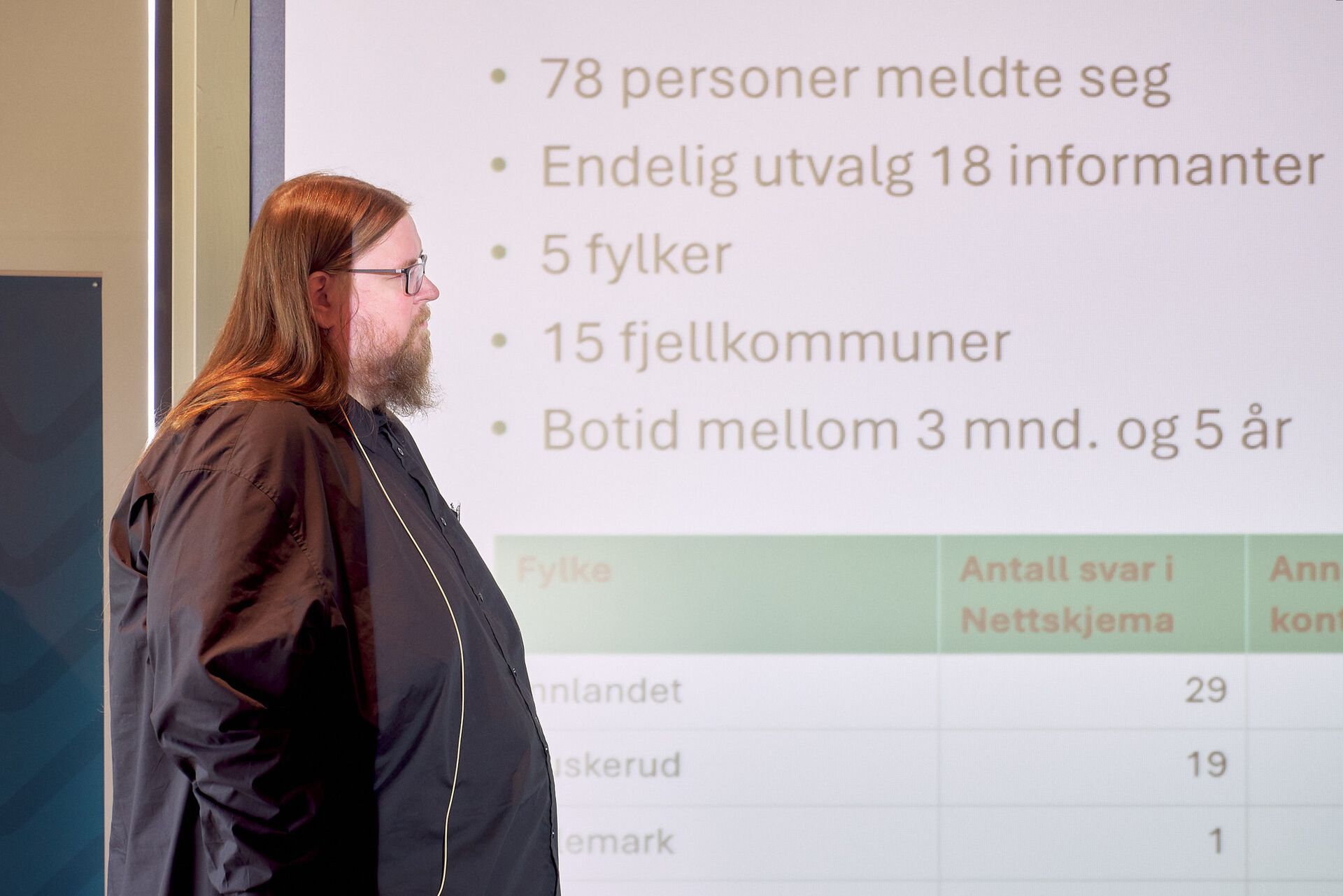
The study is based on in-depth interviews with 18 newcomers who had settled in 15 different mountain municipalities in Southern Norway. Researchers used the ‘photo elicitation’ method, where participants brought photographs that illustrated their decision to move. The goal was to trigger memories and reflections, leading to richer and more engaging conversations.
From the report:
During the interview, Vegar and Vilde show a photo taken on holiday in Gudbrandsdalen and explain:
“This picture is from 2022, but we stood in the exact same spot maybe four or five years ago (...) The weather was just as nice, and there were cows grazing here. So I said: ‘Oh, imagine living near this and being able to wake up close to this!’ Not exactly here perhaps, but having this within reach.”
Participants had to meet certain criteria: they must have moved to a mountain municipality where they had not grown up, within the past five years, and from a city or town with high centrality — such as Oslo, Bergen, or Stavanger — to a municipality with low centrality, such as Trysil or Sel.
Project leader Bern notes that a life-course perspective is key to understanding migration motives. “Something happens around the time people have children, and when the children move out.”
Young families typically prioritise safe environments with good schools and kindergartens, while people in other life stages seek a lifestyle that offers better balance between work and leisure.
Challenges
Housing stands out as a challenge. Even though housing prices are lower in mountain municipalities, availability is often limited, with many homes sold through informal channels such as local Facebook groups or family and friends.
Another contrast to current trends in Norway is the construction of apartments in small municipalities. “The people we spoke to emphasise single-family homes with enough space for their projects, such as keeping livestock or growing food,” says Bern. The report therefore recommends that municipalities plan for varied housing options and create more formal information channels for the local housing market.
Bern and his colleagues Mona Stokke and Deniz Akin, who conducted many of the interviews, conclude that newcomers bring fresh perspectives and energy, potentially creating activities and meeting places that strengthen communities.
“Based on these findings, we believe mountain municipalities would benefit from developing varied housing offers, improving communication, promoting local nature and culture, and working for an inclusive community to attract and keep newcomers,” they write in the report. They also recommend continued focus on inclusion, diversity, and facilitation for both new arrivals and long-term residents.
The report is in Norwegian but has an English summary and can be downloaded here.