
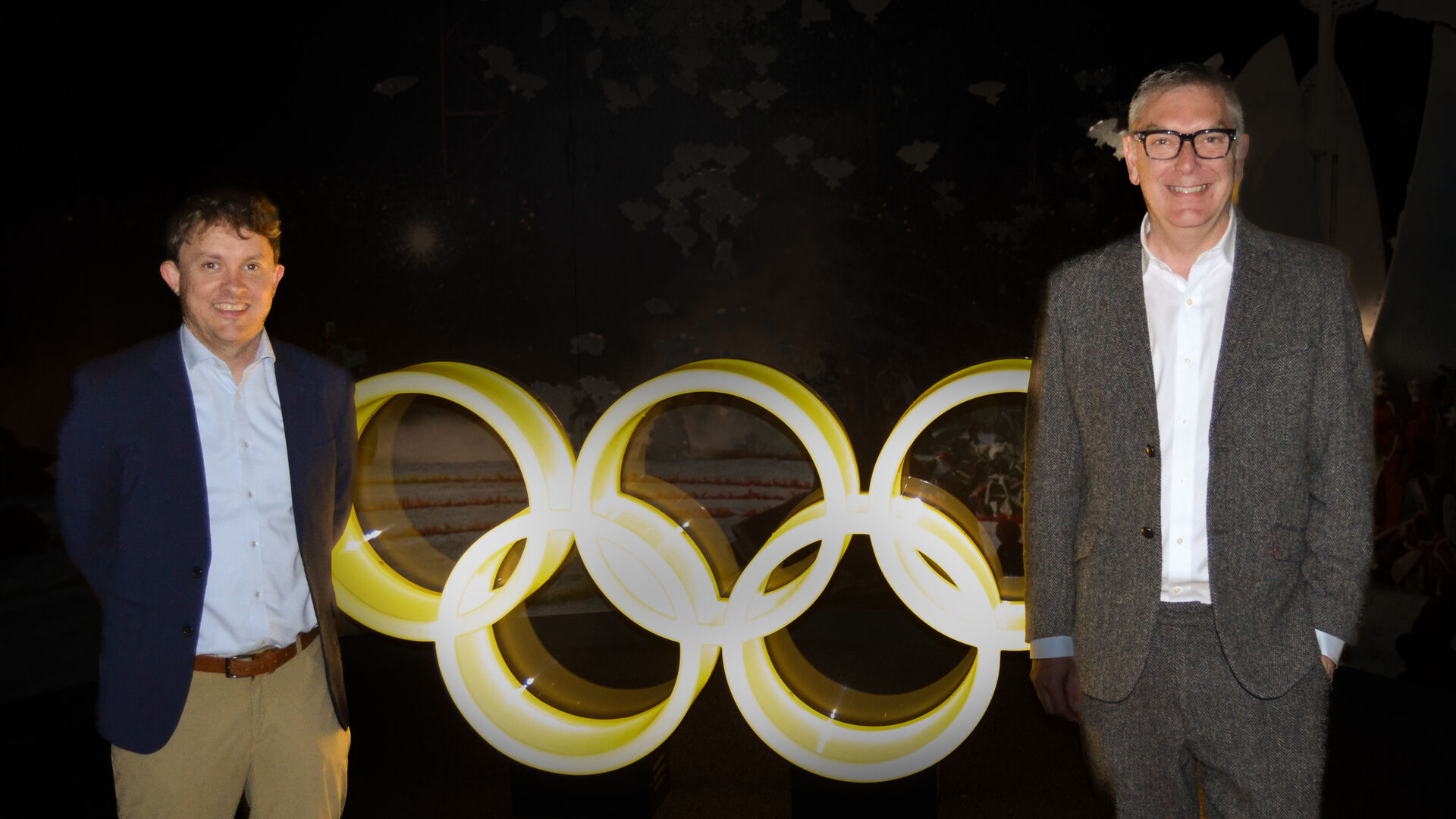
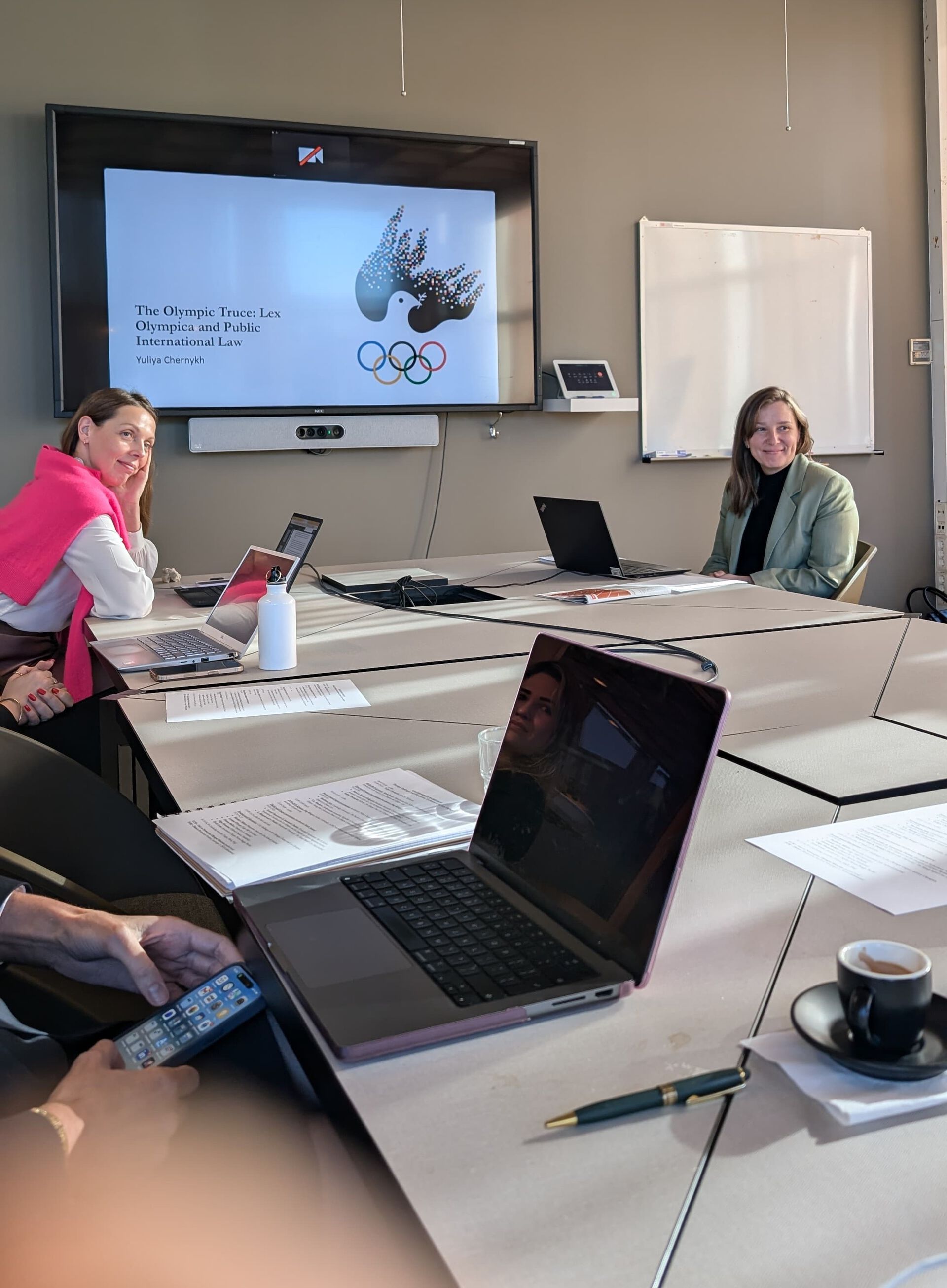
On Friday 20 September, Inland University of Applied Sciences (INN University) hosted the international workshop 'Through Challenges and Disruptions: Evolution of the Lex Olympica', focusing on legal and historical aspects of the Olympic Games and its regulations.
– Since the revival of the Olympic Games in 1896, the lex olympica, with the Olympic Charter taking its central place, has undergone tremendous changes. It has increased not only in volume but also in complexity and reach. The workshop invited lawyers and historians to reflect on how Olympic laws and regulations have developed within the last 128 years, says organiser of the event and Professor of Law Yuliya Chernykh.
Earlier this year, Chernykh published a chapter focused on host city Olympic contracts and their Eurocentric gravity. She continues working with Olympic truce and sports contracts at Inland School of Business and Social Sciences.
Impressive list of participants
The workshop assembled experts, scholars and practitioners from Canada, Danmark, Germany, Finland, Norway, New Zealand, UK and the USA.

A broad range of topics were addressed, including Olympic truce, the practice of sport as a human right, war-related sanctions, the historical development of anti-doping and gender testing, the emergence of esports regulation, and the practice and role of the Court of Arbitration for Sport.
The next step will be publishing a special issue of the International Sports Law Journal, focused on the rich ideas presented and addressed during the workshop.
Are human rights threatened in the Olympics?
Professor Mark James (Manchester Law School) was a keynote speaker at the workshop. As editor in chief of the International Sports Law journal, he offered insightful perspectives on the Olympic Charter and how the International Olympic Committee (IOC) enforces it.
– There is a lack of clarity in the way that some of the requirements of the Olympic Charter are defined. This ambiguity allows the IOC a very wide discretion to decide if, when and how to react to possible infringements of the Charter and related guidelines, James explains.
His focus was primarily on human rights issues with special attention to the freedom of expression.
As Rule 50(2) of the Charter states: 'No kind of demonstration or political, religious or racial propaganda is permitted in any Olympic sites, venues or other areas.'
The apparent ambiguity of the law is underpinned by the IOC's somewhat unpredictable enforcement of it, and James offers the following example:
During the Opening Ceremony of Paris 2024, the Algerian delegation were allowed to throw roses into the River Seine to commemorate the killing of 120 demonstrators by French police in 1961, whilst at Sochi 2014, the Norwegian cross-country team was threatened with expulsion for wearing black armbands to commemorate the death of Astrid Uhrenholdt Jacobsen’s brother and training partner Sten Anders.
Another challenge is that the Olympics is hosted in different countries with respective legislations.
– The IOC claims that it is both autonomous from political interference and that it is apolitical in its operations, meaning that it is reluctant to force host nations to change their laws to be in compliance with the Charter, James says.
This was demonstrated at Paris 2024 where female athletes were allowed to wear hijabs as the Charter does not prohibit religious headwear, but not if they were French. France has a general hijab ban that trumped Olympic regulations.
– The IOC could, and I think should, be more active in requiring host nations to be human rights compliant through the commitments made in the host city contract and the Olympic Charter, in the same way that they require hosts to pass legislation that protects the commercial and intellectual property rights of the Olympic Games, Mark james concludes.
Gender and doping challenging fairness
Keynote speaker and Associate Professor Jörg Krieger (Aarhus University, INN) offered historical aspects in the workshop, focusing primarily on the historiography of 'fairness' in the Olympic Games and how this has affected doping and gender regulations.
– Gender and doping regulations are linked because they can both be characterised as oppressive rules to regulate participation based on scientific techniques, and they both deal with what constitutes fairness in sports, Krieger explains.

Regarding the difficulties related to regulating doping in the Olympics, he says the following:
– Historically speaking, the challenge with anti-doping is that it was introduced much later than performance-enhancing substances and methods.
Athletes have been trying to improve their performances by all means possible since the beginning of modern sport. It was later on that conservative sport administrators decided that doping was to be considered 'unethical'.
– Thus, those participating in competitions are always a few steps ahead of the anti-doping system, he continues.
History demonstrates varying attitudes towards drug enhancements in sports. For example, during the Cold War, both supernations Russia and the USA had Olympic athlethes using amphetamines and anabolic steroids to demonstrate national supremacy.
More scientific methods, such as drug testing, have gradually been introduced in the Olympics in order to regulate 'fairness' among competitors. More difficult to measure, perhaps, is gender and hormonal components.
– Obviously, there is a lot of public discussion on gender identities in our societies now. Since elite sport – and particularly the Olympic Games – is an arena where we can see society’s phenomena play out publicly, it is inevitable that the gender issue also becomes an issue here, Krieger says.
In 2022, World Aquatics passed a law that only allows transgender women who transition before the age of 12 to compete in women's swimming events. Transgender American swimmer Lia Thomas lost her challenge against the Court of Arbitration of Sport and was therefore prohibited from competing in Paris 2024.
– Elite sport has very specific features and is defined around performance and equality (whether right or wrong) and therefore not the same criteria for inclusion as in society apply. Courts currently support sport organisations' restrictive stance towards athletes who do not fall into the traditional gender binaries and for the foreseeable future I do not see that changing, Krieger states.
Olympic legacy and future possibilities
The workshop was concluded with a guided tour of the Norwegian Olympic Museum in Lillehammer.

The participants of the workshop could learn more about the history behind the Olympic Games and the Olympic heritage in Lillehammer and Norway from Sebastian Kühn, curator of the museum and PhD research fellow at INN University.
– With the Lex Olympica workshop, we continue to unpack the huge potential that Lillehammer and our university has for addressing sports law and Olympic movement, Yuliya Chernykh concludes.
Read more:
- Europeanisation of the Olympic Host City Contracts (Yuliya Chernykh)
- The Influence of European Legal Culture on the Evolution of Lex Olympica and Olympic Law (Mark James)
- Olympic Laws: Culture, Values, Tensions (Mark James & Guy Osborn)
- Dope Hunters: The Influence of Scientists on the Global Fight Against Doping in Sport, 1967-1992 (Jörg Krieger)
- Women in the Olympics (Jörg Krieger & Lindsay Parks Pieper)
Contact information:

- yuliya.chernykh@inn.no
- Phone
- +47 61 28 75 44

- jorg.krieger@inn.no
- Phone
- +47 62 43 04 46