
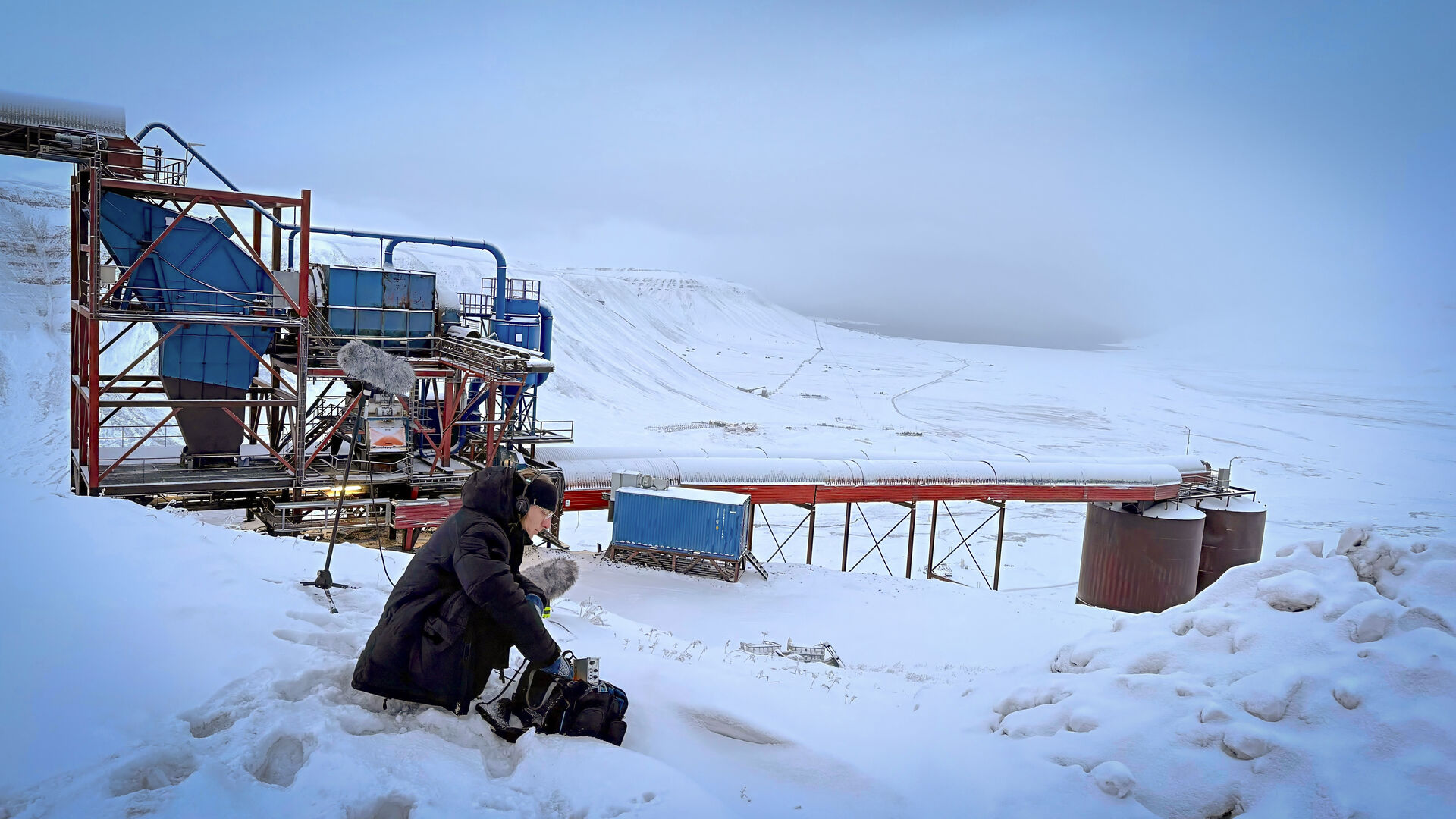
James Welburn, a musician, sound artist and university lecturer, is searching for the authentic sound of the Arctic island.
He hears his own footsteps in the snow, a dog barking, a snowmobile in the distance and the sound of the wind tearing through abandoned industrial buildings.
The field recordings span several weeks and form part of an artistic research and development project he is undertaking as a member of academic staff at the TV School at the University of Inland Norway (INN) in Lillehammer, where he normally teaches sound design on the documentary programme.
"It’s about storytelling and about expressing atmosphere through sound. I wanted to document Svalbard’s soundscape – both as sound art and in my own music," says the Englishman.
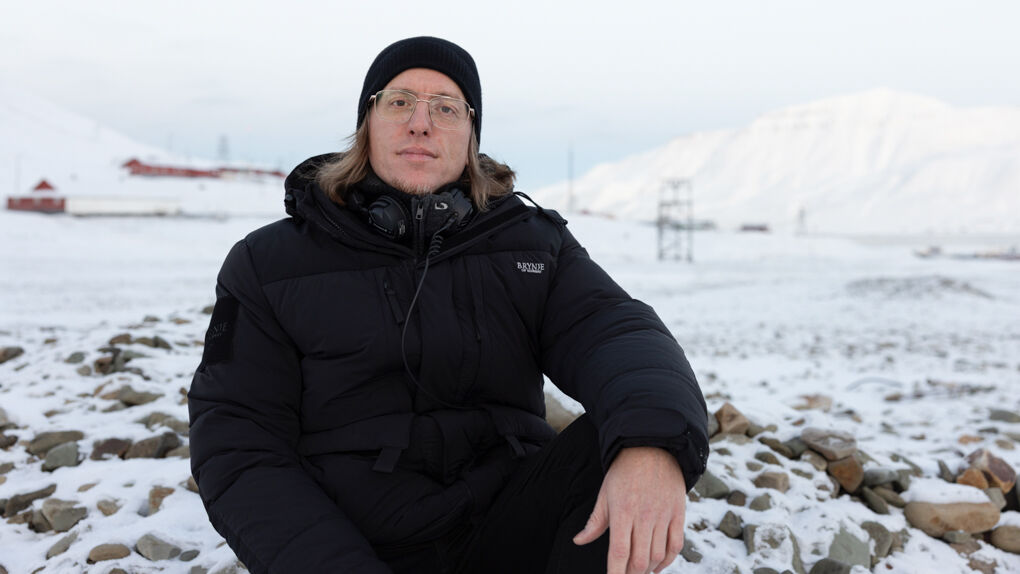
Finding the genuine sound
Before he first came to Svalbard, he had what he calls a romantic notion of the place; he imagined quiet, peaceful nature. In his mind, the musician envisaged floating, almost clichéd ambient music, he explains.
"I was not prepared at all for what I encountered. Svalbard is a busy place with a lot of activity. Historically, it was a site of heavy industry with coal mining; today there is extensive tourism. You cannot understand it or portray it if you haven’t been there."
He was searching for the real, genuine soundscape – something that cannot be recreated in a studio or by artificial intelligence. He found wind and weather and human activity in a fragile natural environment, full of natural hazards, set against a backdrop of visible and dramatic climate change.
-3.jpg)
Cultural history told through sound
Welburn searches and listens among the ruins of abandoned coal mines in the icy Arctic wind. After two hours, he finds what he is looking for: the wind catches hold of a metal plate on an old machine, producing an uneven, thudding sound.
"I was interested in how nature takes ownership of the ruins of the heavy industry from the mining era. The sound tells a story in itself. Where humans once controlled things, nature strikes back."
Listen to the recordings here:
(Photo: Elizabeth Bourne)
He experienced Svalbard as a museum, or an archive, of different periods of activity on the Norwegian island, he explains. Here he found buildings and machinery from various eras.
Sound art based on the recordings has now been published by Austrian broadcaster ORF Sound, in a 55-minute podcast.
At the same time, he composed music inspired by his surroundings. Welburn is a musician with a fondness for noise rock and composes soundscapes and experimental music.
In Longyearbyen, he walked the streets to test whether the music suited the landscape:
(Photo: James Welburn)
Authenticity in film
His project is part of the initiative for artistic research and development at the Faculty of Film, TV and Games.
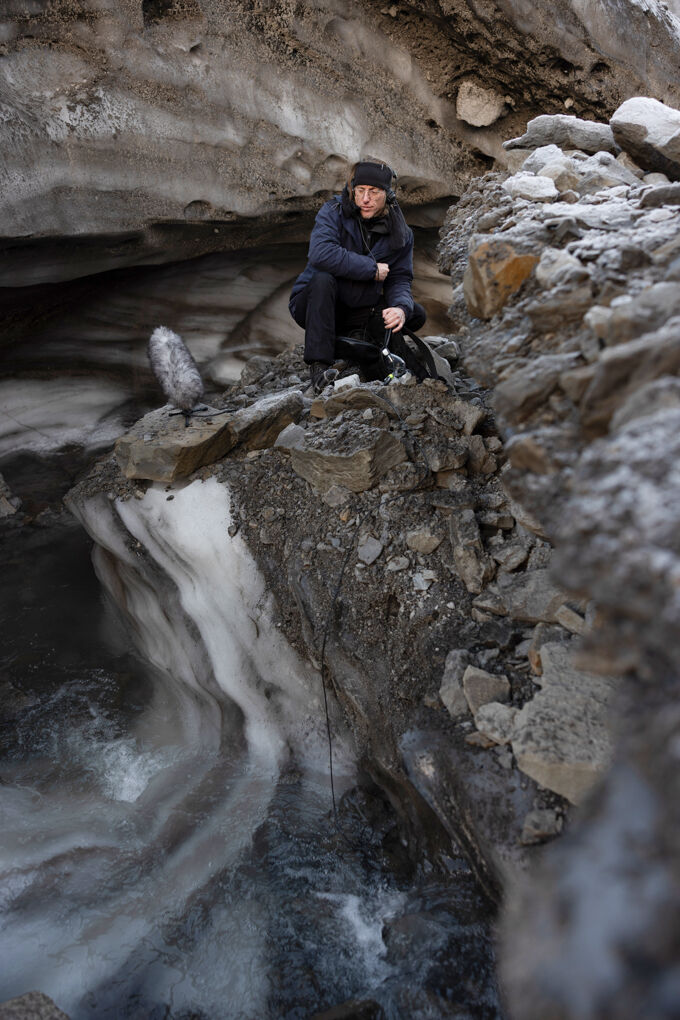
As a documentary film lecturer, he is passionate about realism and authenticity.
In a documentary film, every word is weighed carefully. The images must convey credibility. But on the sound side, filmmakers take greater liberties, using music and sound effects as tools to steer the audience’s emotions.
He wants his students to think more deeply and more holistically about the soundscape in the films they create.
"You can try to recreate a specific reverberation or a particular resonance from old machine parts on Svalbard, but I would say you have to have been there and experienced it to be able to imagine it properly. You need knowledge of the place you are portraying," says Welburn.
The use of artificial intelligence in sound work is also something that concerns him: when soundscapes are developed through machine learning, what we get is a diluted, second-hand impression of how a place actually sounds.
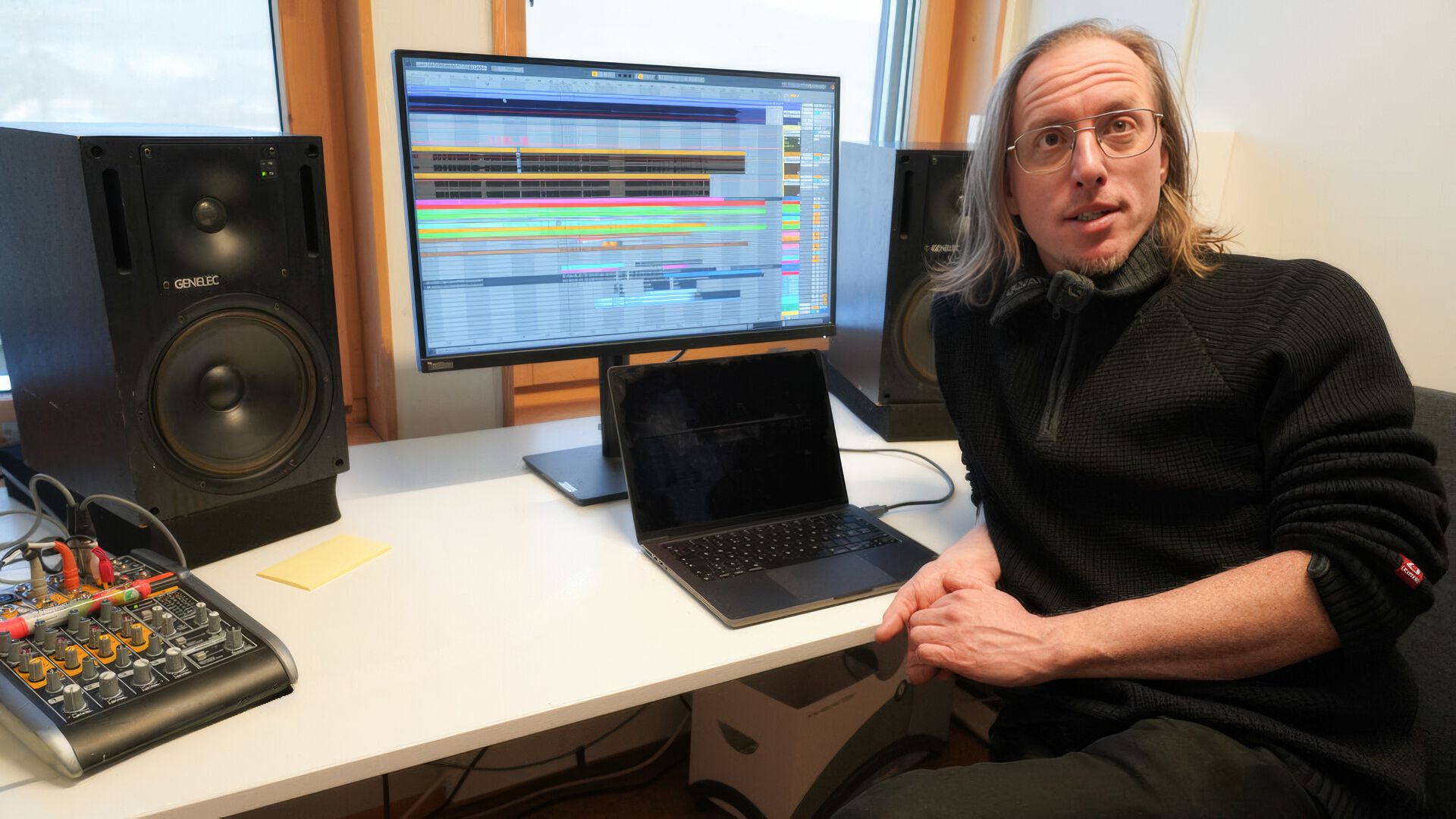
The soundscape of everyday life
James Welburn is probably more attuned to the sounds of his surroundings than most people, even in everyday life.
He grew up in London, a city he describes as a cacophony – noisy, harsh and chaotic. He says he had a close relationship with the Underground and the distinct sounds of the different lines.
He later moved to Berlin to explore sound and technology in the city’s musical underground scene. He considers the German capital to be more minimalist, structured and sonically distinct, much like the music associated with the city.
Then he arrived in Lillehammer, a quiet Norwegian small town with forested hills, birdsong and panoramic views of the mountains. Or is it?
"In Lillehammer we have a lot of nature, but at the same time we humans are taking up more and more space in nature’s soundscape," he says, sitting in his office overlooking the construction machinery building the new four-lane E6 through the Lågendelta nature reserve.
And what about the sound of Longyearbyen – how would he sum it up?
"The place is a fascinating paradox. It is massive and meditative, beautiful and frightening. Wild and desolate, yet at the same time full of life and activity. A bizarre blend of epic nature and a post-industrial wasteland. It is remarkable that people have existed in such an extreme environment for centuries," concludes the assistant professor at INN.
Read more:
Contact information

- james.welburn@inn.no
- Phone
- +47 61 28 74 57