
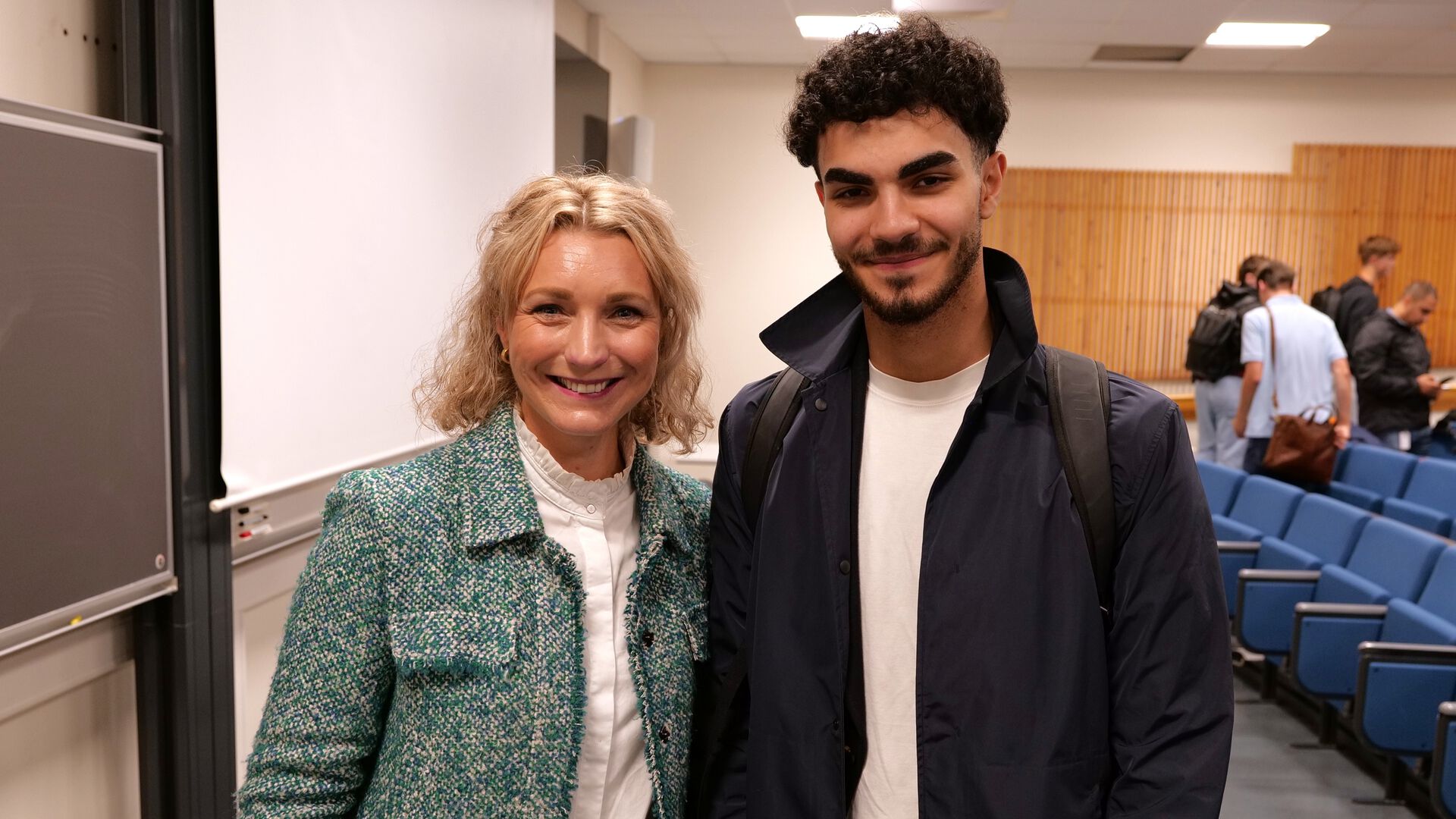
"I want to congratulate all of you who will be among the most sought-after people in the job market in the years to come," said Minister of Digitalisation Karianne Tung to a packed auditorium in Hamar.
She has come to speak with the students about digitalisation in Norwegian society and a future that will increasingly be shaped by artificial intelligence – a future that will, quite literally, be shaped by the minds in this very room.
A highly relevant study programme
"Our entire society rests on the shoulders of digitalisation. So, no matter which sector you end up working in over the coming years, your expertise will be needed," Tung emphasised.
Last year, the University of Inland Norway(INN) launched the bachelor’s programme Artificial Intelligence – Development and Application. It is therefore first- and second-year students on this brand-new programme who are now receiving a ministerial visit.
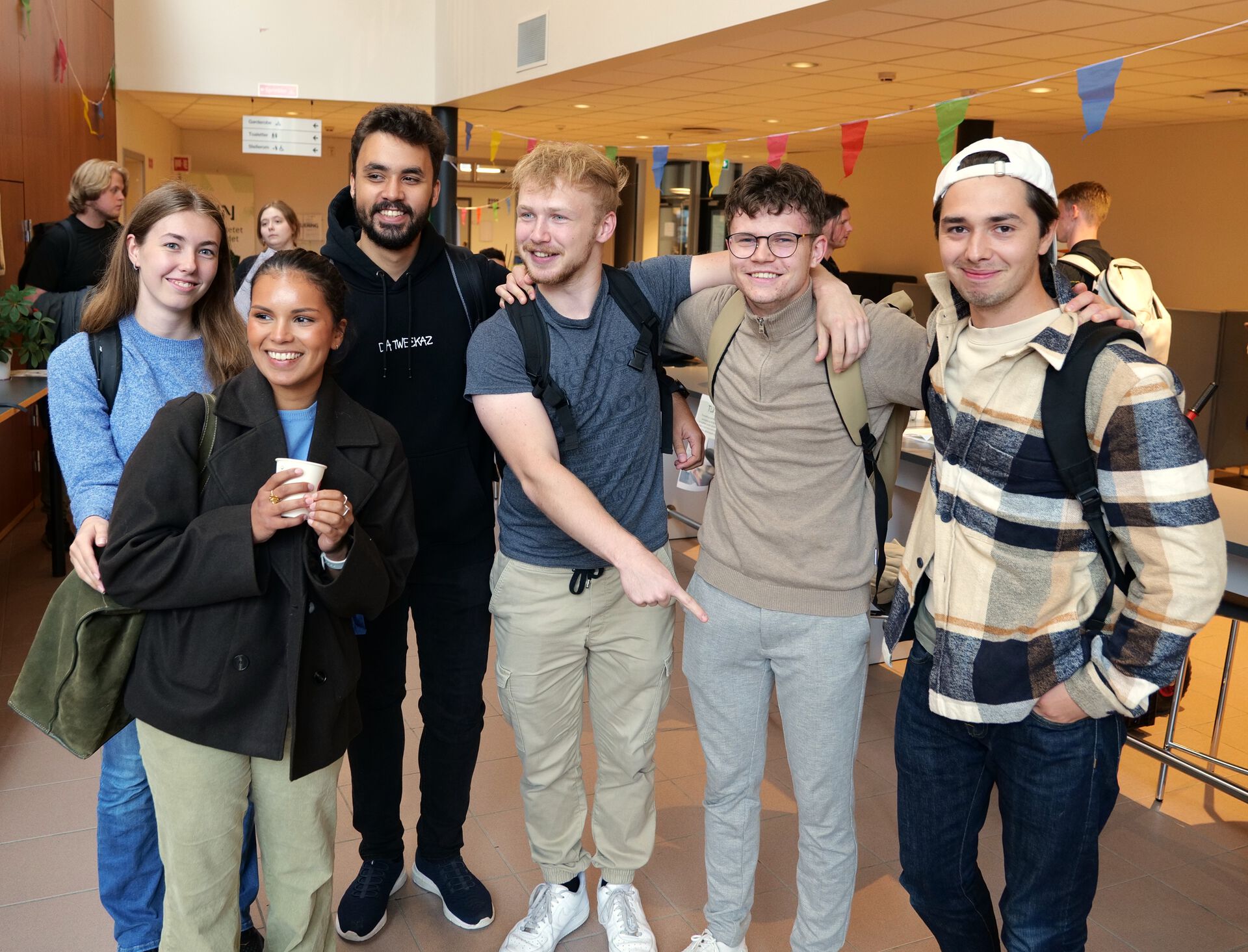
"What is special about the study programme is that students can choose whether they want to develop AI systems as hardcore programmers, or whether they prefer to focus on applying AI across different industries. This could be in finance, healthcare, education, or the creative industries," explains Head of Department Marit Christine Berg Strandvik.
INN’s commitment to artificial intelligence is evident in several areas. This year, the university became part of MishMash – one of the government’s six AI research centres, with a particular focus on creativity and ethics.
These centres have been allocated funding worth several million, and the research not only focuses on how AI works in practice, but also on how we as humans interact with it.

The importance of the newly established study programme is further underlined by a clear ambition the Minister of Digitalisation has for our society:
Norway is to become the world's most digitalised country by 2030.
According to Tung, this is not just an ambition but also a necessity. With an ageing population and fewer young people paying taxes and providing essential services, we are dependent on thinking smart and making our systems more efficient.
"We will build and safeguard Norway with digitalisation as our tool. For technology is the tool. It is we humans who must control it, who must use it in the same way a carpenter uses a hammer," Tung explains.
Dialogue with the students
In the auditorium in Hamar, there are lively discussions around the key issues that artificial intelligence brings with it.
The students raise topics such as changing legislation, deepfakes, fraud and other criminal activities, discrimination, threats to democracy, and challenges related to training and enforcing AI as a tool.
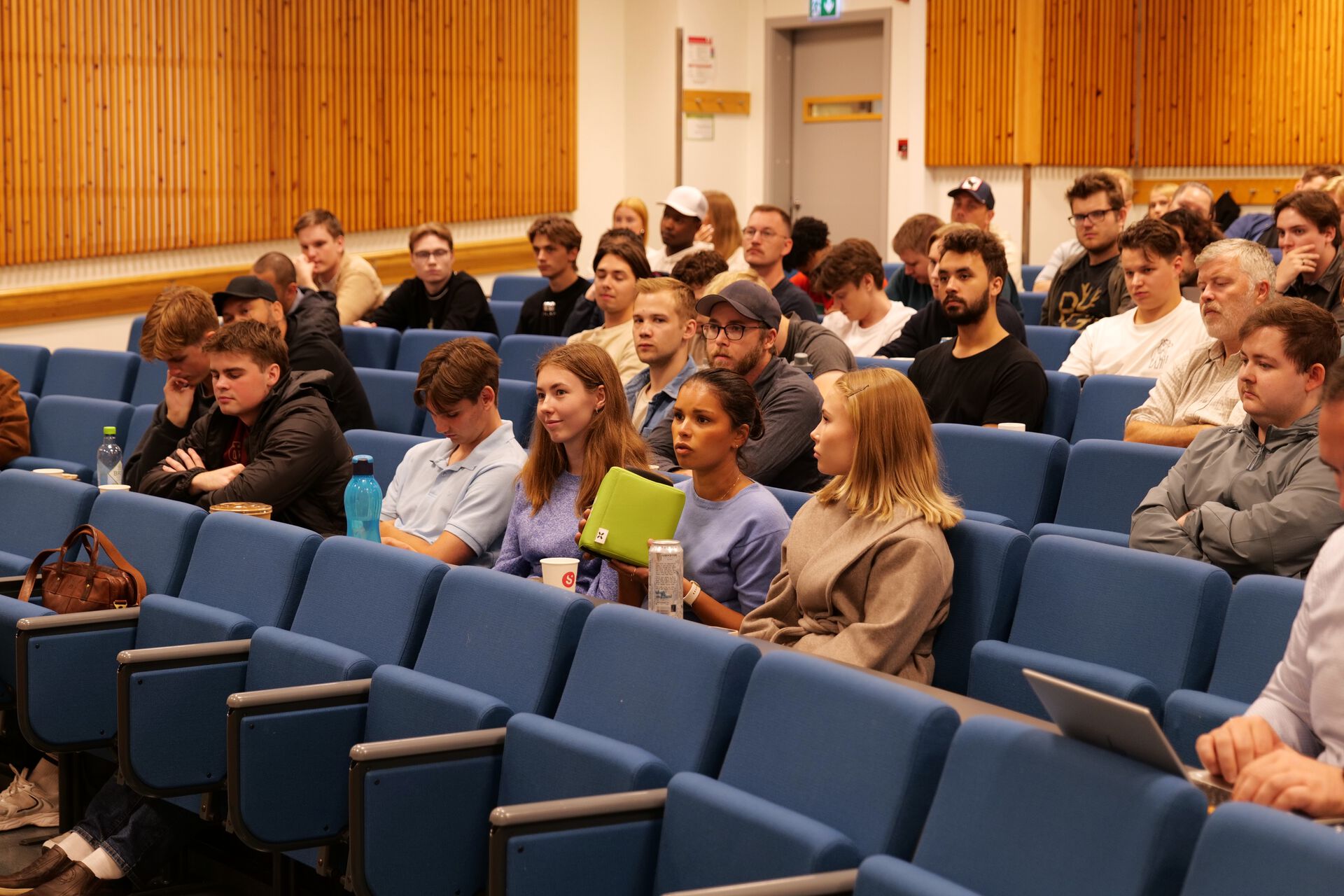
"Are any of you afraid of artificial intelligence?" Tung asked the students.
Several in the audience raised their hands to share different concerns. It was clear that the students had a solid understanding of what their field means – and will mean – for society.
Artificial intelligence is a bit of a black box. We don't really know exactly how it works on the inside.
Despite the concerns and unpredictability surrounding technological developments, it is the opportunities to influence and the wide scope for action that seem to motivate the students.
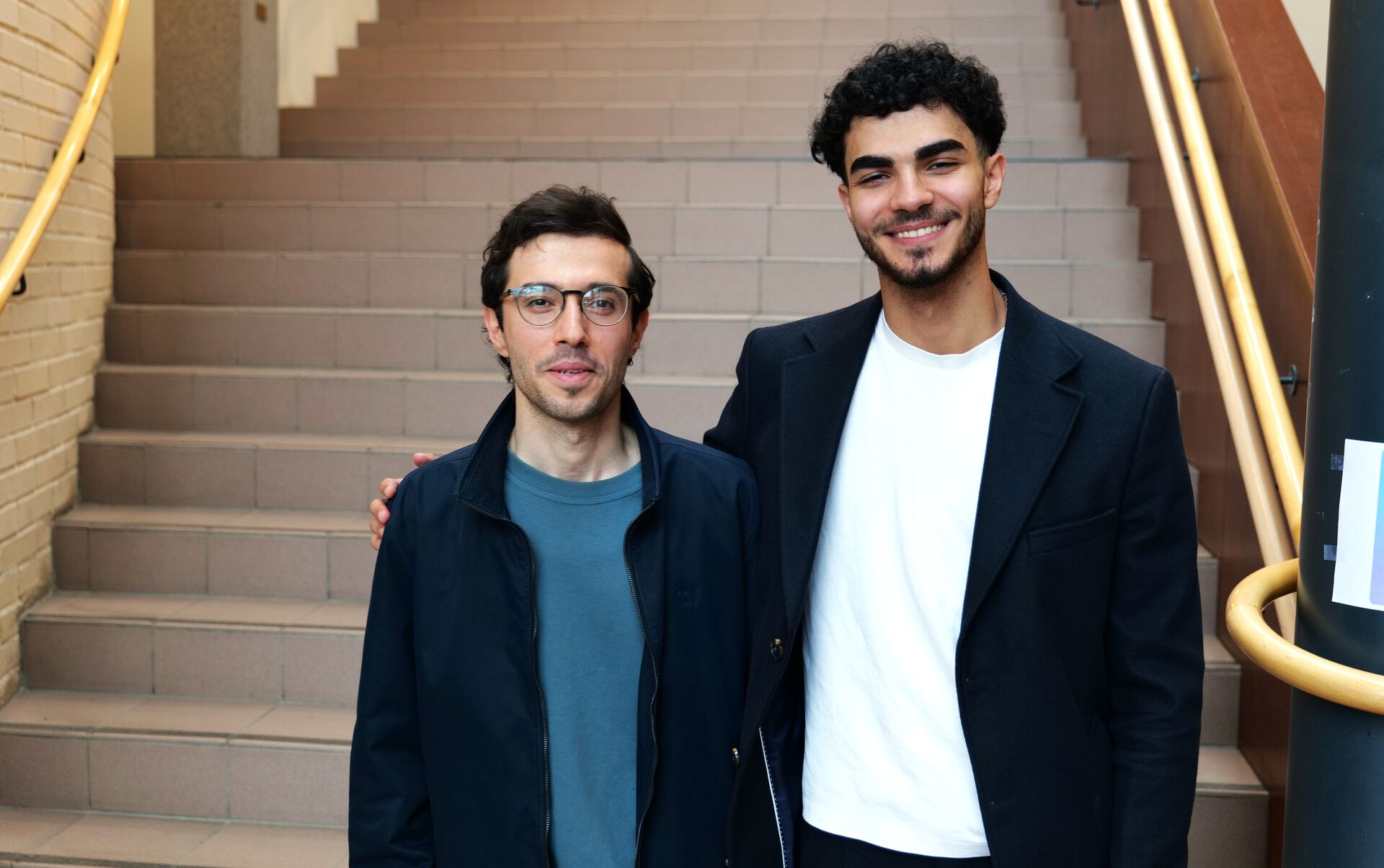
"It really is an unpredictable future. So it will be exciting to be part of it and to influence what that future becomes, quite simply," says Hayder Karim.
Both he and fellow student Germian Mohialdeen have just moved to Hamar and are enthusiastic about the next three years at INN.
"It’s not every day you get to meet a minister – and not everyone gets to meet the most relevant minister less than two weeks into their studies! That really says something about the importance of artificial intelligence," says Mohialdeen.
Contact information:

- sashi.komandur@inn.no
- Phone
- +47 61 28 75 23

- marit.berg@inn.no
- Phone
- +47 62 51 77 84

- leif.holst.jensen@inn.no
- Phone
- +47 62 54 16 08