

This year's moose hunting season has ended. In recent decades, moose hunters have faced competition from four-legged hunters, as wolves and bears have become more numerous in parts of the country.
But exactly how many moose fall prey to predators remained uncertain. Now, researchers at the University of Inland Norway and the Swedish University of Agricultural Sciences have an answer. They have conducted a comprehensive and unique study based on the results of many years of research on large predators in Scandinavia.
Using hunting statistics, GPS tracking of radio-tagged predators, field observations and a compilation of previous studies, they have calculated how large a proportion of the moose population ends up as prey for predators and how much is killed as a result of hunting.
Significant decrease in the moose population
The researchers examined 20 wolf territories with varying densities of wolves and bears, in central parts of Sweden and eastern parts of the old Hedmark county in Norway. The figures are taken from a period of 21 years.
The study shows that predation can account for a significant proportion of the moose that die each year: wolves and bears kill an average of nearly 11 percent of the moose in the areas studied.
The wolf accounts for 8.6 percent and the bear for 2.3 percent.
There are also large variations from year to year and between areas. Where there are few moose and wolf dens are small, the impact of predators on the moose population can be large. If the moose population is large, the impact of predators is smaller.
In a small wolf territory on the border between Norway and Sweden, wolves killed 17 percent of all moose in 2018. The researchers followed a wolf pair in the same region fifteen years earlier. Despite killing almost twice as many moose, their killing amounted to less than three percent of all moose – simply because there were more moose and they were killed over a larger geographical area.
The impact of hunting
The researchers also estimated that the average human hunting harvest was 17.5 percent across the areas.
On average, more moose are still killed in hunting than by predators, but in some of the wolf territories, predators kill more.
In some places, increased predator harvest is compensated by less hunting, but in several areas, hunting has not been adjusted. Several other factors come into play when hunting quotas are set, including grazing damage in forests and the risk of traffic accidents as a result of moose collisions.
"There should be consequences"
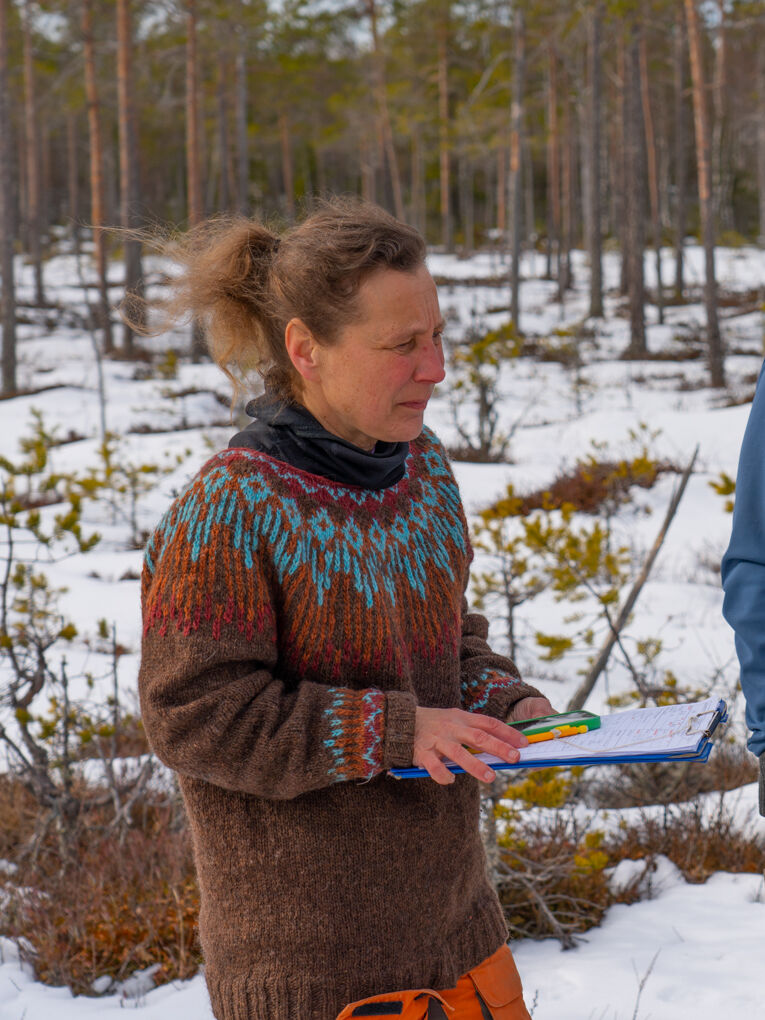
One of the researchers behind the study, Professor Barbara Zimmermann of the University of Inland Norway, says that the figures they have presented will have consequences for hunting and wildlife management:
"These figures are important for those who manage hunting. Quotas and targets for the moose population must be adjusted to ensure sustainable management of forest resources", she says.
The appetite of predators for moose can have a negative effect on income from hunting in some local communities. At the same time, she points out that predators, and the limitation they place on the moose population, help reduce grazing damage in the forest. In addition, the carcasses left behind by predators are important for scavengers, she adds.
Unique study
The study points to the need for dialogue between landowners, hunters, wildlife managing authorities and researchers to find solutions that both ensure sustainable management of moose and take into account the place of predators in the landscape.
According to Zimmermann, there is great interest in the figures – in both wildlife management and research.
"On a global scale, this is a fairly unique study, because we have access to research data and hunting statistics from many years. This allows us to make these types of calculations", says the INN University professor.
Reference:
Sand, Zimmermann, Wabakken, Eriksen, Wikenros: Quantifying large carnivore predation relative to human harvest on moose in an intensively managed boreal ecosystem. Ecological Applications, 2025.
Contact person:

- barbara.zimmermann@inn.no
- Phone
- +47 62 43 08 70